


Vortex Helios Review: Musically Relax your IEMs
Vortex Cables has been a familiar name on our review table for a while now. From the C.F.S. series (Seraphina, Alida, and Lavinia) to the more recent Nadia cable, we’ve had a good amount of time with their lineup across different price tiers. Recently, Vortex made a notable shift in philosophy with the launch of their new Zenith Series – a departure from the multi-material blends and fabric shieldings which the brand became known for, now pursuing a simpler material, non-fabric approach instead. The Iris was the first out of that series, and now follows the Helios, the second entry in the Zenith Series. Using gold-plated 7N OCC copper conductors with the newly developed Litz Type 7 Helix structure, Helios is priced at $639 ($679 for the Versa modular version). In this review, we’ll be covering the features of Helios, sharing sound impressions, and pairing Helios with various IEMs and competitor cables that are within a similar price range.
About Vortex Cables
For those who haven’t come across Vortex before, Vortex Cables is a Hong Kong-based cable brand established in 2018 after a year of planning and development. Their brand principle has always been “affordable luxury” – building cables that are well-crafted and well-tuned without pushing the price to uncomfortable levels. They’re known for their careful attention to both sonics and accessory design, and the ConX and VERSA modular connector system that has appeared in most of their premium cables is one of the more practical implementations of modular connectors in the custom cable space. The Zenith Series, launched in 2025 to celebrate the brand’s seventh anniversary, marks a clear evolution in Vortex’s engineering approach – an in-house developed Litz Type 7 Helix structure built around non-fabric, single-material conductors, rather than the complex alloy blends and fabric form factors they’ve used previously.
Including & Specifications of Helios
In line with the Zenith Series design concept, Helios arrives in minimal packaging – the same side-carry pouch introduced with the Iris rather than a conventional box. The pouch is a practical, multi-purpose carry bag large enough to also fit a DAP or dongle alongside the cable, which is a thoughtful and functional choice. A warranty card is also included. It’s a straightforward package with no leather case or accessories beyond the cable itself, though that’s consistent with Vortex keeping costs focused where it matters. For those who want the Versa modular connector option, that version is available at $679.
Customization: Versa Modular Connectors
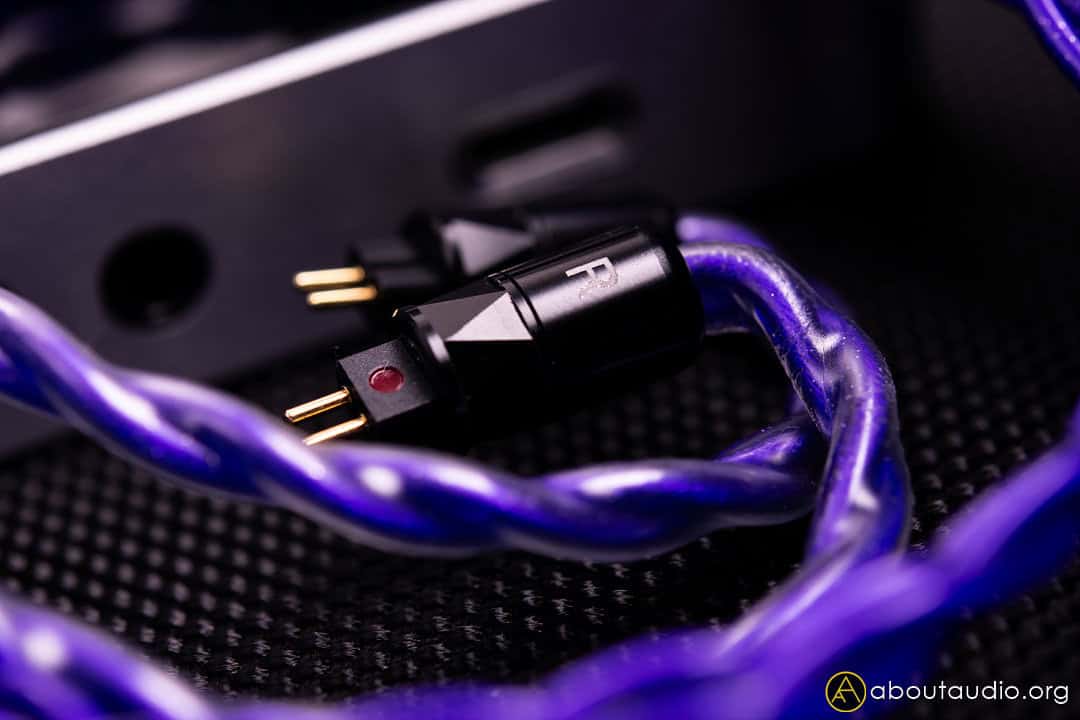
For those who prefer the modular connector route, the Versa variant of Helios comes with Vortex’s Versa connector system, allowing hot-swappable IEM terminations between 2-pin, MMCX, and Pentaconn Ear without re-terminating or re-ordering. For multi-IEM users, this makes Helios a much more cost-efficient investment in the long run, as the cable can move between earphones freely.
Detailed specifications of Helios are as follows:
- Structure: Litz Type 7 Helix
- Material: Gold-plated 7N OCC Copper
- Material Origin: Taiwan
- Wire Gauge: 25.1 AWG
- Connector options: 2-pin 0.78mm, MMCX, Pentaconn Ear, Versa, etc.
- Plug: 4.4mm balanced (custom options available)
- Price: ~$470 (Standard Version) / ~$510 (VERSA Modular Version)
Cable Geometry / Usability
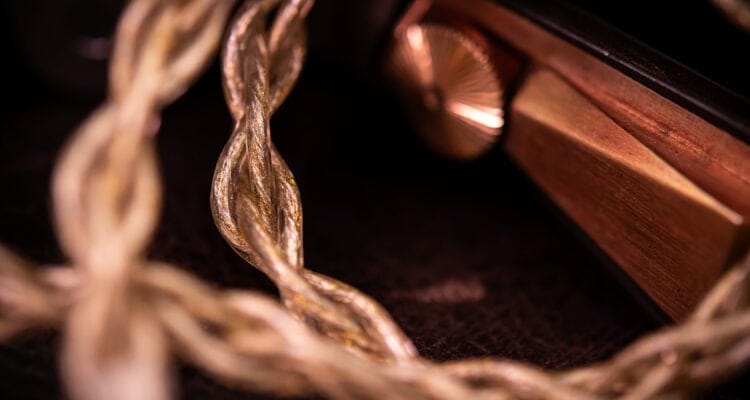
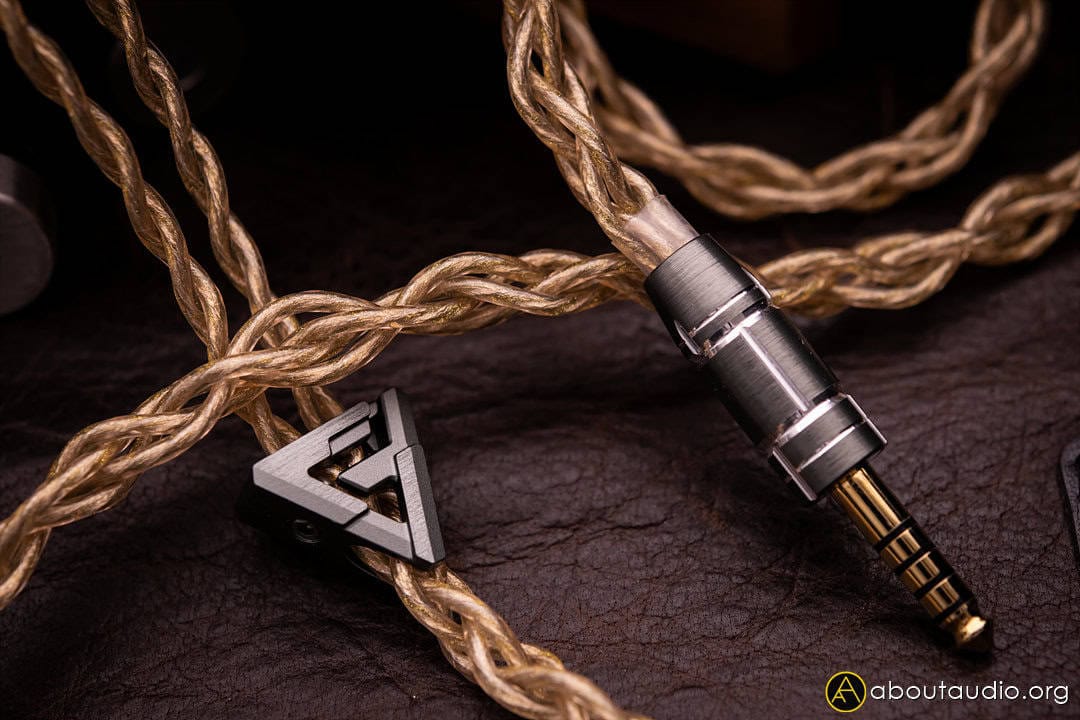
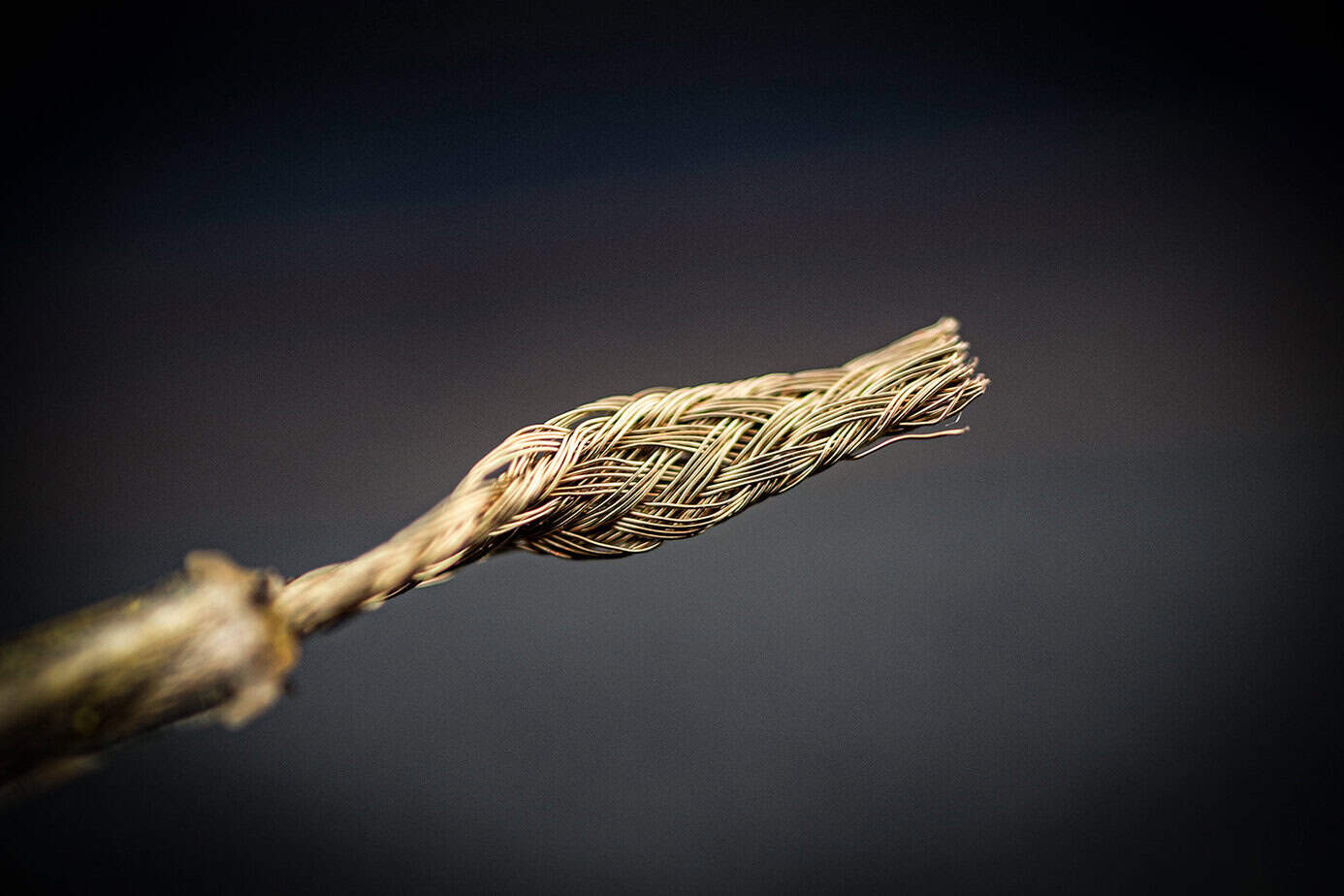
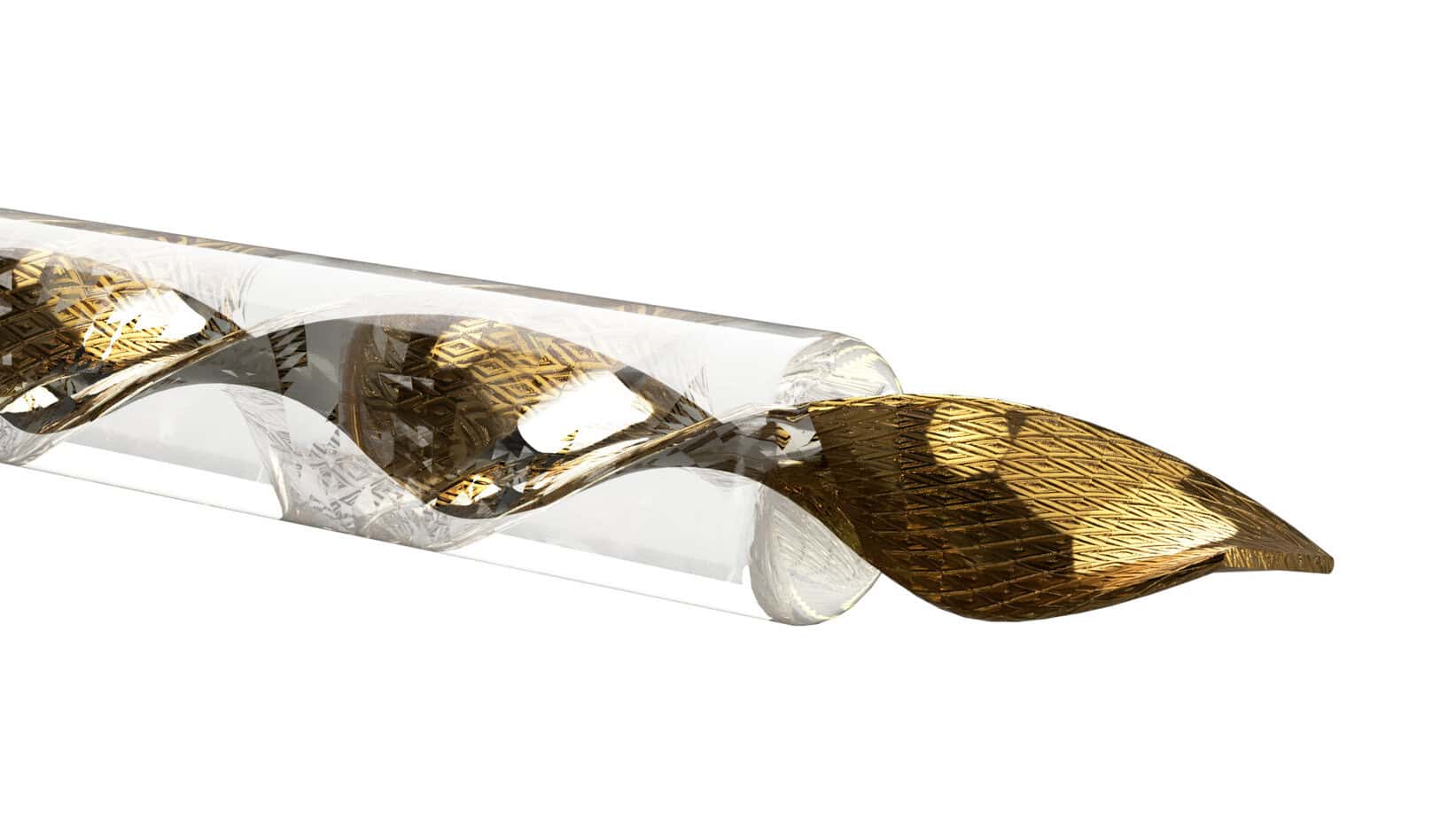
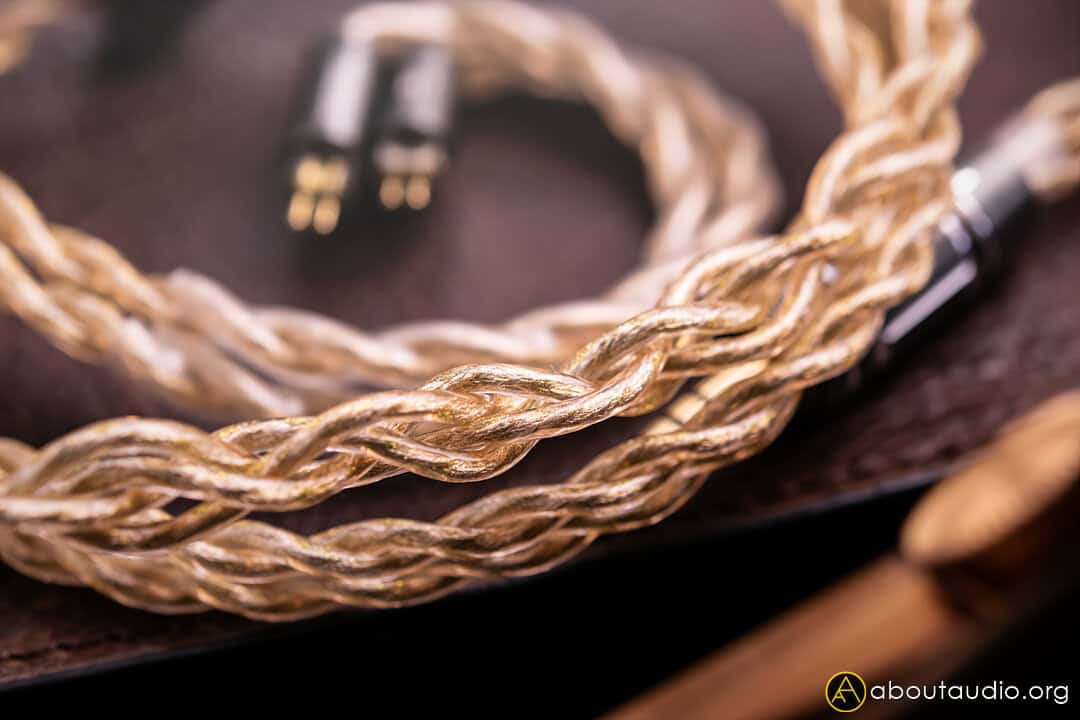
Visually, Helios takes on a warm golden-brown color that is a clear distinguisher from the silver-toned Iris. It uses a 4-braid construction with the Litz Type 7 Helix format, which consists of multi-stranded flat rectangular conductors woven in a precise geometric pattern. Vortex designed this structure to minimize skin effect and proximity effect, aiming for more stable signal transmission and lower distortion than conventional round-conductor Litz designs.
A thickened proprietary insulation shielding layer is applied on top of the conductor treatment – something Vortex is introducing for the first time within the Litz Type 7 structures. The purpose of this thickened insulation is to reduce dielectric loss and suppress partial discharge, which Vortex states results in better high-frequency extension and more complete instrumental overtones. For this reason, Helios is slightly thicker than your usual 4-braid cables, with the finished cable thickness similar to 6-core cables.
In handling, Helios is comfortable and practical. The 4-braid body is soft and pliable without being flimsy, and the wires don’t spring back or tangle easily. Weight is light for a 4-braid cable, and microphonics aren’t a concern. The CNC aluminum hardware for the chin slider, Y-split, and plug casing all have a clean, consistent finish. Overall, Helios is a very soft and easy custom cable to handle, despite the thicker cores, even for everyday on-the-go usage.
Overall Sound Characteristics of Helios: How does it sound?
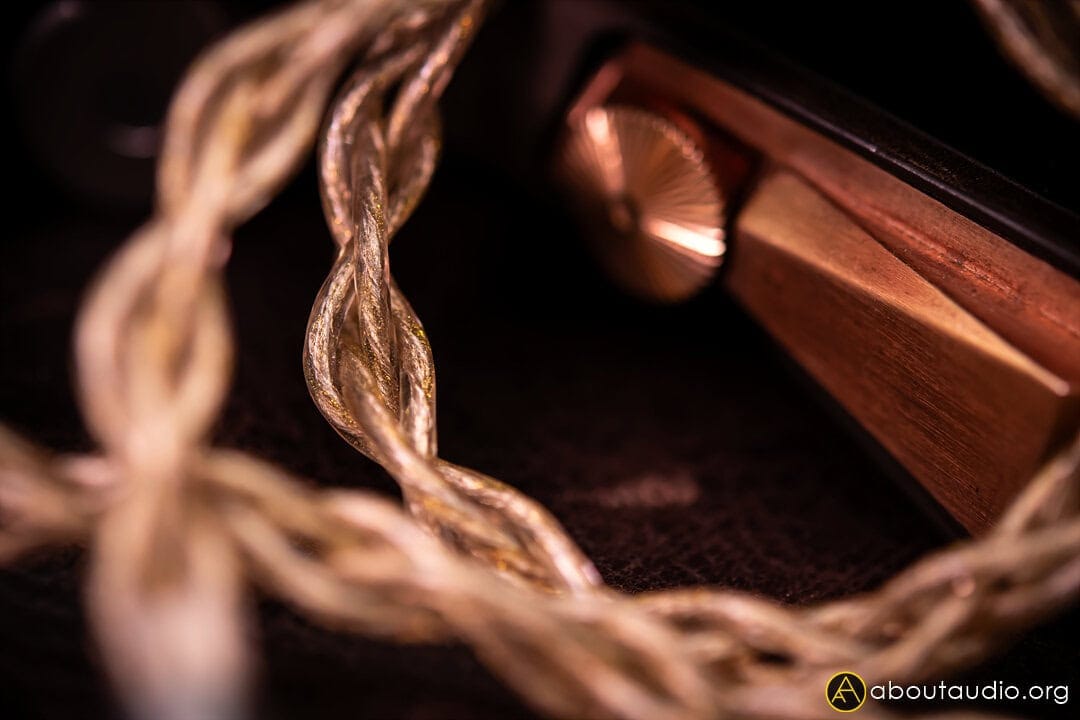
Gold-plated copper carries a distinct tonal identity compared to both pure copper and silver-plated variants. It tends to be warmer and denser than silver-plated copper, yet the gold plating adds a certain refinement to the texture that separates it from raw copper’s raw warmth. Helios reflects this character clearly from the first listen.
The most immediate characteristic is the tonal density. Helios gives the sound a fuller, rounder body across the spectrum – the low end gains a heavier, more present weight, the mids are thick and creamy, and even the trebles carry more body than you’d typically hear from silver-based cables. This added density never feels congested, though – the Litz Type 7 Helix structure keeps the overall presentation well-organized and clean in separation.
Bass depth and sub-bass extension improve noticeably. Helios makes the low end feel more anchored – deeper reverbs, a stronger physical presence, and cleaner definition within the low-end texture. There’s also a tightness to the bass that prevents it from getting sluggish or bloated despite the added body, which is one of the qualities that makes Helios a reliable pairing for many different IEMs.
Mids are where Helios particularly shines. The vocal timbre gains richness and warmth, giving singers a fuller, more organic tone. The texture is smooth and refined – not buffed flat but velvety in a way that preserves the resolution grain while keeping the surface feeling silky. The tone is natural and musical without veering into overly colored territory. Helios gives that noticeable golden warmth and smoothness to the vocals, but without getting dull or muddy.
Trebles are smooth and controlled, with the emphasis being on tonal completeness rather than brightness or sparkle. Helios doesn’t push the highs forward or add extra shimmer – instead, it presents treble details with a composed, refined quality. For those sensitive to upper-frequency brightness or harshness, Helios is a comfortable option that doesn’t sacrifice resolution for the sake of smoothness.
Soundstage improvements show mostly in depth and three-dimensional layering. The background gets noticeably quieter and darker, and the contrast between foreground elements and background ambiance becomes more defined. Width doesn’t expand dramatically, but the spatial layering and imaging within the stage become clearer and more precise.
Next Page: Sound Pairing with Flagship IEMs (Quantum / Macbeth / Andromeda 10)