

Vortex Reference: Debut-Launched and Unveiled
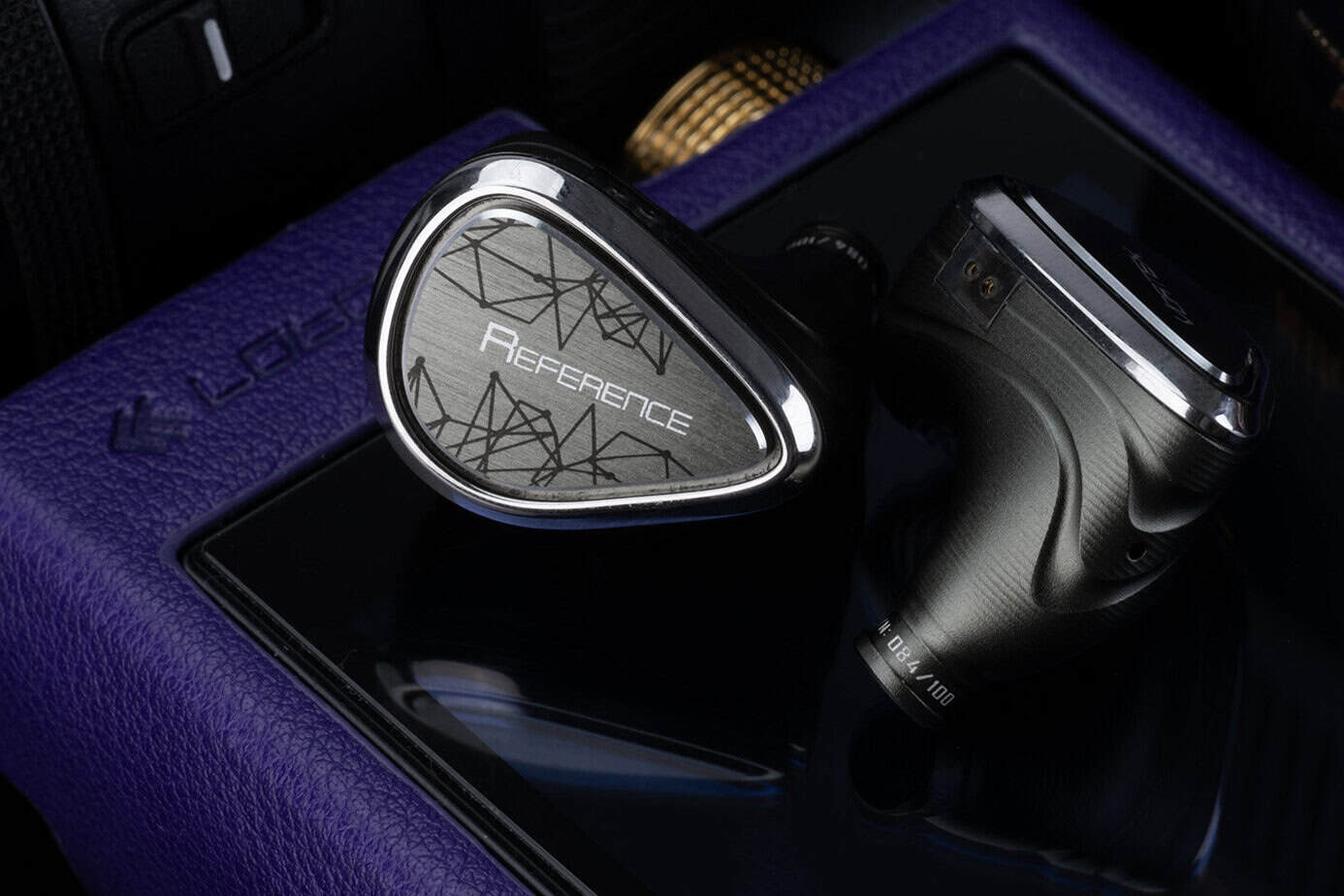
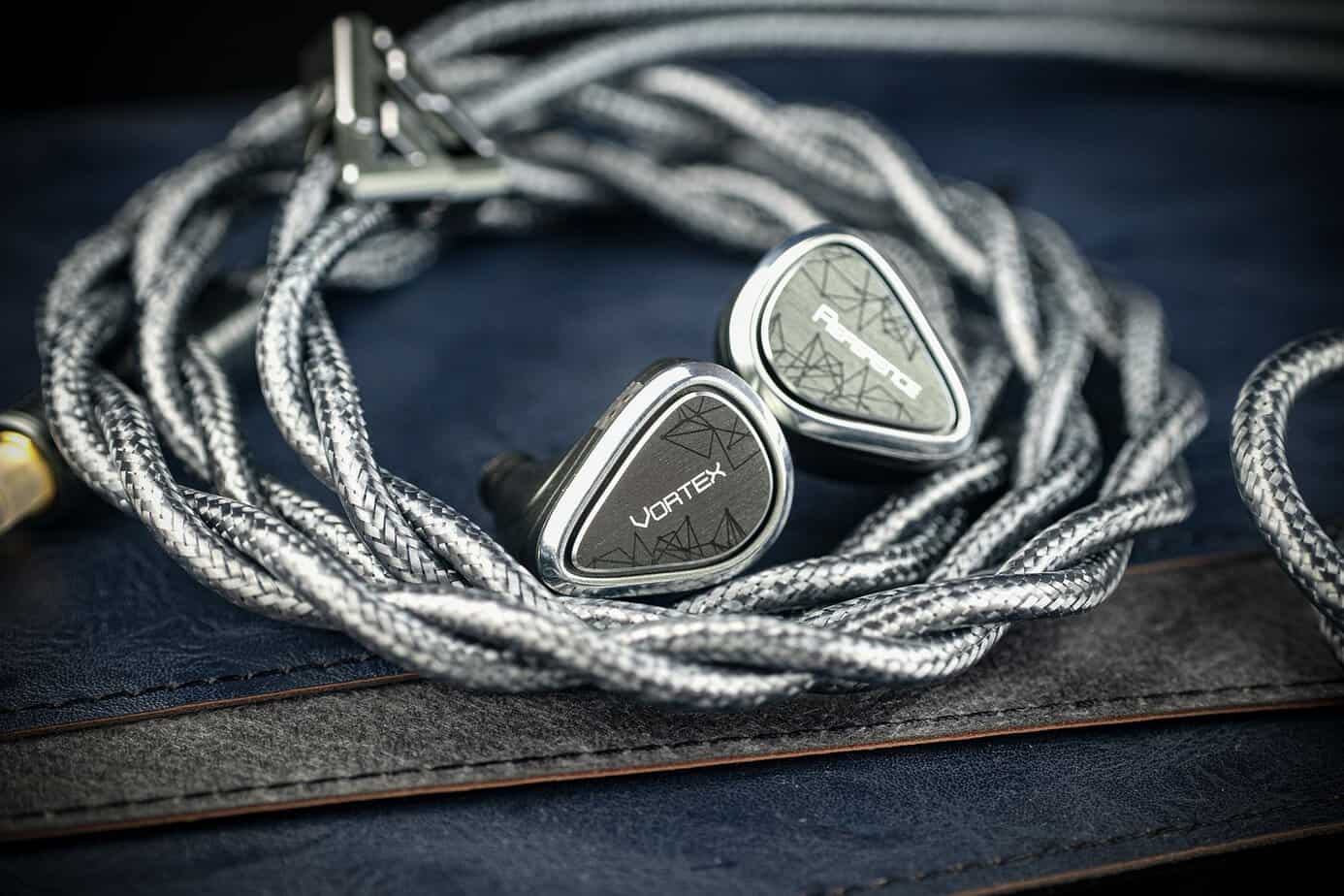
Vortex Cables has crossed a line that most cable brands never dare to. After years of building cables for everyone else’s earphones, Vortex has made their own IEM – the Vortex Reference. Limited to just 100 pairs worldwide with individual serial numbers and priced at HKD 25,800 (~$3,299 USD), the Reference uses a 2DD+2 Passive MEMS driver configuration – with the passive dual MEMS tweeter being claimed as a world-first implementation. For a cable brand’s debut IEM, that’s a confident first move.
Table of Contents:
- Vortex Reference Announced
- Behind Story: Why an IEM?
- Specs and Features: World’s First Dual xMEMs Drivers
- The Sound Outlines
- Next Chapter for Vortex & Vortex Cables
Why a Cable Brand Needed Its Own IEM
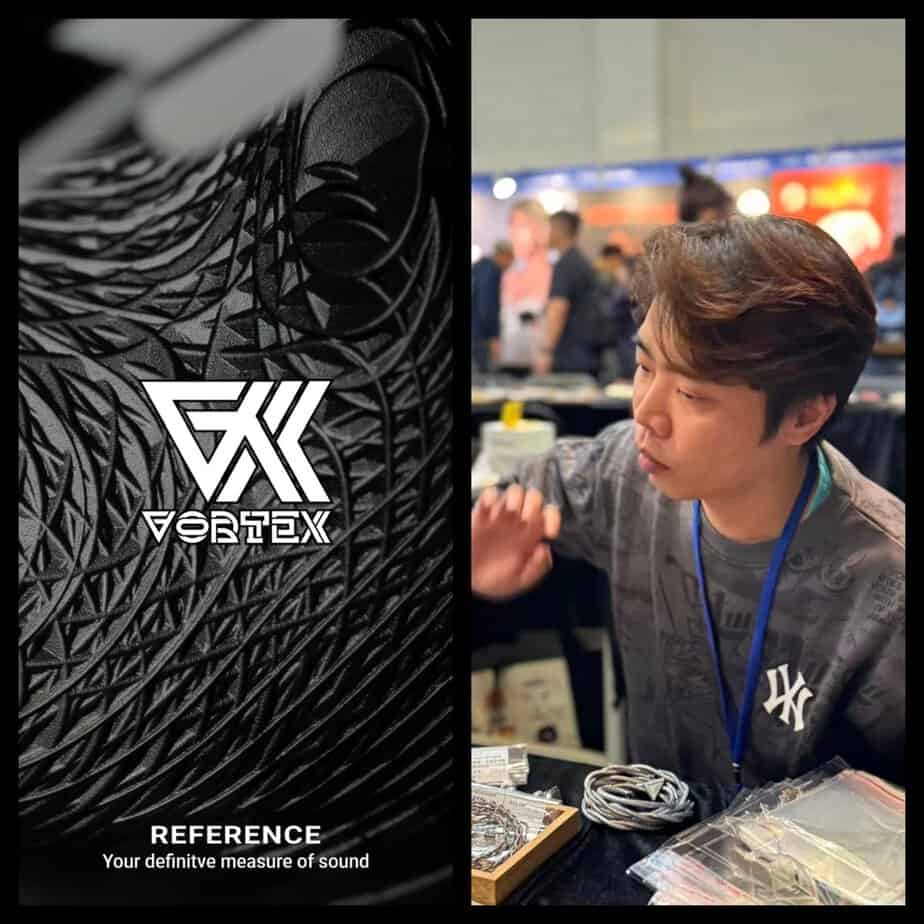
The reasoning behind the Vortex Reference, as Oscar explained in his Spill HK interview, is more nuanced than the standard product launch narrative. His team had long found that many IEMs on the market simply weren’t sensitive enough to cable changes – swapping cables produced limited and hard-to-articulate differences, which created a ceiling on what cable-rolling could achieve and communicate. For a brand whose entire purpose is demonstrating what cables can do, that ceiling was a serious problem.
The Reference is designed to remove that ceiling. Oscar calls it “a precise mirror” – an IEM with high enough resolving transparency that the differences between cables and source equipment become clearly audible and easy to identify. More than just a reference testing tool, he describes it as “a high-revealing platform” that lets users genuinely explore sound customization through cable pairing rather than being limited by the IEM itself. (Source: Spill HK interview, March 2026)
Vortex Reference: World’s First Dual MEMS Earphones
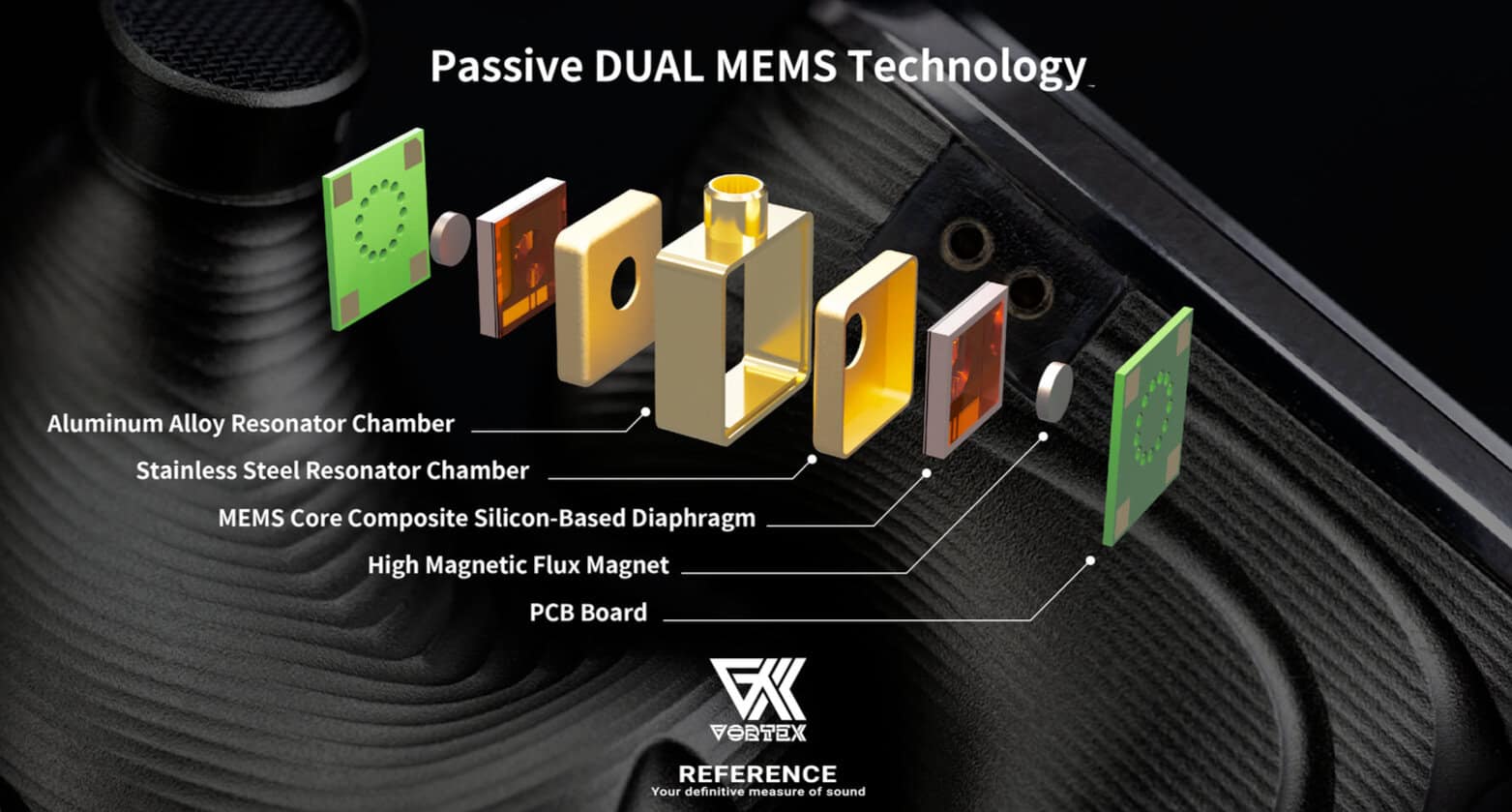
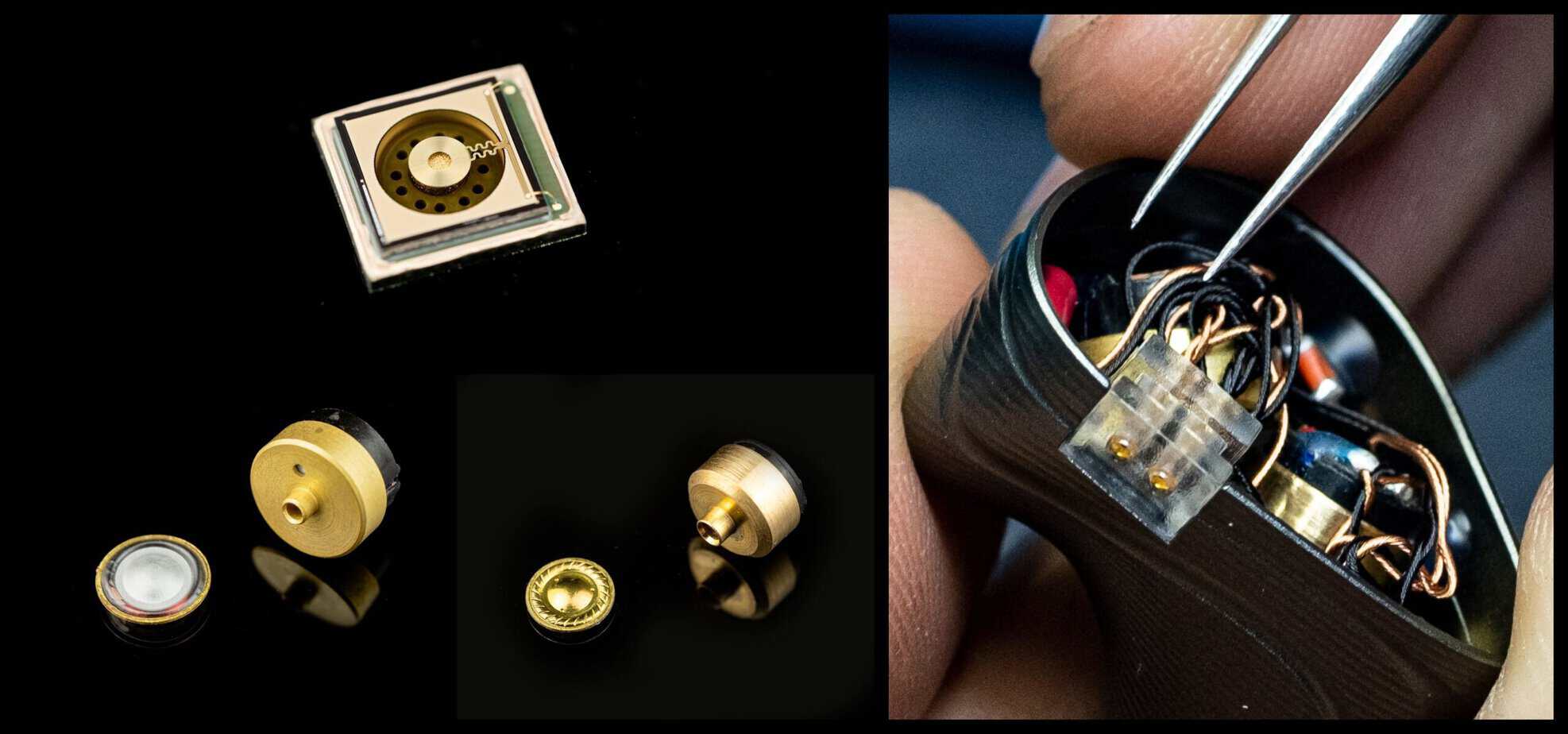
The driver configuration of Vortex Reference is 2DD+2 Passive MEMS. The dynamic drivers are divided by role: an 8mm aluminum-magnesium alloy dome woofer for the bass and a 6.5mm three-layer composite titanium-plated driver for the midrange. The highs are handled by Vortex’s passive dual MEMS tweeter system, which is the world’s first in the IEM industry. MEMS drivers carry well-documented advantages in speed, distortion control, and high-frequency extension.
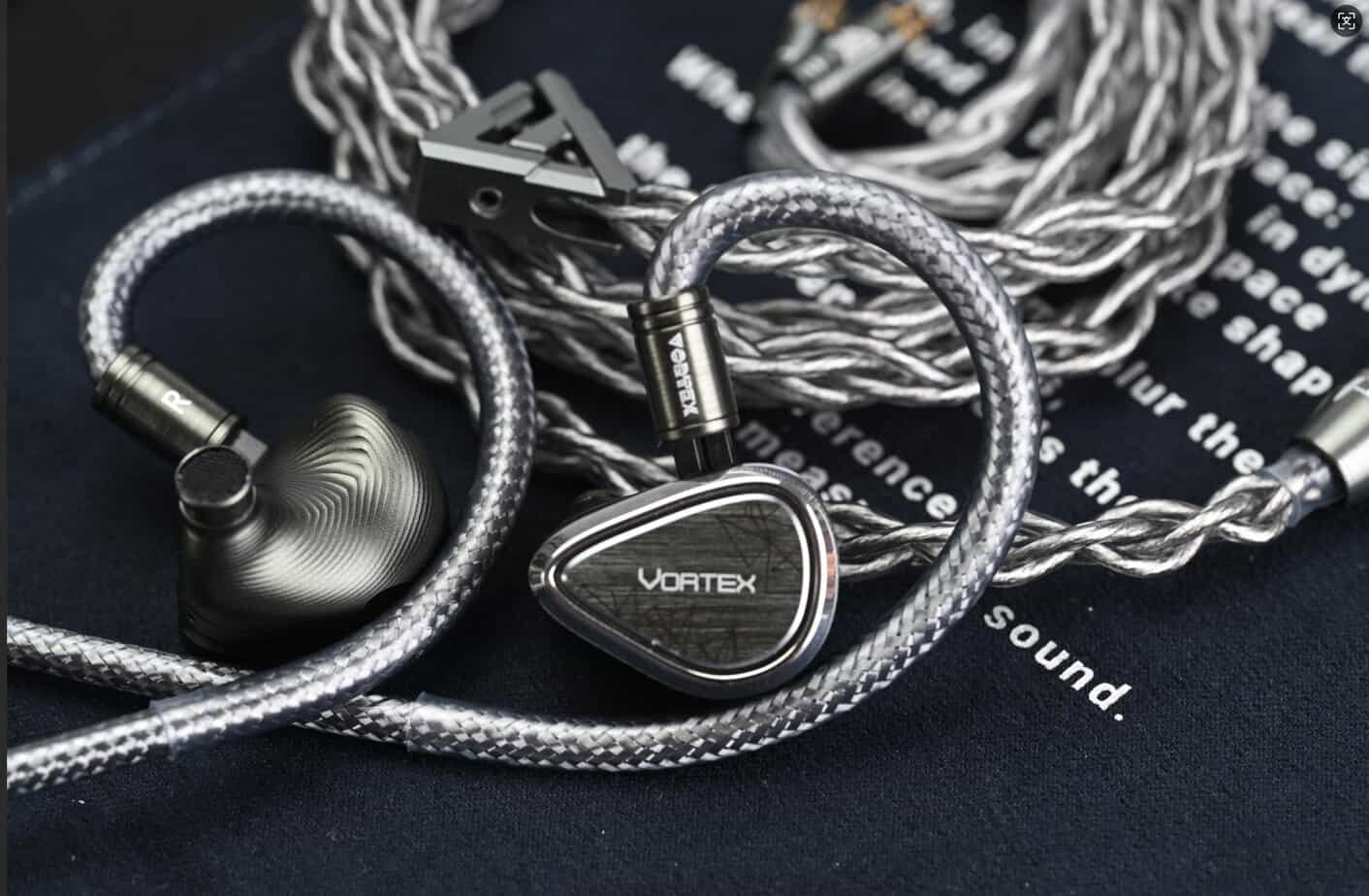
However, MEMS drivers have historically been impractical for portable use due to their high voltage demands. Vortex’s proprietary ATCC circuit integration removes that barrier, allowing the passive MEMS tweeters to be driven from any standard portable source. Internal components are premium throughout: RA resistors, ELNA audio / Vishay capacitors, 7N OCC internal wiring, and a CNC-machined aluminum shell with diamond-cut internal geometry for resonance management.
The dual stock cable inclusion is one of the more thoughtful decisions in the package. The Ultra Series Titan (2-wire) is tuned for depth and dynamic atmosphere; the Zenith Series IRIS (4-wire) is tuned for precision and clarity. Both are 4.4mm balanced. Two structurally opposing cables, as the starting point is the Reference’s core concept made literal, the platform for cable exploration begins before you’ve even bought a third-party cable. Limited to 100 pairs worldwide, each unit is hand-matched from material selection through assembly. Price is set at HKD 25,800 (~$3,299 USD). For further technical details, I recommend reading the Reference Developer Blog.
Vortex Reference Specs:
- Drivers: 2 Dynamic Drivers + 2 Passive MEMS
- Impedance: 23Ω
- Sensitivity: 102dB
- Frequency Response: 10Hz – 80kHz
- Limited: 100 pairs, individual serial numbers
- Price: HKD 25,800 (~$3,299 USD)
- Includes: Ultra Series Titan + Zenith Series IRIS cables, leather case, nylon mesh bag, polishing cloth, Nostalgia Audio XWB eartips
The Brief Sound Impressions
I’ve only had a brief moment to listen to the Reference, though I could tell the tuning was on spot with impressive technical details to it. Vortex Reference is tuned to stay “musically neutral” and transparent – not overdosing your ears with full-on excitement on first contact, though revealing and stable over longer listening. The bass has powerful, tight, and punchy transients and clean layering, while the vocals are full-bodied and natural in tone, offering very clean, immersive-sounding mid-range. The MEMS tweeters bring a high-frequency completeness that extends further and with more overtone texture than conventional tweeters without adding brightness for brightness’s sake. Staging is precise yet holographic and expansive, a type of widened headroom that doesn’t get bombastic or feel overdone.
What’s Next for Vortex & Vortex Cables
Oscar describes the Reference as only the first step. More IEM products are planned, and even over-ear headphones are on the horizon (though no specific timeline has been confirmed yet). MEMS technology will remain central to future IEM development for Vortex. On the cable side, the CFS series continues but moves to a more deliberate release model – each new cable arriving with its own fresh structure or technology rather than a regular production cadence. Vortex is also in the process of restructuring its overseas distribution network to better reach international markets at different price points.
For a brand that started because its founder got tired of looking at identical cables on a table, the Vortex Reference is a very different kind of product. But the same instinct is there – do something specific, do it with clear intent, and make sure it’s recognizable. Vortex’s first IEM checks those boxes. Whether it also checks the sonic ones is something I’ll see if I can get into properly once I have the chance and time with it. My initial impressions of the Reference were thoroughly satisfying, so if you’re looking to buy a TOTL IEM, be sure to look out for the Vortex Reference as your possible candidate before they run out.