

Compared to Canpur CP622B (Review link)
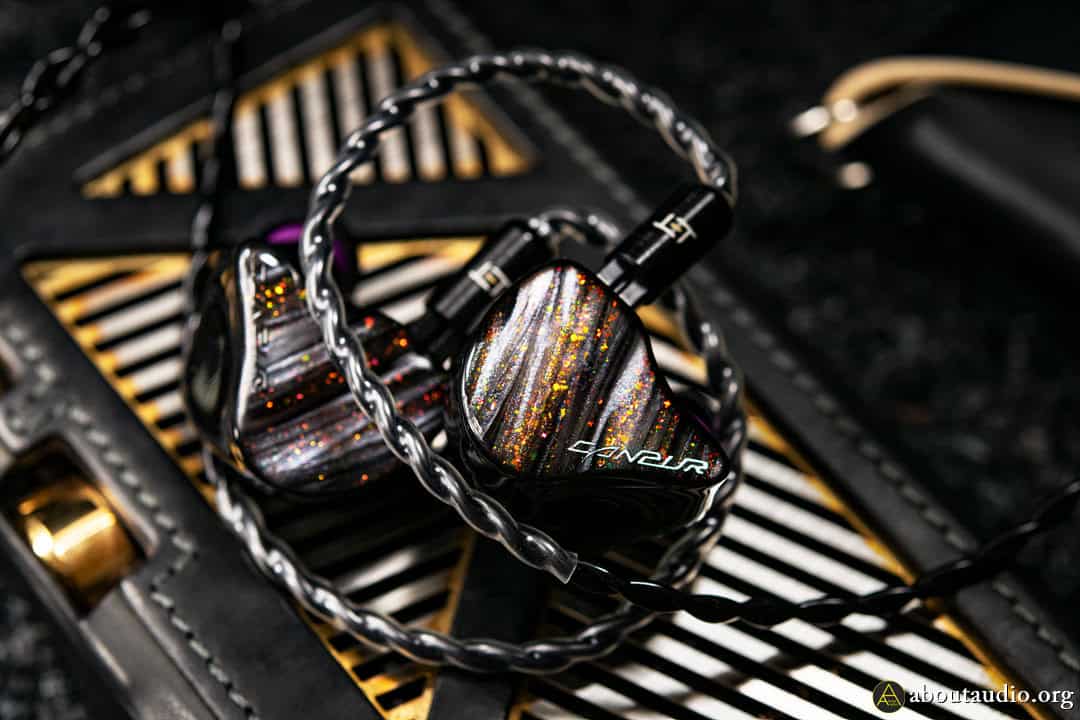
The CP622B is Canpur’s flagship reference monitor that delivers a clean, calm W-shaped sound with what I’d consider a reference-style sound wth a “dark-bright” vocal character – solemn and deeply toned while being transparent and airy at the same time. The CP622B sits on the reference side of musical, and it pulls off the balance between the two convincingly.
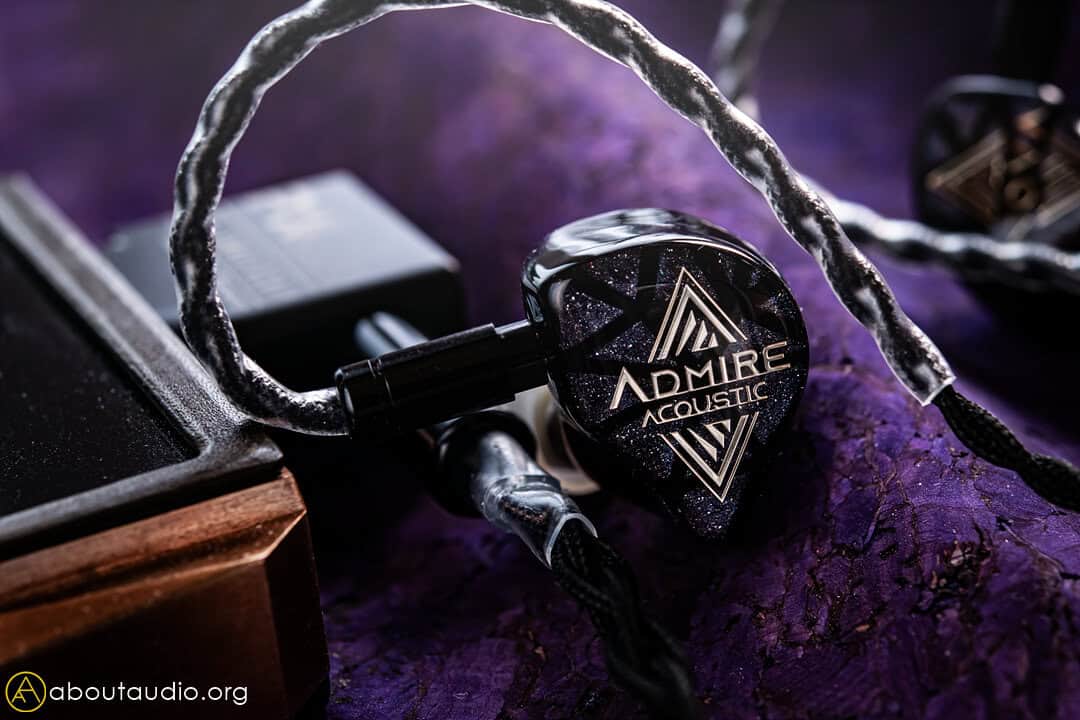
Sound signature-wise, Nova and CP622B share a fair amount of common ground. Both are W-shaped, mid-forward, and transparency-based. The difference, however, shows in how they each achieve that. CP622B’s vocals are built on a pitch-black background that makes the dark-bright tension work cleanly – the depth and the transparency coexist neatly. Nova’s mids bloom more openly, with a more radiant and lush quality that feels warmer and more forward in personality than CP622B’s more controlled delivery.
Bass also differs in character. CP622B keeps a snappier roll-off with tightened reverbs, making the low end feel cleaner and more tactile. Nova’s bass is more elastic and holographic, with more ambient presence and a longer, more natural decay. Treble-wise, CP622B’s highs are quietly penetrative – calm, detailed, and sneaky in how good they are without drawing attention. Nova’s planar-driven trebles have a tighter, more elastic response with a more natural physical decay. Both are strong, just different in character. CP622B suits those who want a more linear and reference-accurate presentation. Nova is for those who want more tonal finesse, bass damping, and holographic expansion throughout the range.

Compared to Palavox Dark Knight (Review link)
Dark Knight is Palavox’s latest 13-driver flagship IEM with BCD-assisted bass, 4 micro planar tweeters, and a W-shaped, holographic sound character. It’s a mid-centered IEM with generous reverbs and a warm, atmospheric low-end quality that offers excellent timbre and soundstage for its price.
Nova and Dark Knight share broadly similar sonic ground: both are W-shaped, mid-centric, and holographic in staging. The bass is the most immediate difference. Dark Knight’s BCD drivers add a physically resonant, dulcet depth to the low end with a slower, more room-filling roll-off. Nova’s DD bass is tighter, tactile, and has a more reference-like phasing. Nova’s bass also rolls off faster with lesser sub-bass reverb, keeping tighter control for the low ends. Nova still provides nice headroom in the way the bass spaces itself, but it doesn’t carry the lingering atmospheric warmth that Dark Knight’s BCD reverbs create. Dark Knight has the advantage for a bass that breathes slowly and fills the room. On the other hand, Nova would suit better if you’re looking for a type of bass that is more controlled and with cleaner vibrations.
In the mids, both are lush and prominent, though Nova’s upper-mid transparency and vocal resolution push it ahead in transparency and brightness. Dark Knight’s mids carry a slightly warmer and darker tone; Nova’s bloom more openly with more upper-mid clarity and shine. For trebles, both use planar drivers, though Nova’s highs give it a crisper sparkle while Dark Knight is relatively (yet only slightly) smoothened for better listening comfort. The way how these two IEMs create the soundstage differs greatly, with Dark Knight focusing on the expansion that scales larger in sheer size, whereas Nova creates a relatively smaller, more compact, and orderly staging; Nova offers superior front-back layering, vertical depth, and distancing.
Compared to Eminent Ears Ruby (Review link)
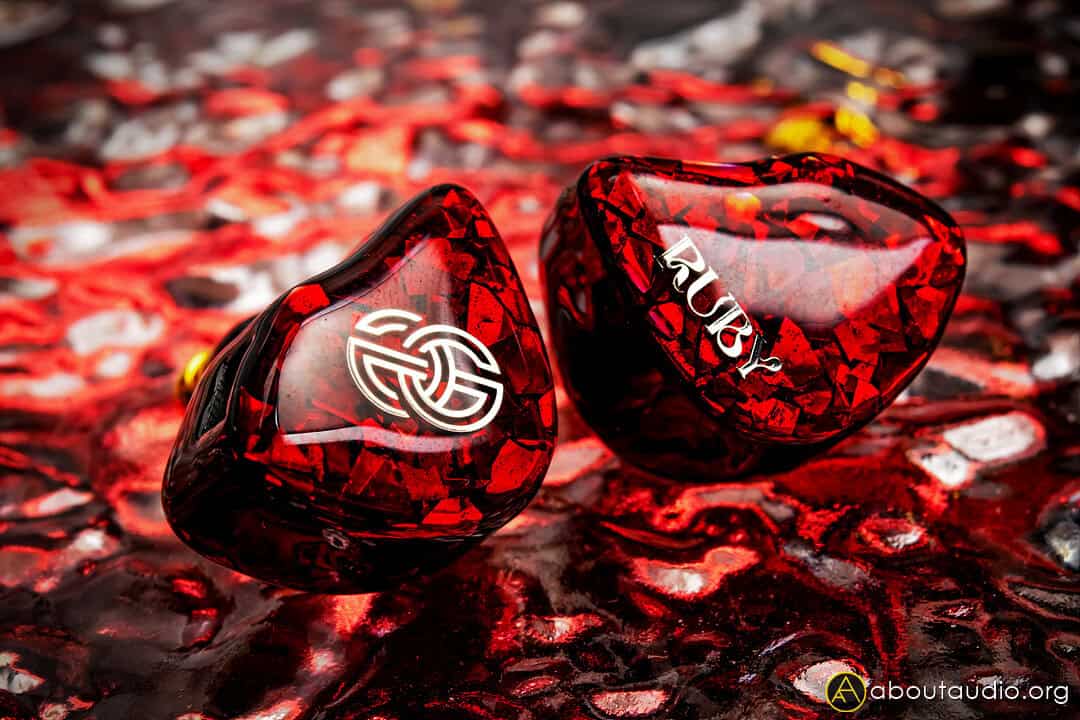
Ruby is Eminent Ears’ signature flagship IEM, a 1DD+4BA+4EST tribrid at $2,300, and perhaps the closest match to Nova’s overall character of any IEM in this comparison section. Ruby has a cheerful, clarity-forward sound with a neutral-bright vocal presentation, strong bass extension, and one of the finer treble separations in its price range. The two share a similar W-shaped character and vocal-forward philosophy that makes the comparison particularly meaningful.
Nova is, in many ways, a direct step up from what Ruby does. The tonal signature and overall direction are familiar, though Nova refines and deepens every part of it. Nova’s mids are more vibrant and holographic, with better phasing accuracy, frequency stability, and a more thorough resolution across the vocal range. Where Ruby’s vocals are crisp and up-close, Nova’s expand larger into the stage with a lot more natural, spatial completeness.
The highs follow a similar pattern. Ruby’s treble is refined and airy, with strong separation and good extension for its driver config. Nova’s planar-driven highs go further in precision and natural decay – the treble texture disperses more finely, and the response feels more elastic and realistic. Ruby’s highs are a strong point on their own terms; Nova’s are simply more complete.
Where Ruby firmly holds its ground is the bass. Ruby’s dynamic driver delivers a fuller, more impactful, and more present low end than Nova’s more reserved and controlled sub-bass. Ruby hits harder and digs deeper in quantity, and the bass is genuinely one of Ruby’s most defining traits. Nova’s bass is more tasteful and accurate in phasing, but it doesn’t match Ruby in raw impact or physical presence. For those who put bass weight high on the priority list, Ruby remains the more satisfying choice in that area. For those who want better vocal quality, more holographic staging, and more refined treble, Nova is the more complete product.
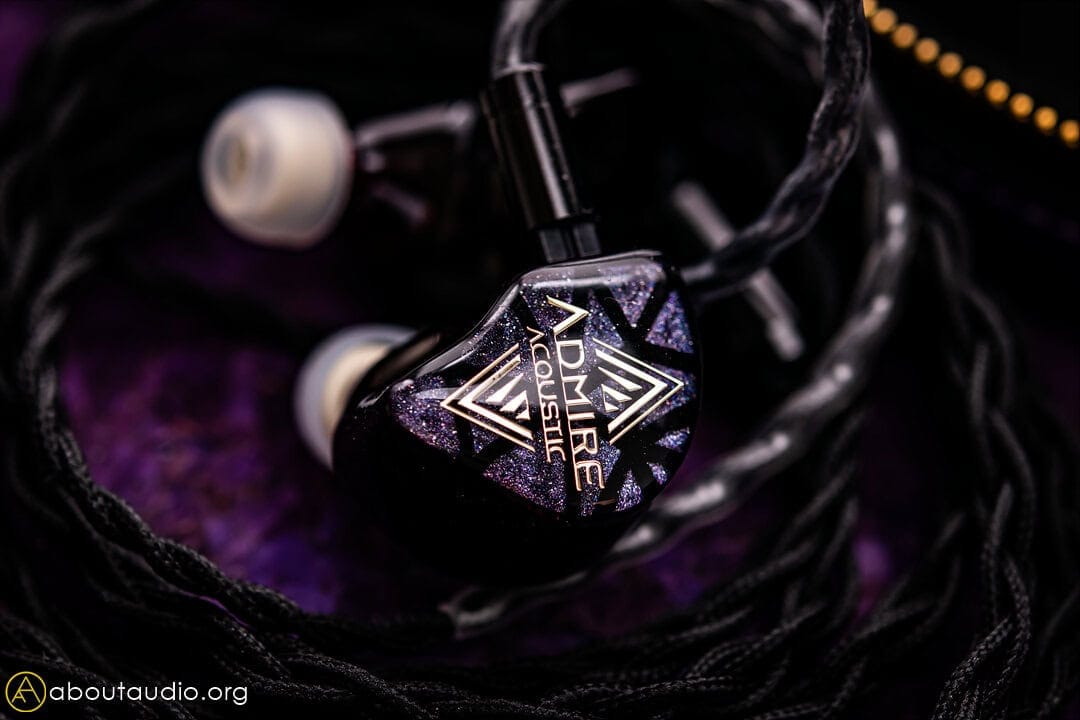
The Magician of Elastic, Holographic Music…
I would say Admire Acoustic came well prepared as it enters this competitive, hard-to-survive industry. Nova is a fine example of what a debut flagship must have, which is to have strictly demanding performance, as well as a distinctive sound identity that settles its purpose on why people should choose Nova over existing TOTL IEMs. In the midst of numerous pitches and products pouring into the portable audio hobby, Admire Acoustic Nova’s P.F.I. tuning mechanism was sure more than enough to burn a permanent place in my head with its natural yet incredibly holographic tuning.
After various A/B testing and in-depth listening, Nova earns its price through lively ambiance and holographic sound, easily competing with flagships priced considerably higher. Those who lean toward deep, powerful bass presentations or warmer, darker signatures will find other options more satisfying – since Nova’s bass is controlled and tasteful rather than aggressive in quantity, and the upper-mid energy may not suit all genres or all ears. But for those who prioritize vocal radiance, holographic precision, and rich planar treble refinement, Nova will be a very special choice for you to make. I’m sure keeping my eyes on Admire Acoustic and would also recommend you do so!