


Letshuoer Sonata Review: My Sincere Muse
Letshuoer is a brand that most of you would already be familiar with. Some of you may remember them all the way back as Shuoer, and since then they’ve grown into a brand that makes popular flagship IEMs such as the EJ series and the Cadenza 12. They’ve also been making noise for quality planar IEMs such as the Letshuoer Ember (Review link), which we’ve reviewed recently.
Today we’re reviewing their newest top-of-the-line flagship, the Sonata. Being the successor to Cadenza 12, Sonata is a 10-driver tribrid IEM using 2 isobaric dynamic drivers, 4 Knowles BAs, and 4 Sonion EST drivers per side, housed in a titanium shell and priced at $2,300. Let’s take a look, see how it sounds and compares with other IEMs!
Packaging – What’s Inside the Box?
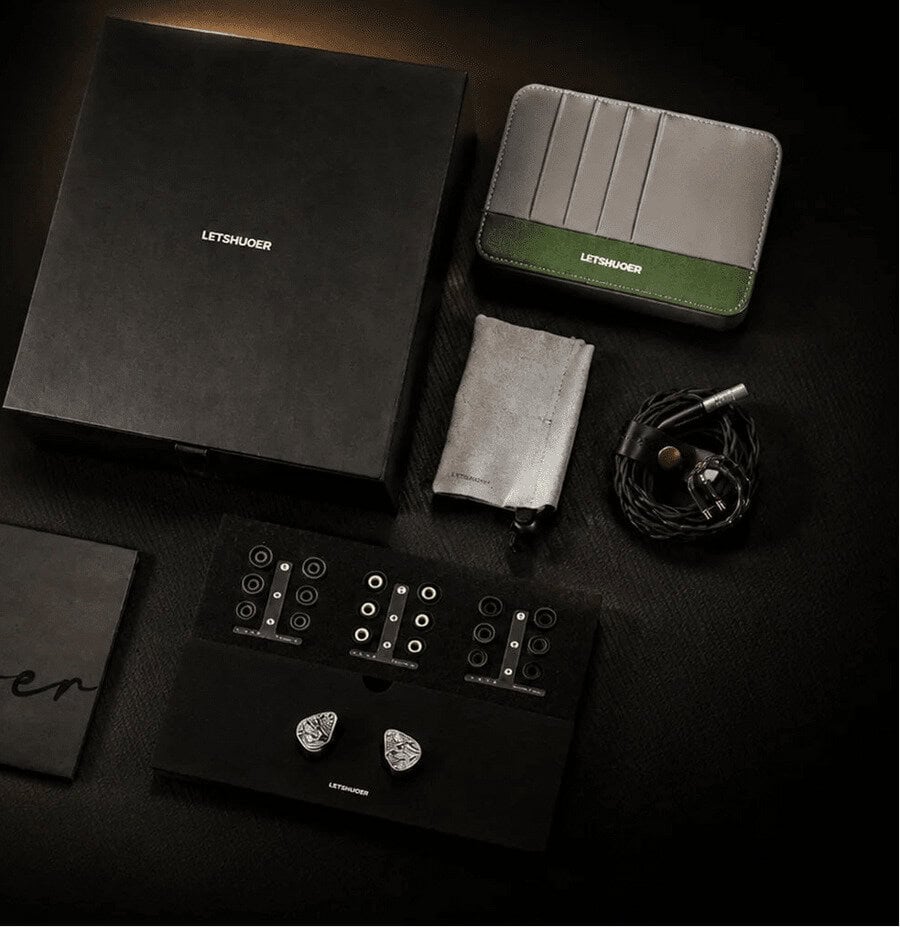
Sonata comes in a large leather box with embossed decorations. Once opened, the earpieces sit in the front section along with the carrying case, and the eartip tray and accessories are placed below. Other than the earpieces,
Sonata comes with a 4.4mm stock cable, an ‘Ultrasuede’ calfskin carrying case, velvet earpiece pouches, 9 pairs of silicone eartips (3 different types), and some paperwork and a product catalogue. The leather carrying case also has foam cut-outs for the eartips and removable separators, which is a thoughtful touch for keeping things organized.
Beautifully-designed, Fully Titanium Earpieces…
Sonata uses a tribrid setup of 10 drivers per side. The lows are handled by two 8mm dynamic drivers in isobaric push-pull configuration, 4 Knowles balanced armatures take care of the mids and highs, and 4 Sonion EST drivers cover the ultra-highs. These are divided by a 3-way crossover, and the sound travels through four acoustic tubes that control each driver group’s output separately.
For those who aren’t familiar, an isobaric design pairs two dynamic drivers with a sealed air chamber in between, so that they move as a single unit. In a push-pull setup, the two drivers face opposite directions and are wired in reverse polarity, which aims to cancel out distortion while keeping better control over the diaphragm. We’ll talk about what this does to the sound in the sound impressions.
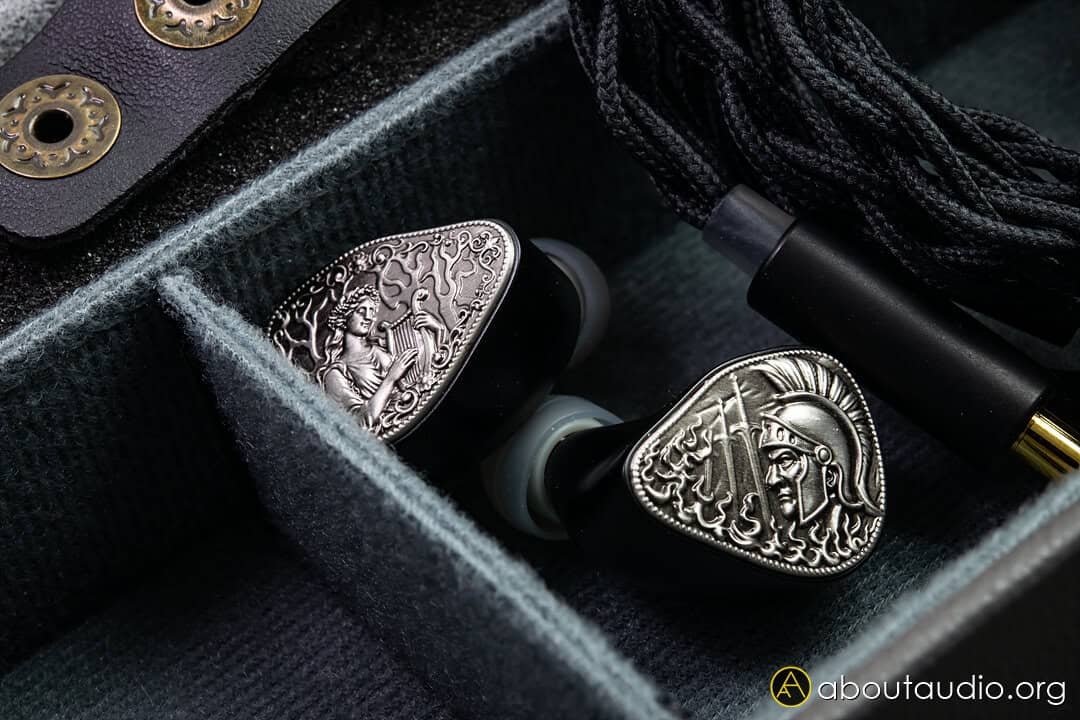
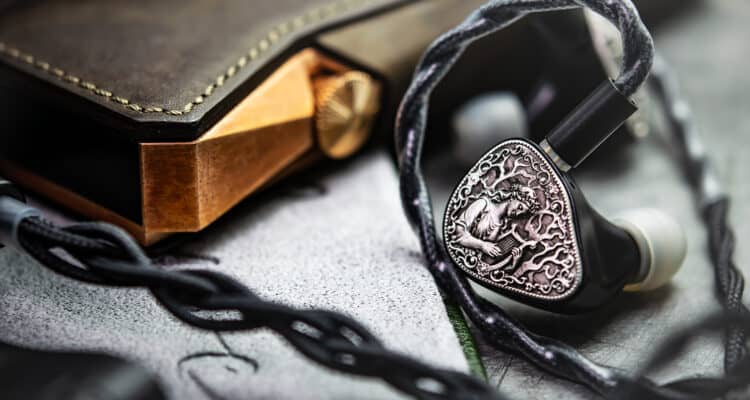
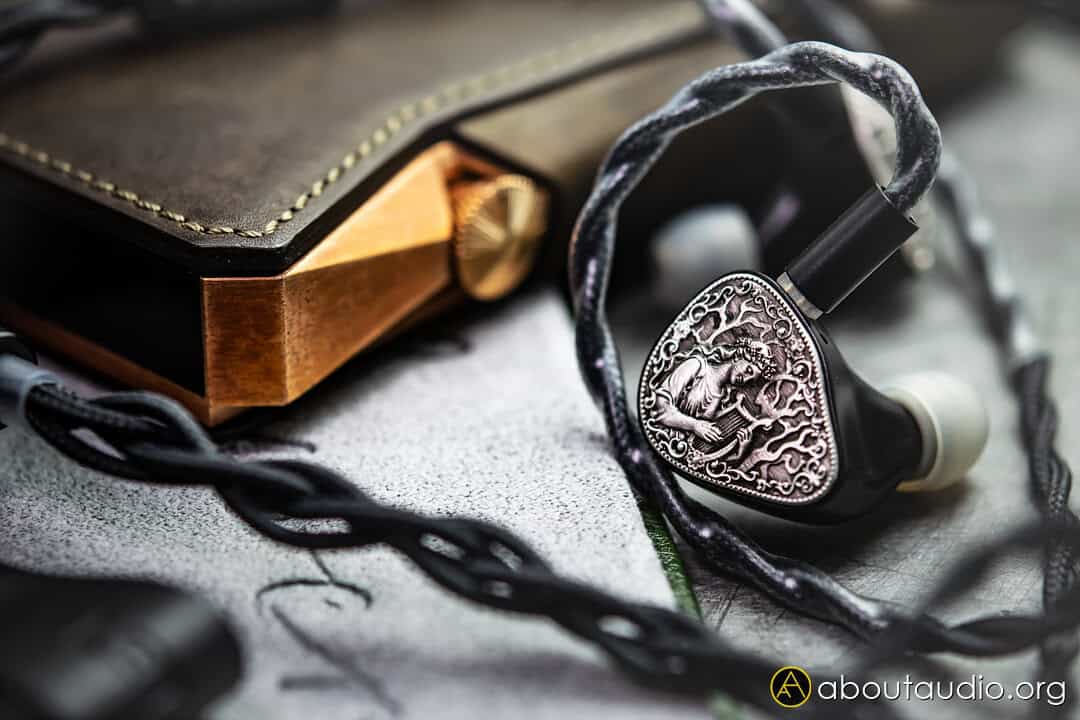
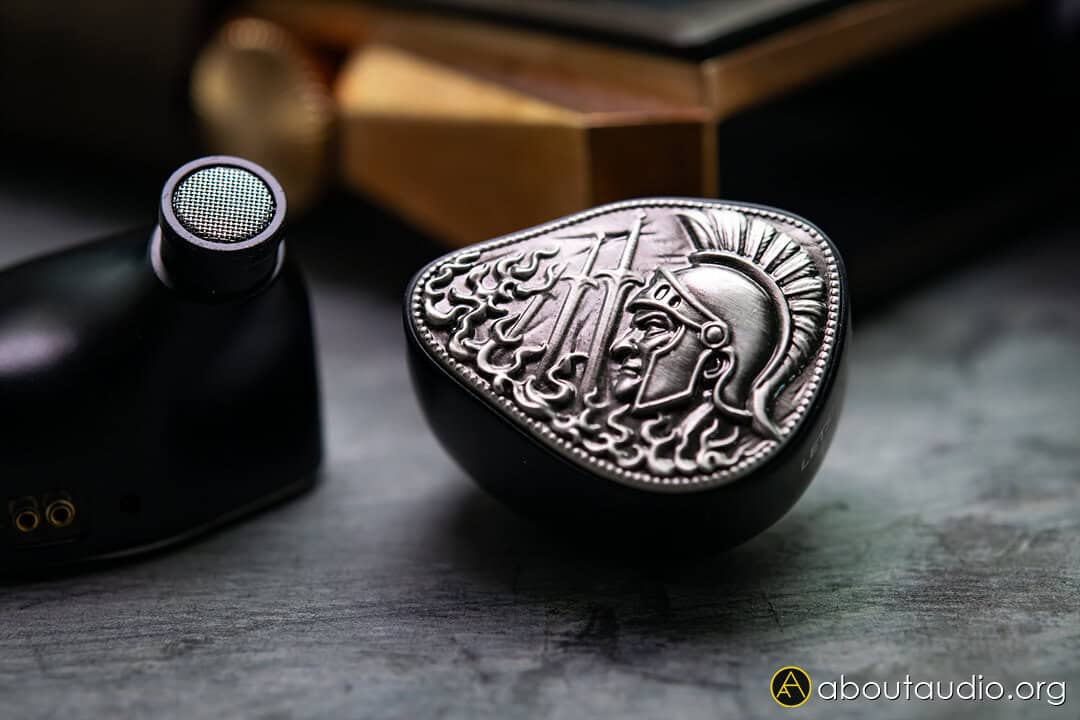
The shells are CNC-machined from titanium alloy and finished in matte black, designed by Letshuoer to be light, rigid, and ergonomic. The faceplates are made of silver-plated brass with CNC engraving and an antique silver finish. Following a Greek mythology theme, each side carries a different artwork: the “Armor” side on the left with an armored warrior, and the “String” side on the right with a woman playing a lyre. Quite fitting for an IEM I’d call a muse.
The fit is comfortable and secure, as the compact titanium shells sit snugly in the ears without putting much pressure on them. However, since the earpieces are fully made of titanium, it does carry more weight than your average resin-shell IEMs. It wouldn’t come off especially heavy if you’re familiar with metal shells, though otherwise, you may need to consider these as it won’t be as light as you’d think. However, unless you’re thinking of using these while jogging or for active outdoor usage, the weight would be manageable.
Further detailed specifications of Sonata are as follows:
• Drivers: 2DD (8mm, isobaric push-pull) + 4BA (Knowles) + 4EST (Sonion) per side
• Crossover: 3-way, 4 acoustic tubes
• Shell: CNC-machined titanium alloy, matte black
• Faceplate: Silver-plated brass
• Impedance: 22Ω
• Sensitivity: 102dB @1kHz
• Frequency Response: 20Hz – 40kHz
• Connector: 0.78mm 2pin
• Plug: 4.4mm balanced
• Price: $2,300
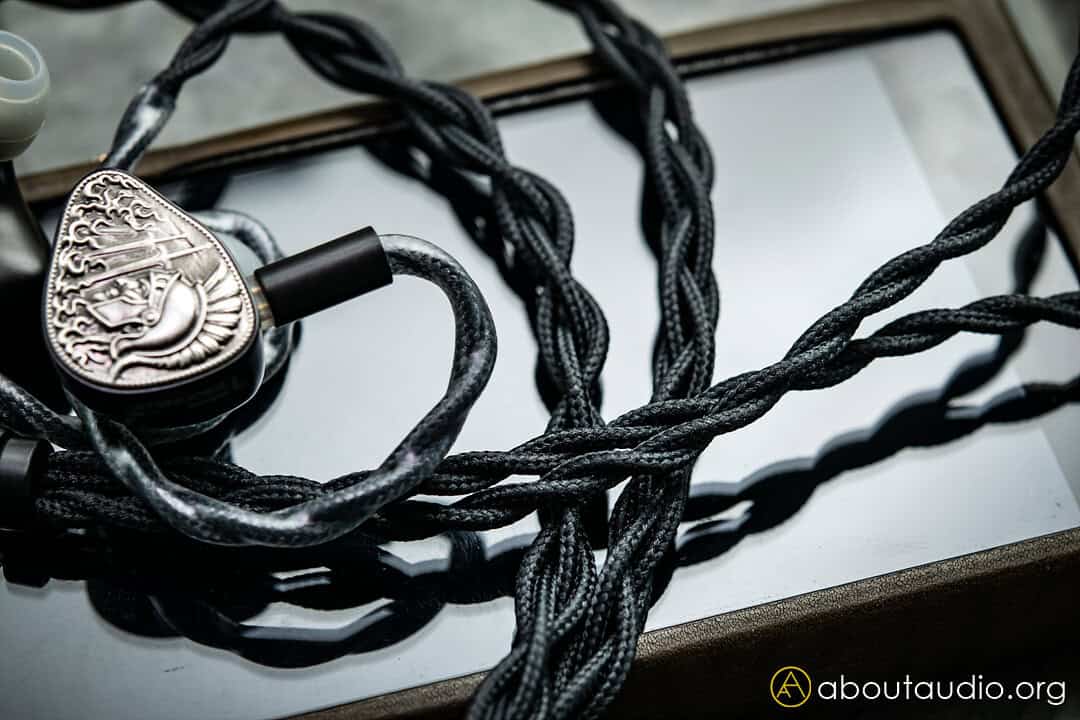
Custom-grade Hybrid Stock Cable
Sonata uses a fabric-finished stock cable with a 4-braid design. Having 280 cores in total, Letshuoer includes a custom-grade cable that is a hybrid braid of single-crystal copper and SPC. It’s 1.3m long and terminated in 2pin-4.4mm. The stock cable is also on the heavier side than your average custom cables – but similarly to the earpiece’s situation, if you’re used to fabric-finished cables, then this won’t be something out of the ordinary. Though otherwise, if you intend to use them actively on-the-go or are sensitive to microphonics, I would also suggest exploring non-fabric custom cables as alternative cable options.
Next Page: In-depth Sound Impressions / How does Sonata Perform?