


Kinera Freya Vanir Review: The Budget Rebellion
Kinera started out as a brand built around great value, and even now, with a full line of high-end flagships, I always look forward to what Kinera has to offer at an affordable price. Their budget models have a habit of punching far above their price tag, and the one we have today is no exception.
I first got to hear Freya Vanir this summer at an audio expo, where I tried a wide range of upcoming IEMs. Among the ones under around $500, a few caught my ear – one was the Ice Lab Lumira, and at a lower price, Freya Vanir was easily the standout. I also got to try Kinera’s higher models like the Mimisbrunnr and Nott Strider, yet when I heard Freya Vanir’s planned price, I had to doubt my ears. That’s how well-made it is.
Freya Vanir is the third generation of the Freya series, following the original Freya and the Freya 2.0. It’s a 5-driver tribrid IEM using 1DD+3BA+1MEMS per side, priced at $299. While flagship IEMs these days come in brutally large shells, Freya Vanir is small and cute in size – yet its performance and tuning are anything but small. Let’s take a look at how it sounds and compares with other popular IEMs.
Generous Accessories & Premium Packaging
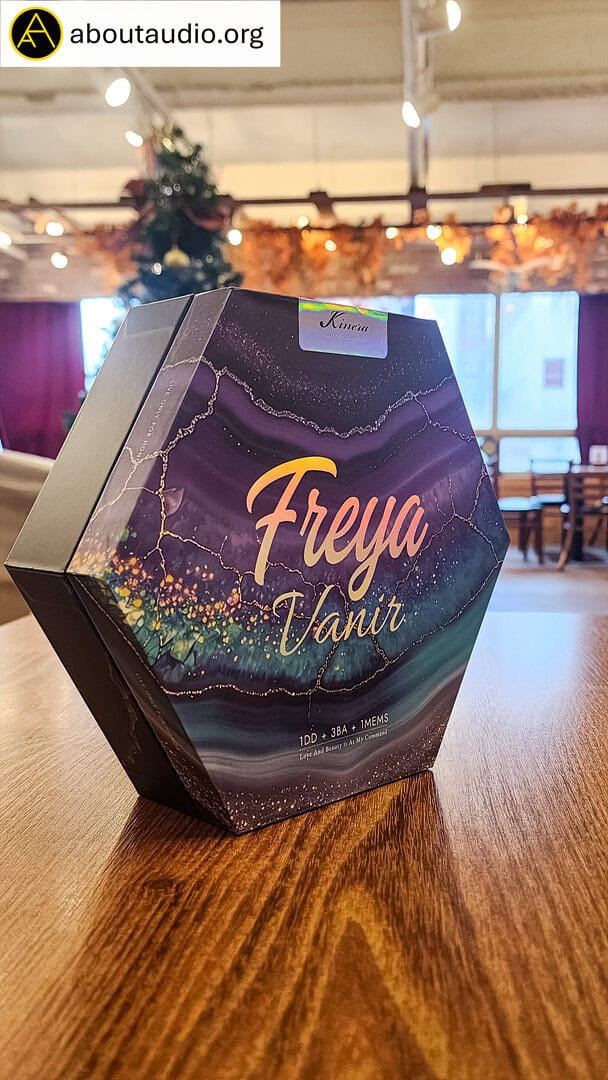
Those who have used Kinera products before will be familiar with the hexagonal box by now. Even though Freya Vanir sits in Kinera’s budget lineup, it comes with nearly the same accessories and packaging as their high-end models. Kinera’s boxes are so pretty that they’d work nicely as home decor – if you have some spare room for it, that is.
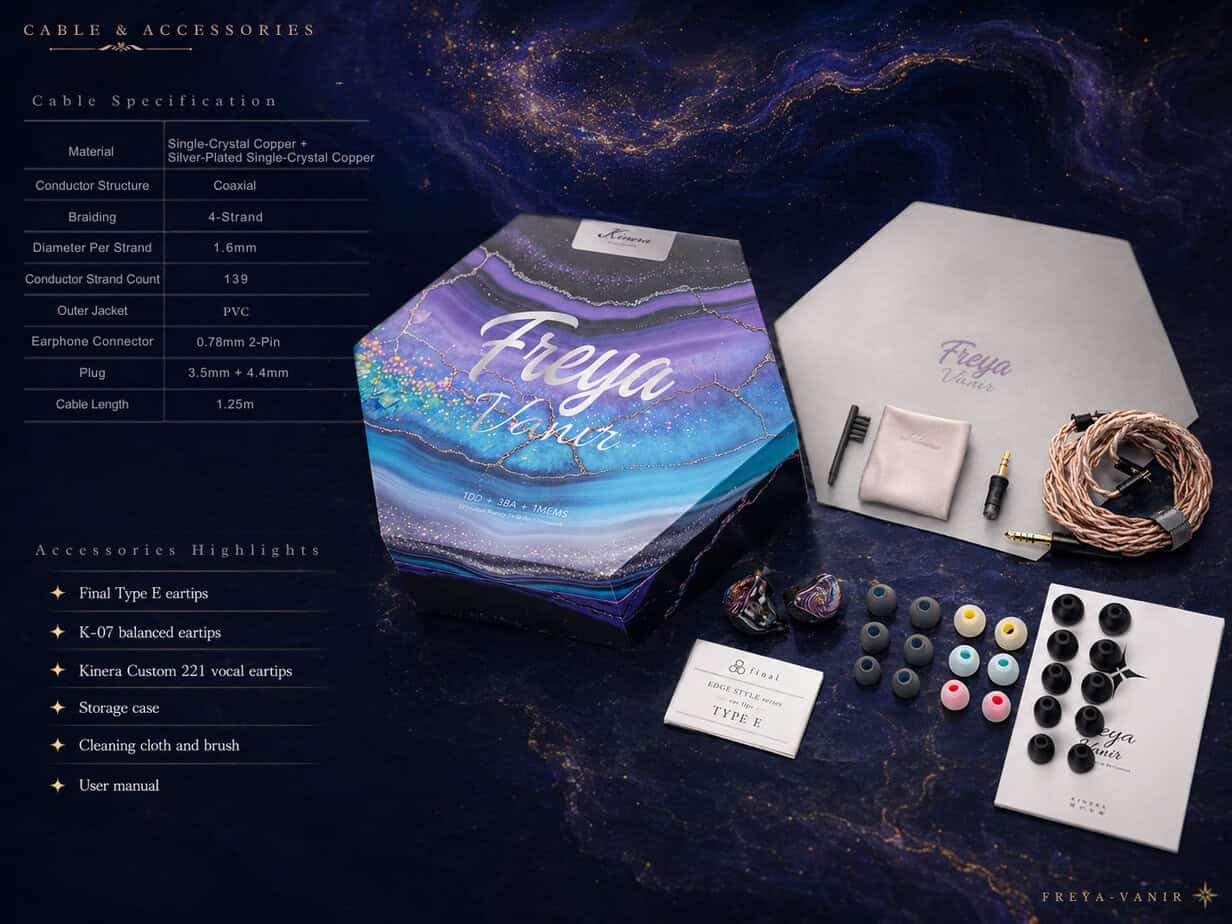
Inside, you’ll find the earpieces along with a carrying case, the stock cable with interchangeable 3.5mm and 4.4mm plugs, a cleaning cloth, and three types of eartips – including a full set of Final Type E tips.
Five-Driver Earpieces: 1DD+3BA+1MEMS
Freya Vanir uses a 5-driver tribrid setup per side: an 8mm liquid dynamic driver for the lows, 2 Knowles BAs for the mids and upper mids, a custom BA for the highs, and a dedicated MEMS driver for the ultra-highs. These are bound together with a precision 4-way crossover.

Handpainted Design: Arguably the Most Beautiful IEMs
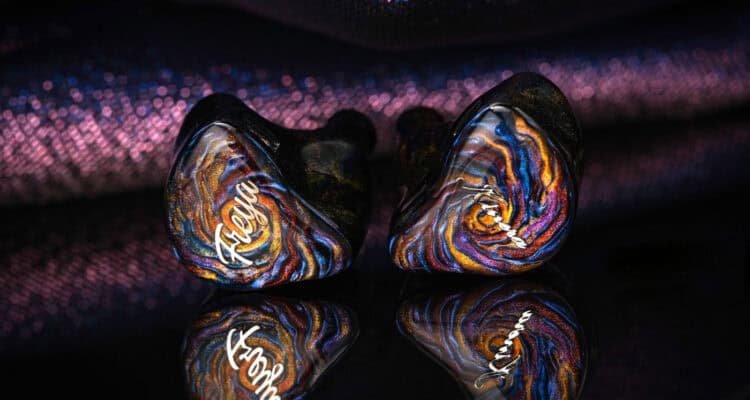
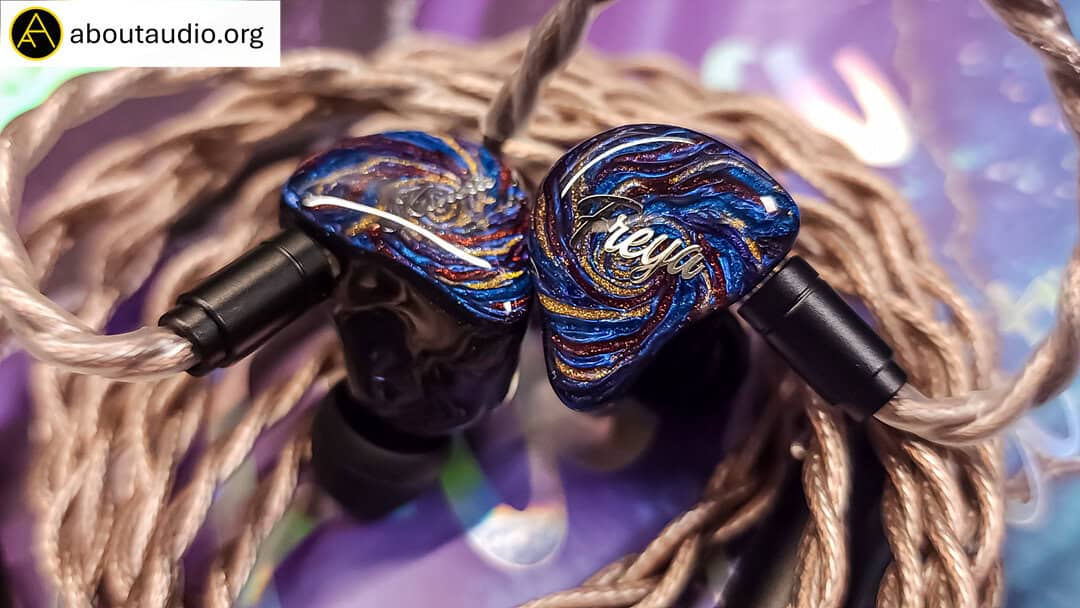
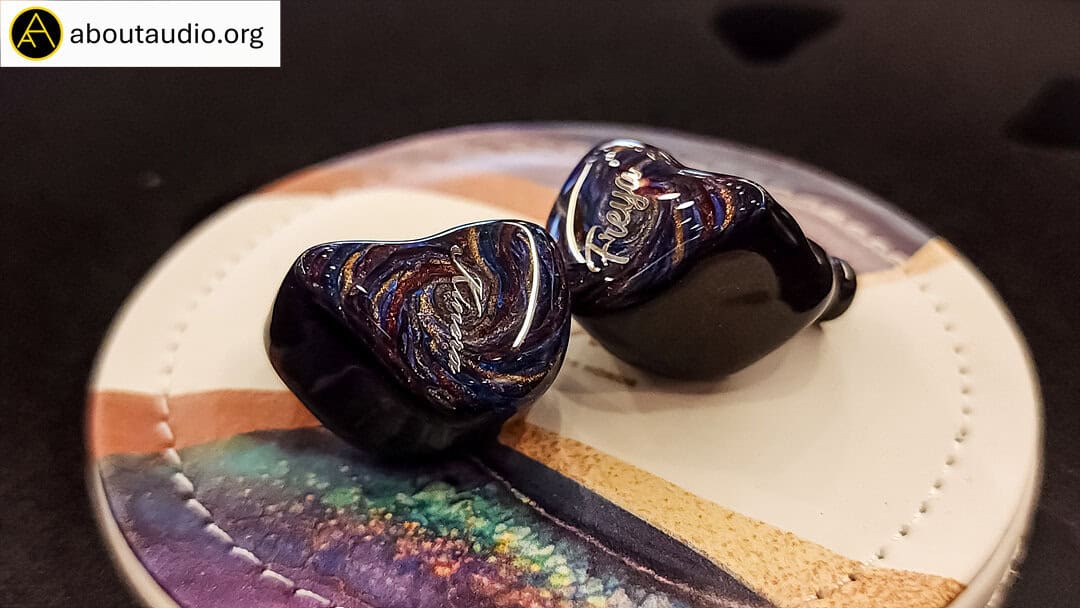
Freya Vanir is arguably one of the most beautiful IEMs I’ve seen under $1000 – or, in fact, regardless of price. One of the key highlights of Freya Vanir is that the faceplates are hand-painted, which is extremely rare to find at a sub-$300 price.
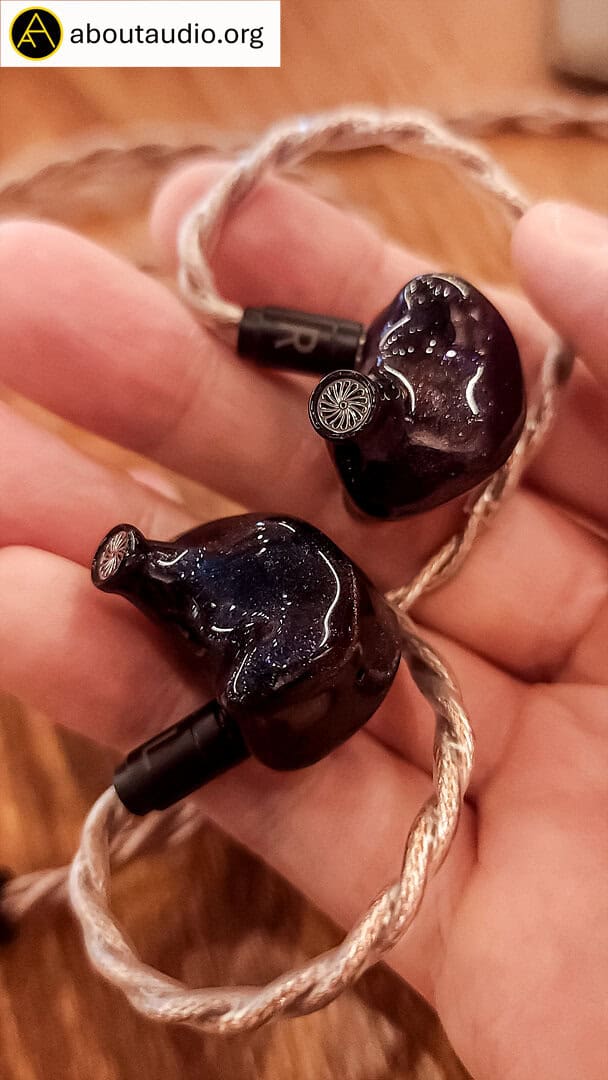
The design is called ‘Stellar Journey’, with swirling nebula patterns in indigo, violet, and gold – the indigo standing for the deep space of the Nine Realms, and the gold for Freya’s golden tears. As every pair is painted by hand, the color flow and patterns differ slightly from one unit to another. The faceplate design and color factors remind me of the Kinera Loki Divine Mark.

Compared to Freya 2.0, the shell is smaller overall, and the contours have been reshaped to put less pressure on the outer ear. It’s lightweight and compact, so the fit should be comfortable for most ears even during long listening sessions.
Freya Vanir’s design could easily look too much or flashy, yet it doesn’t stand out awkwardly in real use. The earpieces aren’t large, and the paint takes on light and shadow depending on the angle. On the inner side, the shell has a subtle layer of pearl like a galaxy in the night sky, which looks almost black unless light shines on it.
Kinera Freya Vanir Specifications
• Drivers: 1DD (8mm liquid) + 2BA (Knowles) + 1BA (custom) + 1MEMS per side
• Crossover: 4-way
• Faceplate: Hand-painted ‘Stellar Journey’ nebula
• Impedance: 16Ω
• Sensitivity: 106dB/Vrms @1kHz
• Frequency Response: 20Hz – 20kHz
• Connector: 0.78mm 2pin
• Plug: 3.5mm + 4.4mm interchangeable
• Price: $299
Custom-Grade, Modular Cable
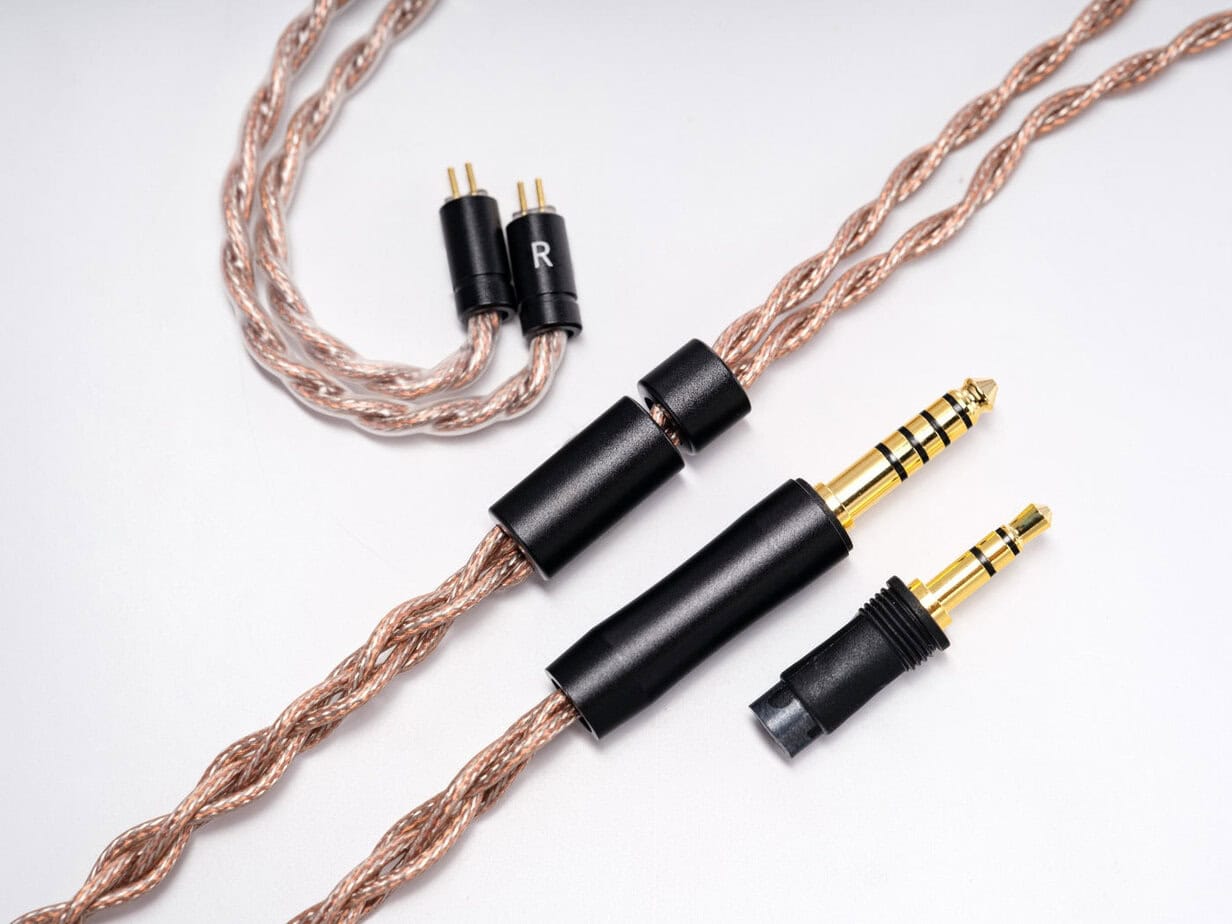
Freya Vanir’s stock cable is a 1.25m coaxial cable in a 4-strand braid, mixing single-crystal copper with silver-plated single-crystal copper across 139 wires. It uses standard 0.78mm 2pin connectors and comes with interchangeable 3.5mm and 4.4mm plugs, so you can switch between single-ended and balanced sources without an adapter.
The cable is higher quality than average IEMs in this range and feels nicely made. The cable being a bit thick and weighty makes the cable presence more noticeable than thinner cables, though the weight is manageable. The wires are not the softest but not stiff either; I’d say it’s more due to the thickness of the wires. Freya Vanir’s stock cable comes with a smooth chin slider and no noticeable microphonics. It’s a step above what you’d normally expect from a stock cable at this price. However, if you’re into a light, fully EDC (everyday carry) friendly cable, the stock cable may feel a bit clunky and weighty. I’d suggest a cable swap in such cases.
Next Page: In-depth Sound Impressions / How does Freya Vanir Sound?