


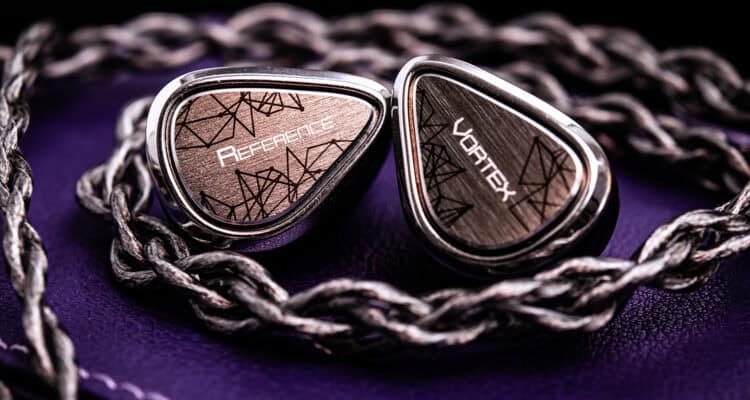
Vortex Reference Review: The New Standard, the Vortex Way
If you’ve been following About Audio lately, the Vortex Reference shouldn’t come as a complete surprise. We already covered this one through a First Impressions post a while back, and the response since has made it clear that this is a product that earned its conversation. For those who missed the preview, the short backstory is this: Vortex Cables, the Hong Kong cable brand behind the Zenith Series and the Ultra Series lineups, built their own IEM from scratch. Not as a collaboration product, not as a side experiment, but as a fully engineered product born out of a problem they couldn’t solve with what was already on the market. After extended listening time and thorough cable comparisons with both stock pairings and aftermarket options, here’s the complete picture.
The brand background and the “why a cable brand needed its own IEM” story is covered in full in the preview post, so I’ll skip repeating it here. In short: Vortex needed a high-revealing reference platform for cable evaluation, couldn’t find one that met their standards, and built it themselves. Priced at HKD 25,800 ($3300 USD), limited to 100 pairs worldwide, and powered by a 2DD+2 Passive MEMS driver configuration – here’s the full review.
Why a Cable Brand Needed Its Own IEM
The reasoning behind the Vortex Reference, as Oscar explained in his Spill HK interview, is more nuanced than the standard product launch narrative. His team had long found that many IEMs on the market simply weren’t sensitive enough to cable changes – swapping cables produced limited and hard-to-articulate differences, which created a ceiling on what cable-rolling could achieve and communicate. For a brand whose entire purpose is demonstrating what cables can do, that ceiling was a serious problem.
The Reference is designed to remove that ceiling. Oscar calls it “a precise mirror” – an IEM with high enough resolving transparency that the differences between cables and source equipment become clearly audible and easy to identify. More than just a reference testing tool, he describes it as “a high-revealing platform” that lets users genuinely explore sound customization through cable pairing rather than being limited by the IEM itself.
The Unboxing: Premium & Practical
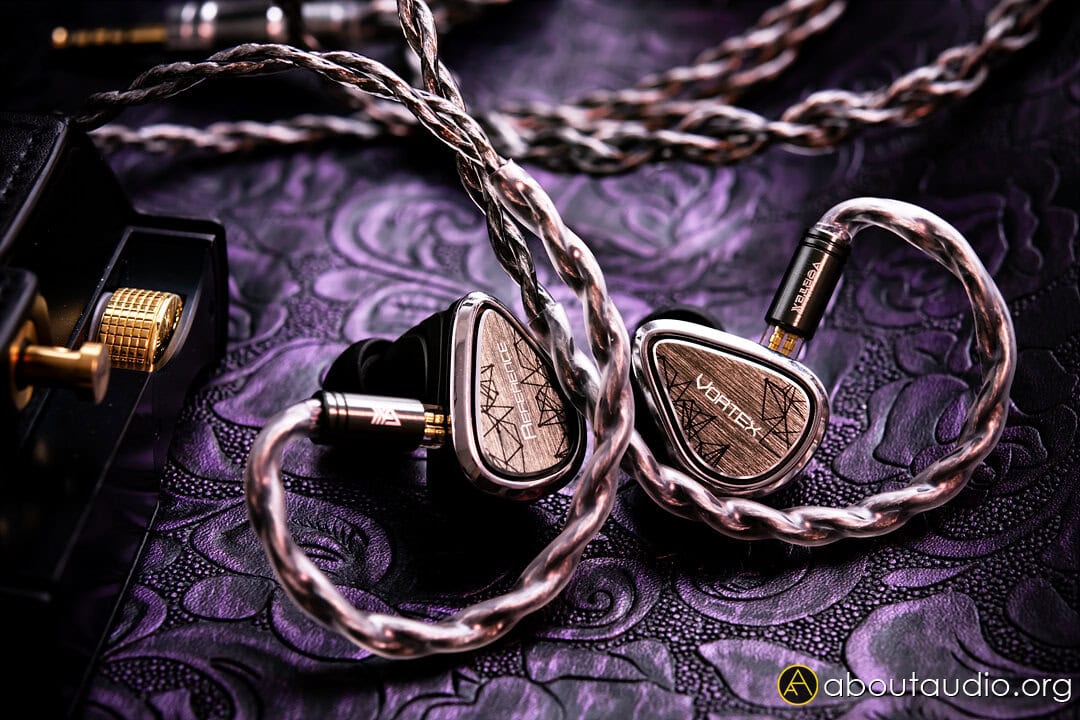
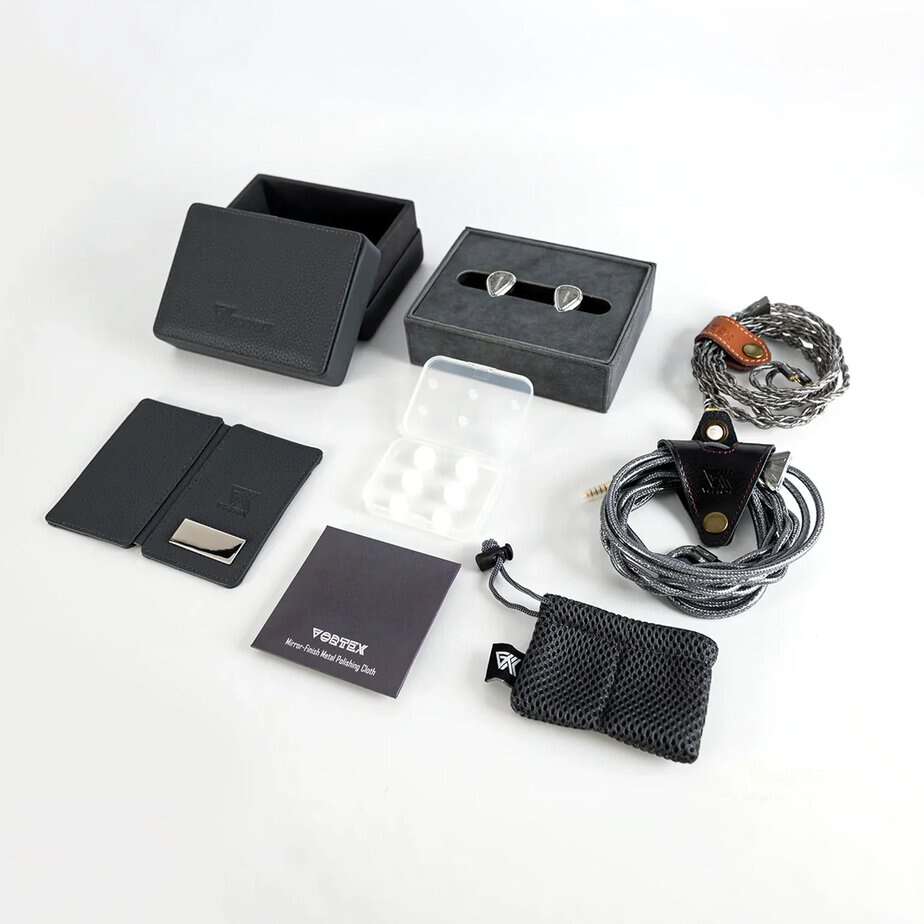
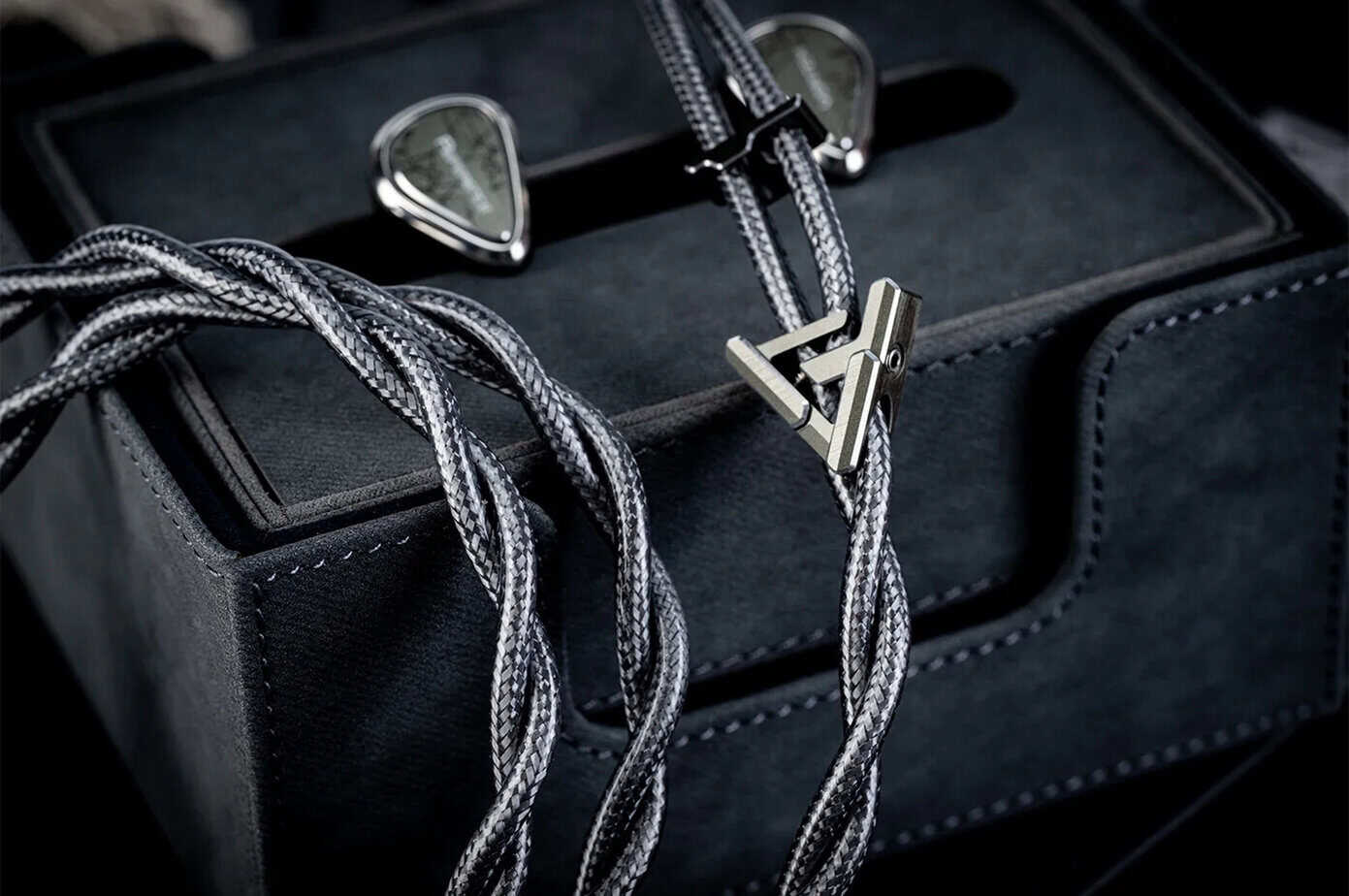
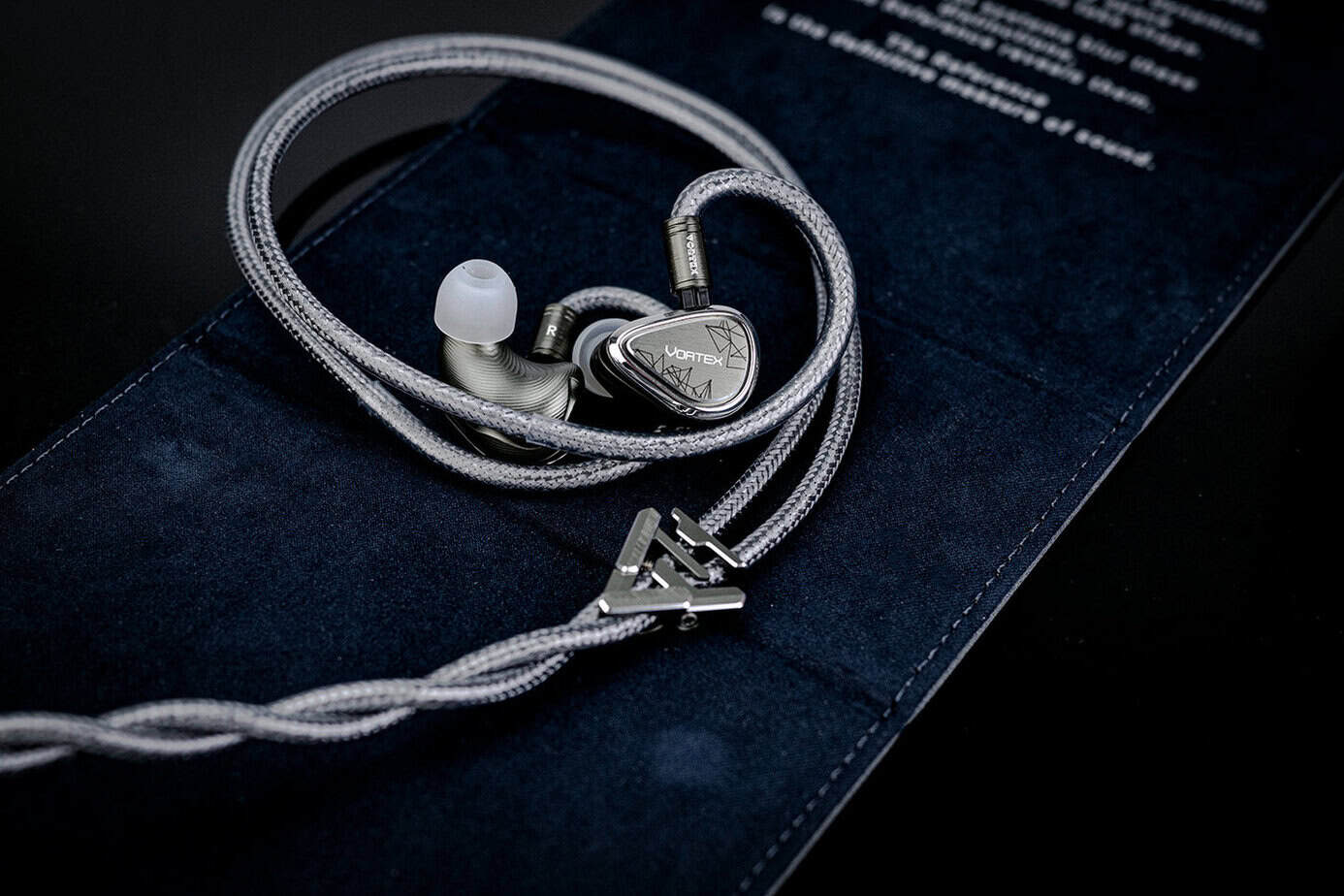
The Reference arrives in a leather protective case with a nylon mesh protection bag alongside, a mirror-finish metal polishing cloth, a packet of Nostalgia Audio XWB eartips, and both the Titan and IRIS stock cables. It’s a practical and clean set of accessories – nothing theatrical, nothing missing. The leather case is well-proportioned for daily carry and spacious enough to house both the IEMs and a cable comfortably. I like how Vortex intended this product to be used and for the accessories to remain practical and usable – seriously, and over time.
What’s in the box:
- Vortex Reference IEMs
- 1.2m Vortex Ultra Series Titan silver-plated copper cable
- 1.2m Vortex Zenith Series Iris silver-plated copper cable (both equipped with 4.4mm balanced plugs)
- Accessories
- Protective Leather Case
- Nylon Mesh Protection Bag
- Mirror-Finish Metal Polishing Cloth,
- Nostalgia Audio XWB Eartips
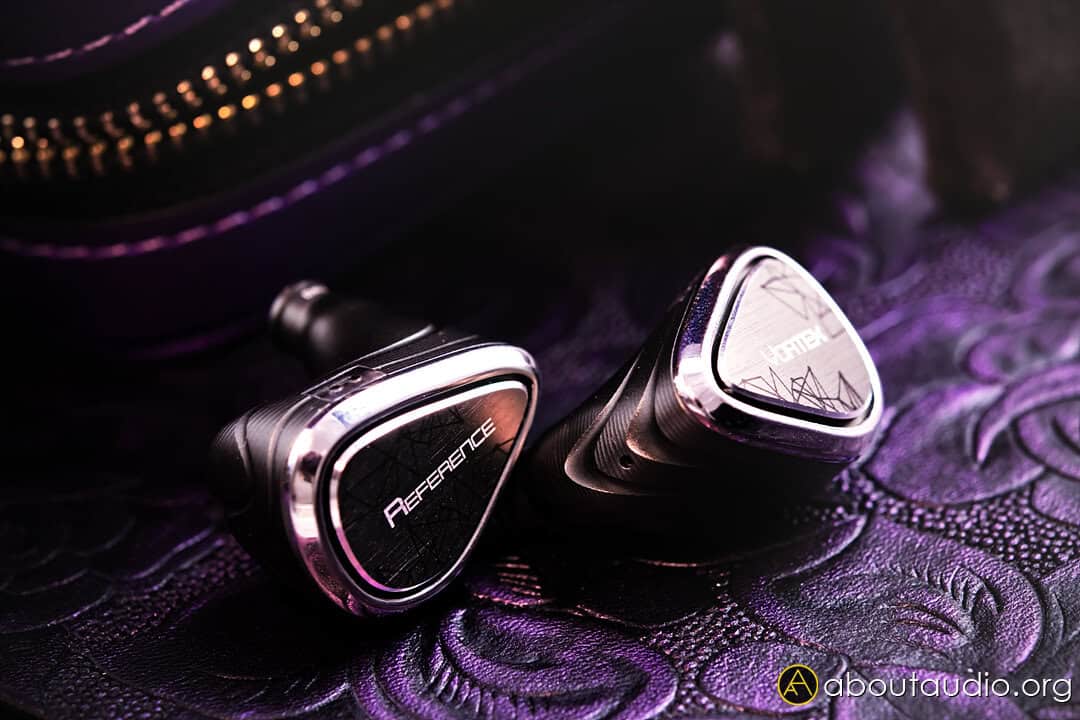
Earpieces: World’s First Dual MEMS Earphones
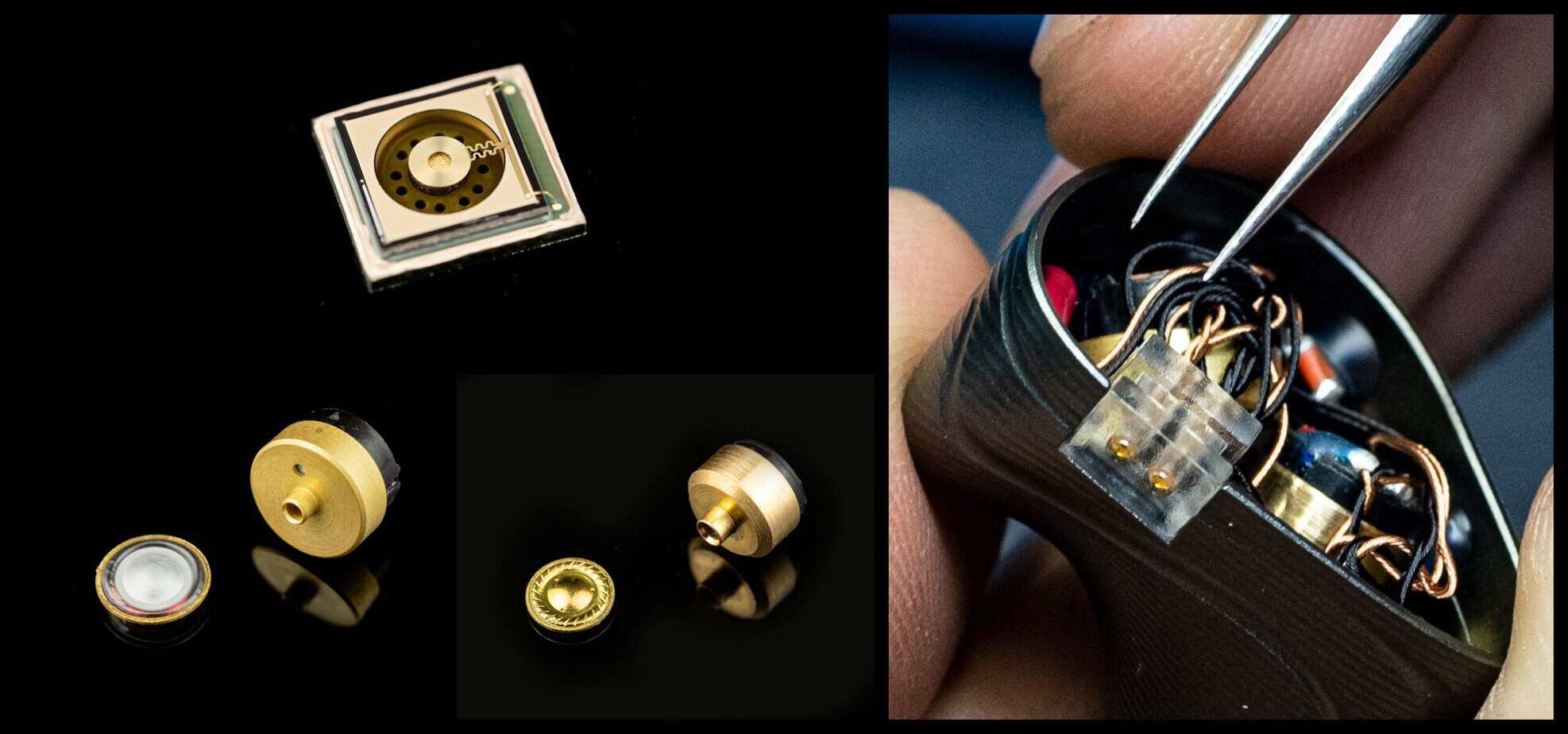
The driver configuration of Vortex Reference is 2DD+2 Passive MEMS. The dynamic drivers are divided by role: an 8mm aluminum-magnesium alloy dome woofer for the bass and a 6.5mm three-layer composite titanium-plated driver for the midrange. The highs are handled by Vortex’s passive dual MEMS tweeter system, which is the world’s first in the IEM industry. MEMS drivers carry well-documented advantages in speed, distortion control, and high-frequency extension.
However, MEMS drivers have historically been impractical for portable use due to their high voltage demands. Vortex’s proprietary ATCC circuit integration removes that barrier, allowing the passive MEMS tweeters to be driven from any standard portable source. Internal components are premium throughout: RA resistors, ELNA audio / Vishay capacitors, 7N OCC internal wiring, and a CNC-machined aluminum shell with diamond-cut internal geometry for resonance management. The ergonomics of the earpieces are very nice. It’s one of the most comfortable metal shell flagship IEMs you could come by – they’re smaller than most other competitor IEMs, and they’re designed to have a semi-custom form factor that’ll let most ears get a snug fit.
The dual stock cable inclusion is one of the more thoughtful decisions in the package. The Ultra Series Titan (2-wire) is tuned for depth and dynamic atmosphere; the Zenith Series IRIS (4-wire) is tuned for precision and clarity. Both are 4.4mm balanced. Two structurally opposing cables: as the starting point is the Reference’s core concept made literal, the platform for cable exploration begins before you’ve even bought a third-party cable.
Vortex Reference Specifications:
- Drivers: 2 Dynamic Drivers + 2 Passive MEMS
- Impedance: 23Ω
- Sensitivity: 102dB
- Frequency Response: 10Hz – 80kHz
- Limited: 100 pairs, individual serial numbers
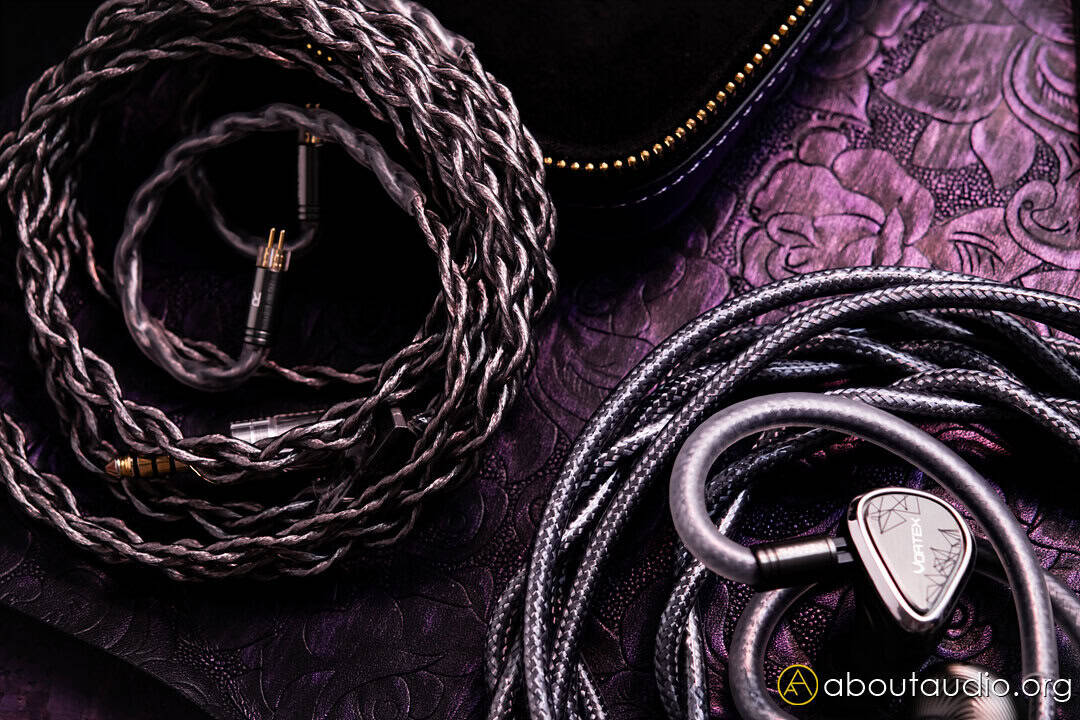
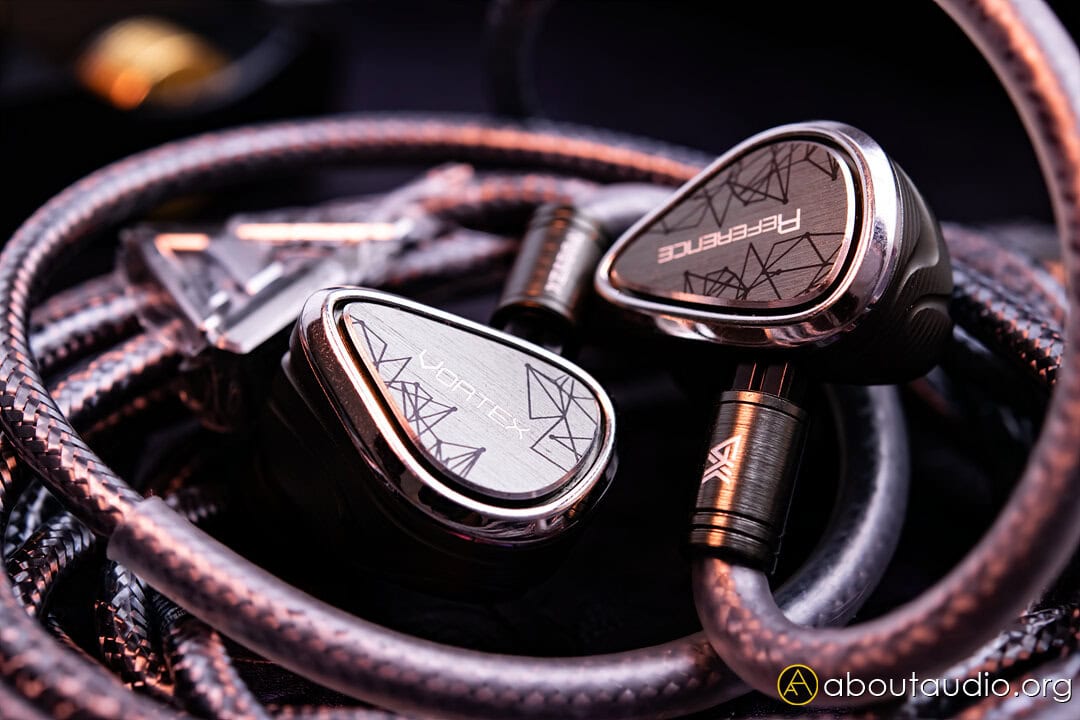
Cable 1: Vortex Titan (Specially made for Reference)
As mentioned earlier, Vortex Reference comes with two cable options by default – the Titan and the Iris. Being the primary and exclusive cable, Titan is Vortex’s specially-made product specifically designed and tuned for Reference. This cable is thicker, heavier, and bulkier, but fully focused on bringing the maximum sound performance – or the ‘ideal’ sound of Vortex Reference.
The Titan is the warmer, more musical of the two stock cables, and it’s the one most Reference owners will likely gravitate toward for long sessions. On the bass, the Titan adds notable resonance and body – the low end becomes fuller and more present, and there’s a richer, more saturated depth to the sub-bass that pushes the overall sound toward a more musical and enveloping character.
Vocals become warmer and more lush, with a pillow-like richness in the lower mids that makes the Reference feel generous and comfortable rather than analytical. Highs are where the Titan’s character is most clearly felt – the MEMS trebles become smoother and silkier, with less of the upper-frequency edge that the IRIS reveals. For those who want the Reference to lean more toward musicality and comfort over surgical precision, Titan is the natural starting point.
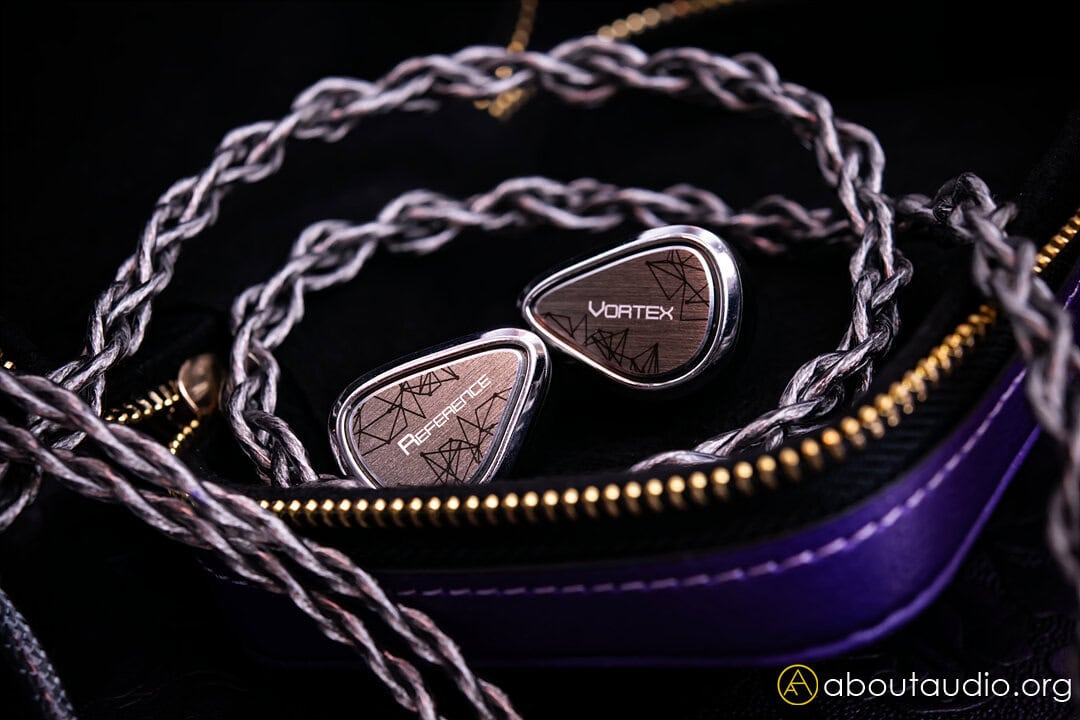
Cable 2: Vortex IRIS (Product link)
The second cable of Vortex Reference is the Iris. This one is a much lighter, softer, and thinner cable that is much more practical for everyday carry and for those who desire more comfort. Vortex IRIS is a 4-wire Litz Type 7 Helix cable from Vortex’s Zenith Series, and it’s the more analytically precise of the two stock cables.
Paired with the Reference, the IRIS brings a quieter background and sharper instrument definition – the imaging tightens, the separation clarifies, and the overall presentation becomes more exposing. Mids are slightly leaner in body but gain transparency and resolution in return. The MEMS treble extension comes through with more articulation and detail on the IRIS than on the Titan.
For those using the Reference for cable-rolling evaluations – which is the core purpose the Reference was built for – the IRIS is the more revealing partner of the two. It gets out of the way and lets you hear what each cable swap does to the signal more clearly than the warmer Titan would.
Next Page: Deep Dive into the Sound / How does Vortex Reference Perform?