


Sound Impressions: Bass / Reverbs
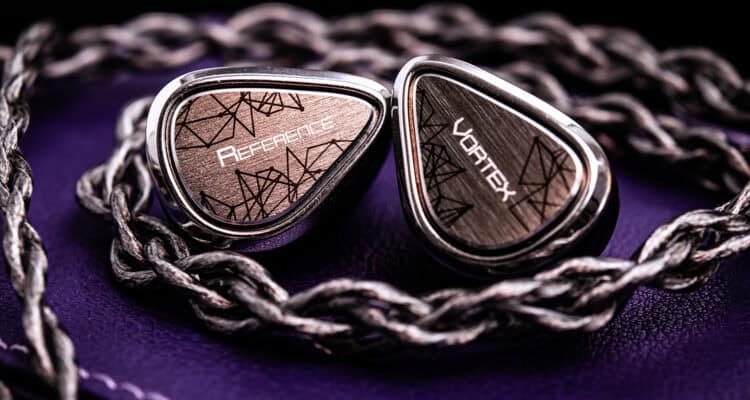
When people say ‘reference’, it typically refers to a sound that retains clinical neutrality and flatness without any personal taste added to it. So does Vortex Reference have that kind of sound? The answer is no – but on a positive note, unless you’re actually looking for a flat-sounding IEM. Vortex Reference desires a lot different – and more. The ‘reference’ sound that Vortex Reference suggests is a sound that is neutral and balanced, within ranges of being thoroughly musically enjoyable.
The bass is strong and punchy, diving deep and bold. Sub-bass is generously elevated, with resolving and roomy space. The bass is clearly elevated from flat, but doesn’t get bombastic or go overboard. While bass isn’t the forte of a flat sound for the most part, still, one of the advantages would be the evenly distributed bass response.
Bass-enhanced IEMs often have the sub-bass hill that makes the bass feel lumpy/warpy as the sound transitions from ultra lows to lows. The reference traits of the Vortex Reference are found here, as the bass keeps spectacular control and consistency across the low-range. And these IEMs show impressive low-end control without killing off the natural decay. That allows Vortex Reference to pull off a full, ambient bass in the cleanest, most natural way.
Another major feature I especially enjoy from Vortex Reference is that the bass sounds surprisingly vast. Impressively so, such a large headroom is brought without making the timbre or staging murky, as mentioned in the earlier paragraph. Loudspeaker-like roominess and natural decay create a sense of lifelike airiness – you can savor the texture and tone of the diaphragm.
Sound Impressions: Vocals / Timbre
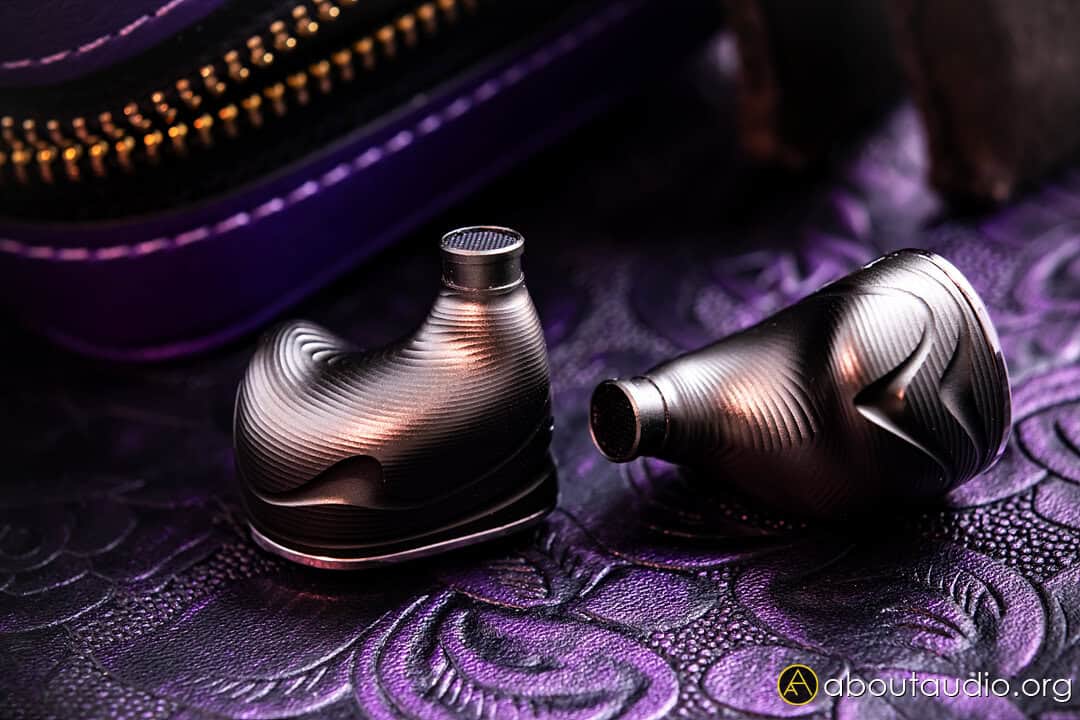
The interesting twist for Vortex Reference’s implementation on DD-based vocals is that mids bring out the subtle resonance and ambiance that most other IEMs often fail to pick up. There’s a major difference between full-bodied vocals done by multi-drivers and a single driver; multi-driver (often BAs) naturally bring the vocals up-close and somewhat clumped up. It makes the vocals sound thicker and stand out stronger, though this sacrifices some portion of phasing accuracy and neutrality. It may sound ‘large’, but it won’t sound too natural or clean. The single driver (often DD) is more prone to falling behind in micro detailing, though its advantage is the natural ambiance and phasing.
Vortex Reference is one of my most favorite listens nowadays, as the vocals show both the full-bodied richness and neutrality – using a single dynamic driver for the mid-range. Serving reference sound the Vortex way, you can say. Mids have a warm, organic, and creamy tone with a smooth texture. Natural coherency and seamless transition from the lows. Reference keeps that neutral-warm timbre, bringing subtle airiness and roominess to the mids.
Despite the advantages of the single dynamic driver, most brands deter from using it for several reasons: 1) Flagship IEMs are meant to serve the most discerning audiophiles, and bringing such a demanding performance through only one driver is a challenge itself, and 2) a single driver is unfavorable from a marketing perspective. I rate Vortex Reference highly because not only did Vortex choose the hard path, but they also nailed it. The Reference housed the multi-driver technicality within a single, neutral-sounding dynamic driver. Again, the Vortex’s way of doing “reference sound”.
Sound Impressions: Treble / Separation
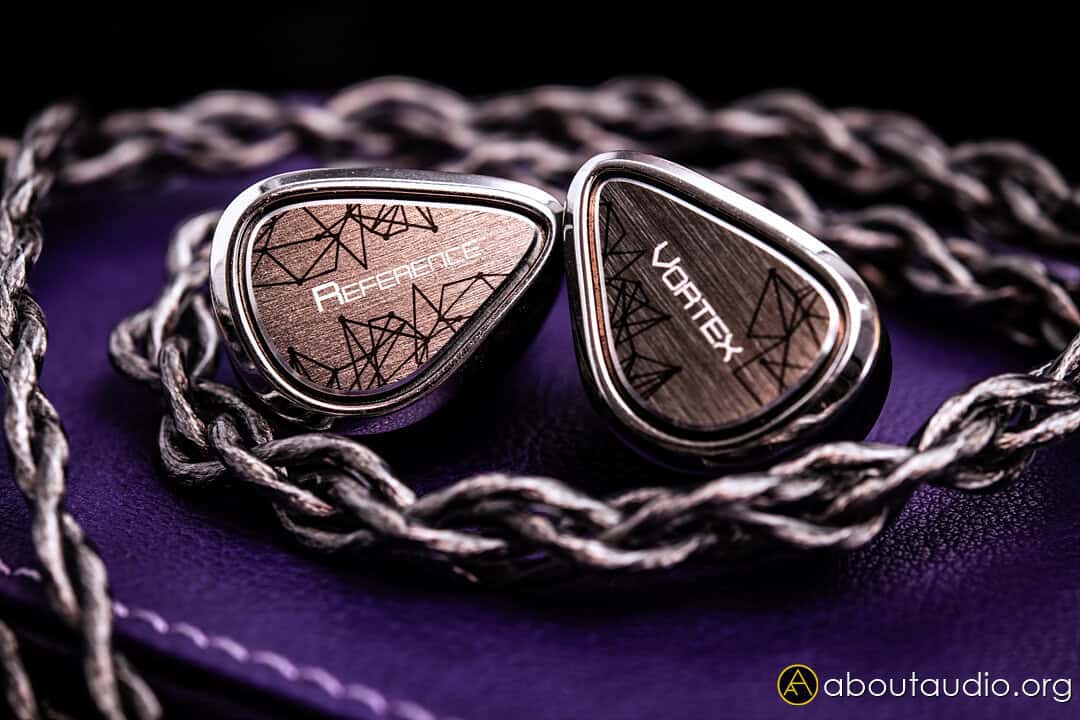
MEMS is the latest driver type introduced to the in-ear monitor industry. Available in either passive or active form, MEMS drivers are supertweeters with exceptional treble performance. However, since these drivers are still very new to the industry, I can’t say I’ve been a great fan of them, as many MEMS earphones sounded off or half-cooked. Soranik IEMs or Brise Audio Fugaku are great examples that made fantastic use of these latest drivers, but those are active MEMS; for passive MEMS, the majority of the IEMs still seem to struggle to find the right tuning in the meantime. As my interest in passive MEMS started to cool down, the Reference put my interest back on the stove, as it’s the first passive MEMS IEM that I thoroughly enjoyed.
So what exactly did I find most other MEMS IEMs to sound off or unpreferable? It’s the unnatural timbre, inconsistency with the lower frequencies, and the brittle texture that just shatters in decay rather than lucid. Vortex Reference doesn’t have that; highs sound full-bodied, smooth yet velvety, having the thickness and fineness that were absent from my other MEMS experiences. Highs have the lifelike agility and ambience that make the MEMS clearly apparent in presence, yet they go extremely harmonic and consistent with the DDs on the lower frequencies. Especially the timbre – it sounds surprisingly seamless with the vocal’s organic tone. You can feel the open-ended, ultra-extensive feel is unique to MEMS drivers, yet Reference does that without getting the trebles hot, shouty, or brittle, making these arguably the best passive MEMS earphones on the market.
The amount of micro treble details could’ve been almost overwhelming, yet the Reference’s overall dark, neutral tonal balance makes the listening smooth and comfortable. The creamy, neutral vocal tone and silky trebles create this very specific overtone that sounds extremely lush and melodic to the ears. It’s a unique overtone that Reference has, which is hard to describe fully in text, though it’s a mysterious, captivating overtone that triggers and rings the musical emotion as you listen deeply. Those who’ve heard it will know – and if you’re given the chance to try, I highly suggest doing so, as the treble these IEMs have is special even among profound flagship IEMs.
Next Page: Deep Dive into the Sound / How does Vortex Reference Perform?
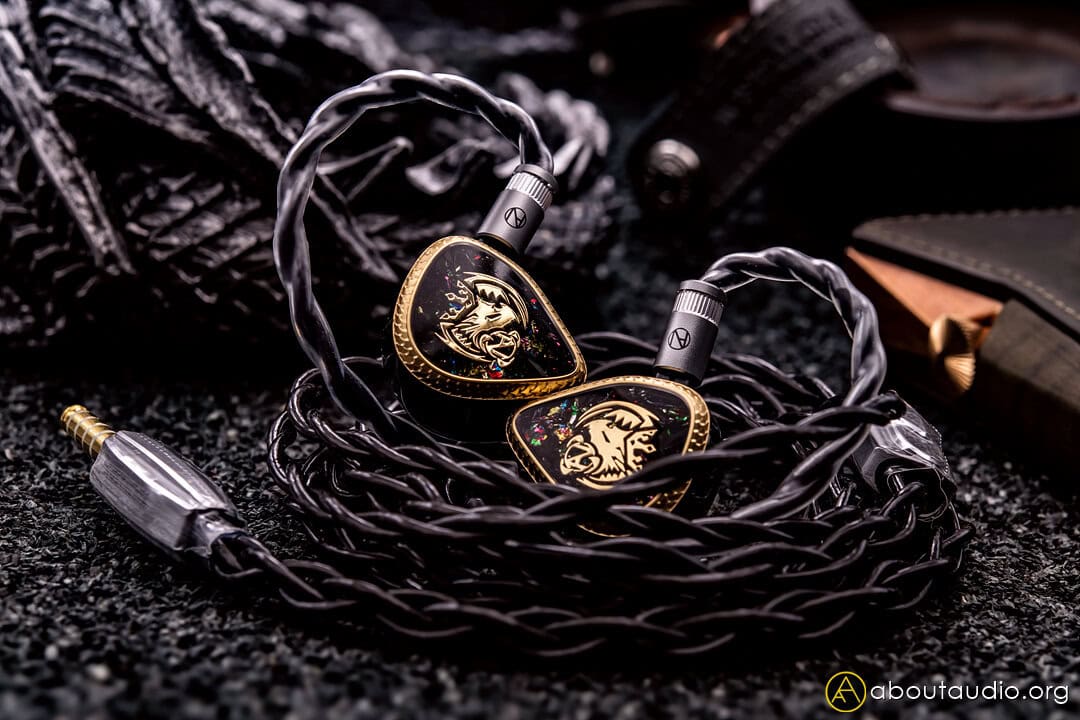
Compared to Nostalgia Audio Pendragon (Review link)
Pendragon is Nostalgia Audio’s TOTL flagship – one of the warmest, most immersive, and most musically generous IEMs I’ve reviewed. The bass is its most defining trait: large, elastic, and atmospheric with a loudspeaker-like scale that sets a strong foundation for the entire sound. Everything about Pendragon prioritizes warmth, musicality, and holographic immersion over analytical precision.
The Reference and Pendragon represent opposite ends of the tuning spectrum, which makes the comparison illuminating. Pendragon’s bass is significantly larger in scale and more room-filling in character – the elastic slow roll-off and warm atmospheric resonance gives the low end a gravity that the Reference’s more controlled bass doesn’t match in sheer presence. Reference’s bass is tighter, more accurate in phasing, and more evenly leveled. The mids on Pendragon are thick, warm, and full-bodied – vocals sit with a sense of total immersion within the broader soundscape.
Reference’s mids are relatively leaner, more neutral, and more transparently revealing. Pendragon’s EST trebles are refined and layered in a musical, supportive way; Reference’s MEMS highs are more technically extended and revealing, though with a tonal smoothness that is characteristically different from EST. Soundstage on Pendragon is one of the grandest holographic headrooms I’ve reviewed, with exceptional depth and spatial scale. Reference’s stage is more focused and intimate – better in precision, smaller in atmosphere. For those who want to be immersed and moved by the music, Pendragon. For those who want to hear through the music with clarity and honesty, Reference.
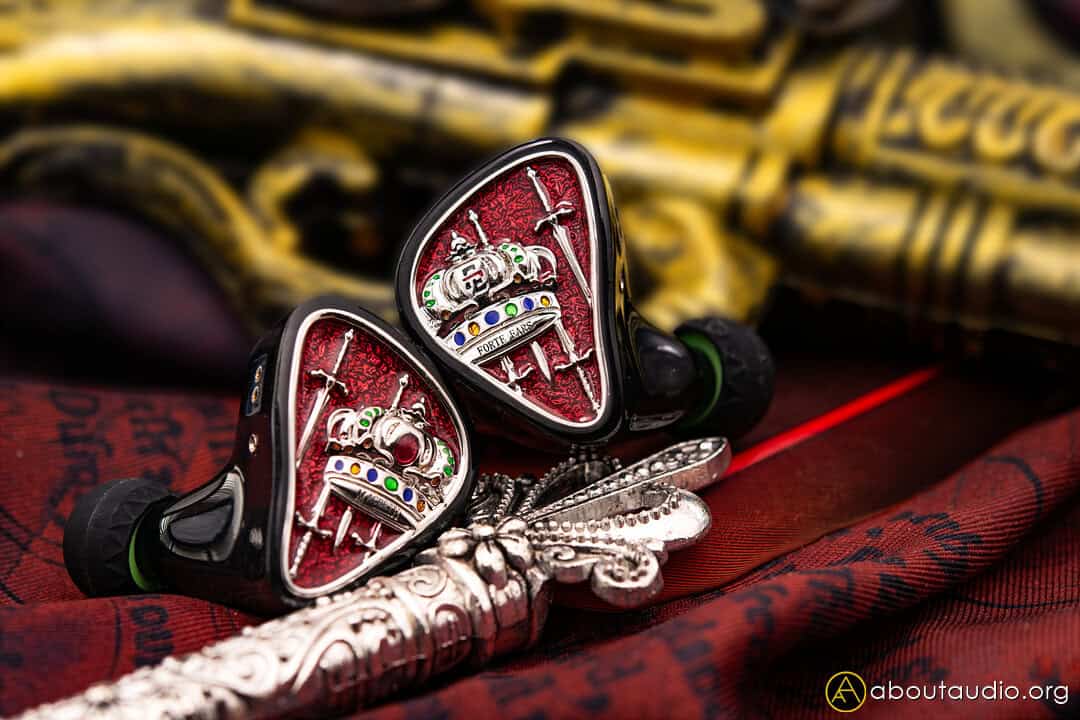
Compared to Forte Ears Macbeth (Review link)
Macbeth is Forte Ears’ flagship all-BA IEM – silky smooth, lush, and deliberately blissful in its midrange approach. The bass achieves a planar-like heaviness despite being entirely BA-driven, and the large-scale vocals are some of the creamiest I’ve heard from any IEM at any price. The EST highs are crystal clear with a fine al-dente texture. It’s one of the most immediately satisfying flagships available.
Reference and Macbeth are different in intent from the ground up. Macbeth’s mids are richer, warmer, and more emotionally generous – the silky texture gives vocals a luxurious body that Reference doesn’t chase. Reference’s mids are more neutral, more accurately phased, and more transparently honest. Macbeth’s bass carries more weight and a longer, heavier decay; Reference’s is tighter and more evenly distributed without that planar-like body. For the treble, Macbeth’s EST highs are crystalline and precise in a way that’s uniquely their own. Reference’s MEMS extension reaches further up and with a smoother timbre, though the two have very different tonal textures at the top. Macbeth is the more immediately satisfying and musically generous listen. Reference is the more accurate and honest one. Both are excellent – the choice is whether you want the music to feel luxurious or truthful.

Compared to FIR Audio Radon 6 (Review link)
Radon 6 is one of FIR Audio’s flagship offerings – bold, physical, and built for impact. The bass hits with real authority and the overall character is commanding and dynamic throughout the range. It’s the kind of IEM that makes its presence immediately known.
Against the Reference, the bass difference is the most immediate thing you notice. Radon 6 hits harder, with more physical punch and more forward sub-bass presence. Reference’s bass is more controlled, more evenly leveled, and more honest in quantity. The mids on Radon 6 are more energetic and vivid with a livelier tonal character. Reference’s mids are calmer and more neutral – more revealing of the recording than colored by the IEM. Treble-wise, Radon 6 carries a lively upper-frequency energy that adds to its engaging and dynamic nature. Reference’s MEMS highs extend further and are smoother in timbre, though less immediately energetic. Radon 6 pulls the sound toward you; Reference holds back and reveals. They’re not really competing for the same listener.
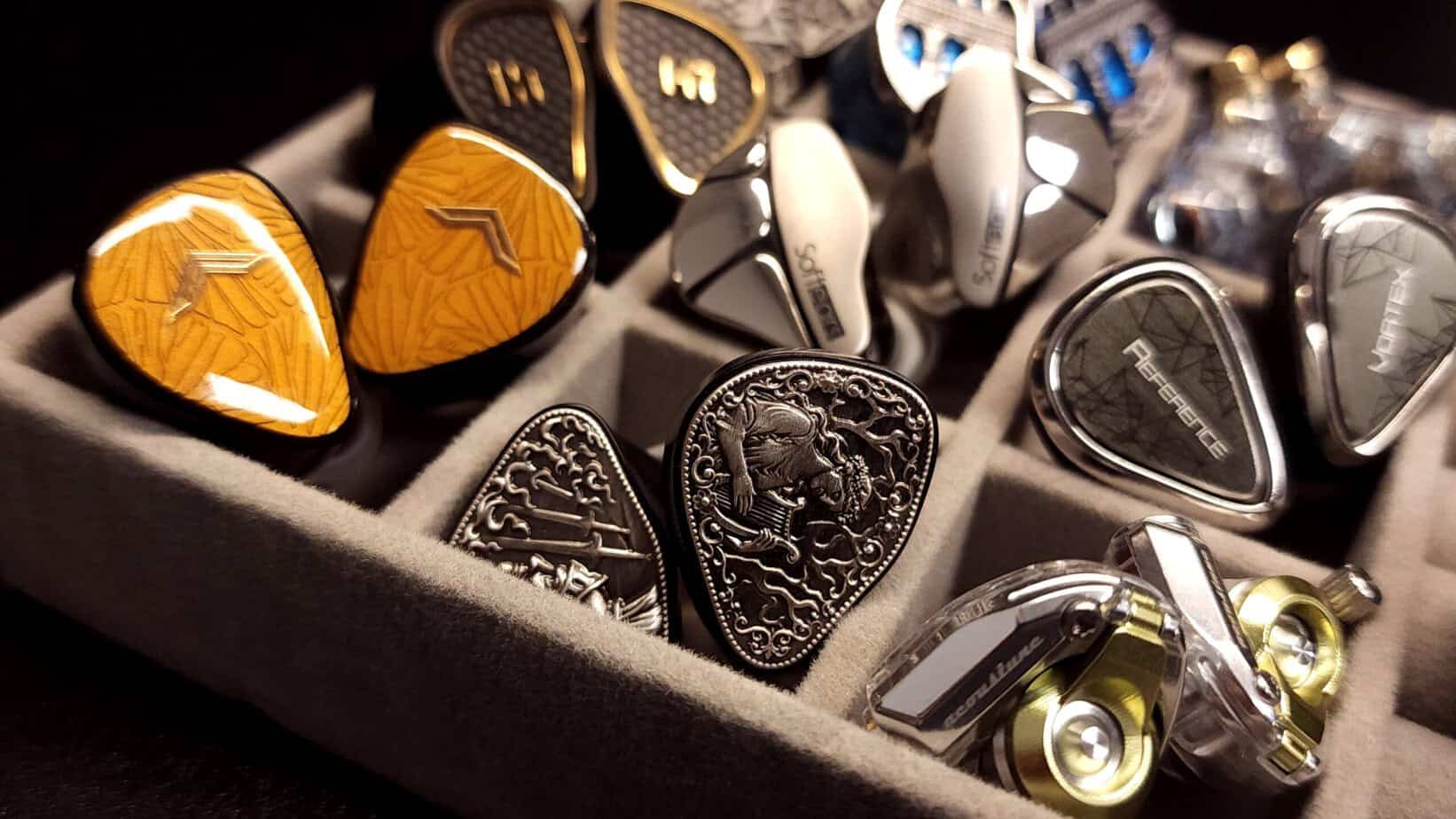
Compared to Letshuoer Sonata (Review coming soon)
Sonata is Letshuoer’s current flagship at $2,300 – a 2DD+4BA+4EST tribrid in a CNC-machined titanium shell. The tuning is balanced and neutral, with a bass-boosted character. Punchy isobaric DD bass, clean and natural mids from the 4 Knowles BAs, and a smooth, airy EST top end from the 4 Sonion drivers. It’s a coherent and well-organized flagship that has been well-received since launch.
Both sit in a similar price range, and both use tribrid configurations, which makes the comparison interesting. Sonata’s bass hits harder and with more physical punch – the isobaric DD pair delivers strong sub-bass impact and good depth. Reference’s low end is more controlled and evenly distributed, less exciting in impact but more accurate in balance. Sonata’s 4BA midrange gives the vocals a layered and complex texture with good detail retrieval. Reference’s single DD mids are simpler in structure but more naturally continuous and phasing-coherent throughout. For the treble, Sonata’s 4 Sonion ESTs are smooth, airy, and well-integrated – a strong EST implementation.
Reference’s MEMS highs extend further and carry a different tonal character – smoother in timbre and more seamlessly connected to the DD below. Soundstage on Sonata has good three-dimensional depth with precise imaging. Reference’s stage is more focused in width but similarly strong in depth layering and imaging precision. Sonata is the more musically engaging and immediately satisfying listen. Reference is the more revealing and transparent one. Same bracket, clearly different personalities.

Compared to Brise Audio Fugaku (Review link)
Fugaku is the most technically accomplished IEM I’ve reviewed. The treble performance is genuinely eye-opening – I don’t use those words lightly. Spending extended time with the Reference and Fugaku back to back makes the MEMS choice on Reference make complete sense. Both share an ambition for ultra-high frequency performance that most IEMs don’t reach for.
Technically, Fugaku is the stronger performer. The treble precision and overall resolution Fugaku delivers sits in a different tier. Where Reference holds a clear advantage is listening comfort and real-world usability. Reference is more fatigue-free and warmer in tonal balance – easier to stay with over long sessions. Fugaku belongs on a powerful desktop setup with a serious chain behind it. It’s not a portable IEM in any practical sense. Reference goes with you everywhere and works from a decent dongle. That difference in usability matters a lot when comparing these two.
For the bass, Reference is noticeably fuller and more present – Fugaku’s low end is more restrained in favor of its extraordinary upper-frequency performance. And then there’s the price. Fugaku sits at a significantly higher price point than the Reference, which makes the Reference an impressively compelling alternative for those who want to get close to that level of treble technicality without the desktop requirement, the weight of the full chain, and the premium price that comes with Fugaku. Reference doesn’t surpass Fugaku technically. But it comes closer than anything at its price should, while being an IEM you can actually carry.
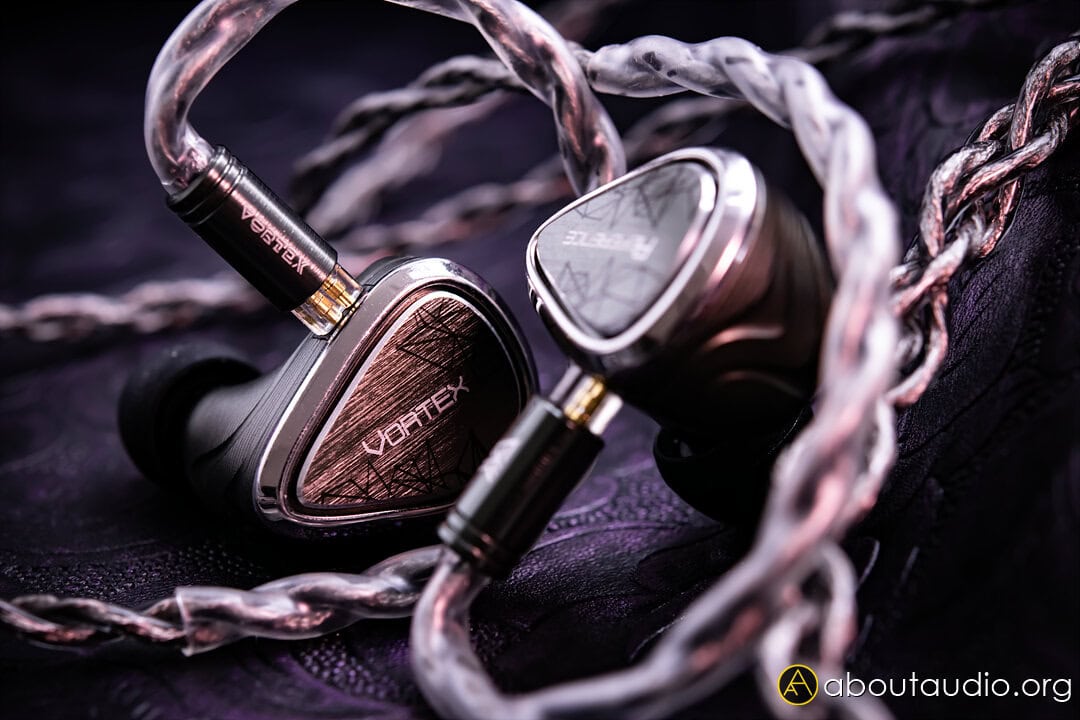
I’m Completely Loving this New “Reference Sound”.
Oscar built the Reference because he couldn’t find an IEM that showed him exactly what his cables were doing. After spending real time with it, I’d say he succeeded – but what surprised me is how strong the Reference is simply as an IEM, separate from that purpose entirely.
The MEMS implementation is genuinely impressive. Before the Reference, I hadn’t heard a passive MEMS IEM that sounded fully natural. This one does. The single DD midrange delivers the kind of phasing accuracy that multi-driver setups compromise on, and the overall tonal coherence is one of the more convincing I’ve heard at this price. It’s not the loudest statement in the room. It doesn’t hit the hardest or expand the widest. What it does is stay honest – and over time, that turns out to be worth more than most of the alternatives. At $3,299 for 100 units worldwide, it’s clearly not for everyone. For those who know what they want from a reference IEM and have been waiting for something that earns the name, the Reference is exactly that.