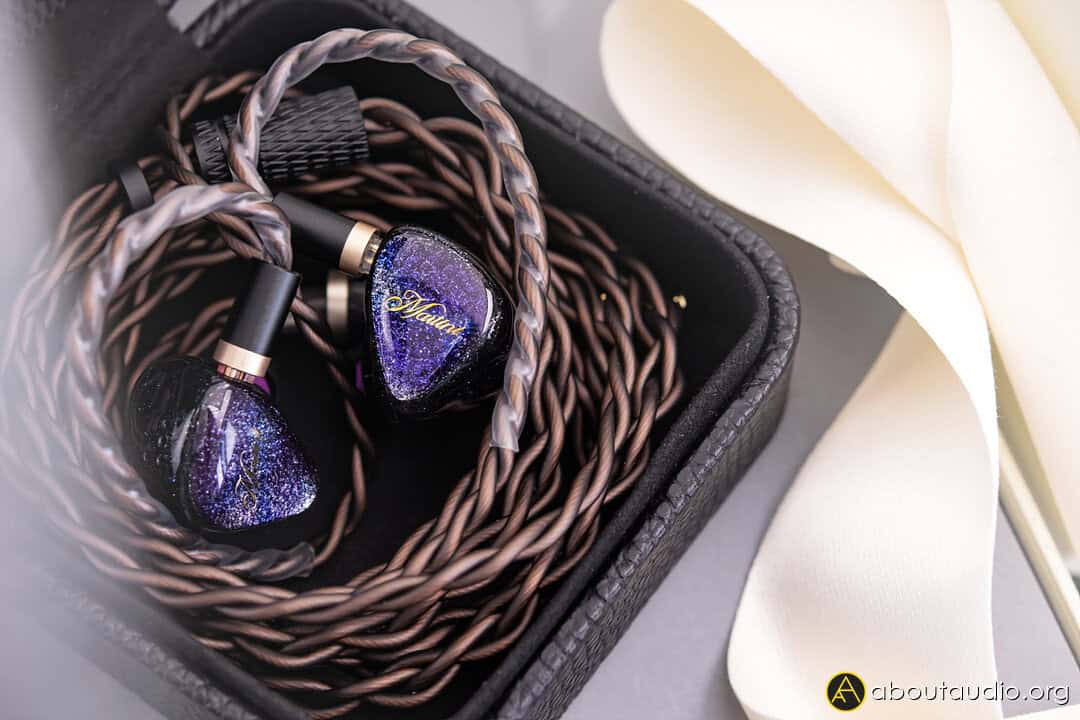



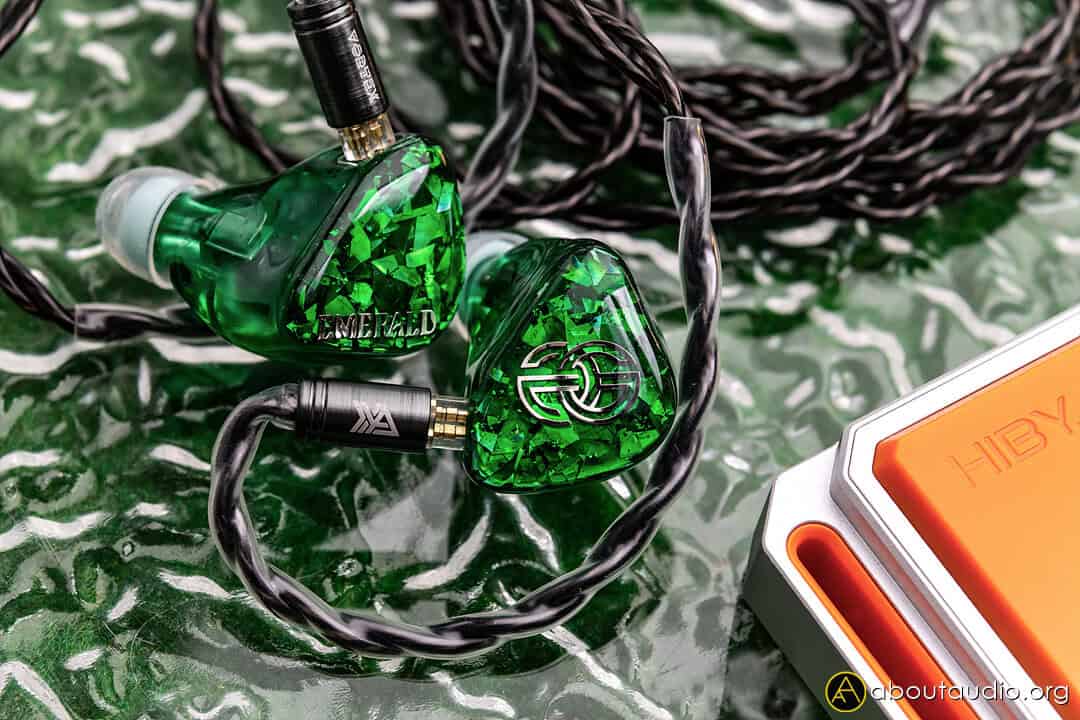
Compared to Eminent Ears Emerald (Review link)
Timbre is similar between the two, both leaning warm with organic low-end character – but other than that, these two IEMs have significant differences. Martini is more reference-like and calmer in its overall sound signature; sub-bass quantity is more reserved with flatter bass amplitudes, being much gentler and more precise in its approach. Emerald, on the other hand, goes more full-house basshead style, bringing stronger slams, bigger rumbles, and a more physically immersive BCD experience. Martini’s BCD adds tactile precision; Emerald’s BCD floods the low end with skull-ringing holographic vibrations. The scale and size of the bass are not in the same territory.
Martini focuses more on keeping the bass accurate and well-phased rather than using it as a presence tool. Relative to Emerald, which has bold, thick, and forward vocals with generous reverbs and that “warm with neutral brightness” character, Martini’s mids are leaner and more neutral-thin in body, with less reverb and a higher emphasis on treble-side clarity. Emerald’s vocal scale is simply larger and more enveloping. In the highs, Martini takes the lead clearly – the sparkly, prominent treble presentation that Martini brings is noticeably more extended and lively than Emerald’s more reserved and supportive highs. Staging is wider and more laterally expansive on Martini; Emerald’s stage is built from the bass upward with more depth and bottom-end foundation. In summary, Martini has a flatter, more reference and accuracy-based sound. Emerald goes for a much stronger W-shaped basshead sound, focusing on musical slam and depth.
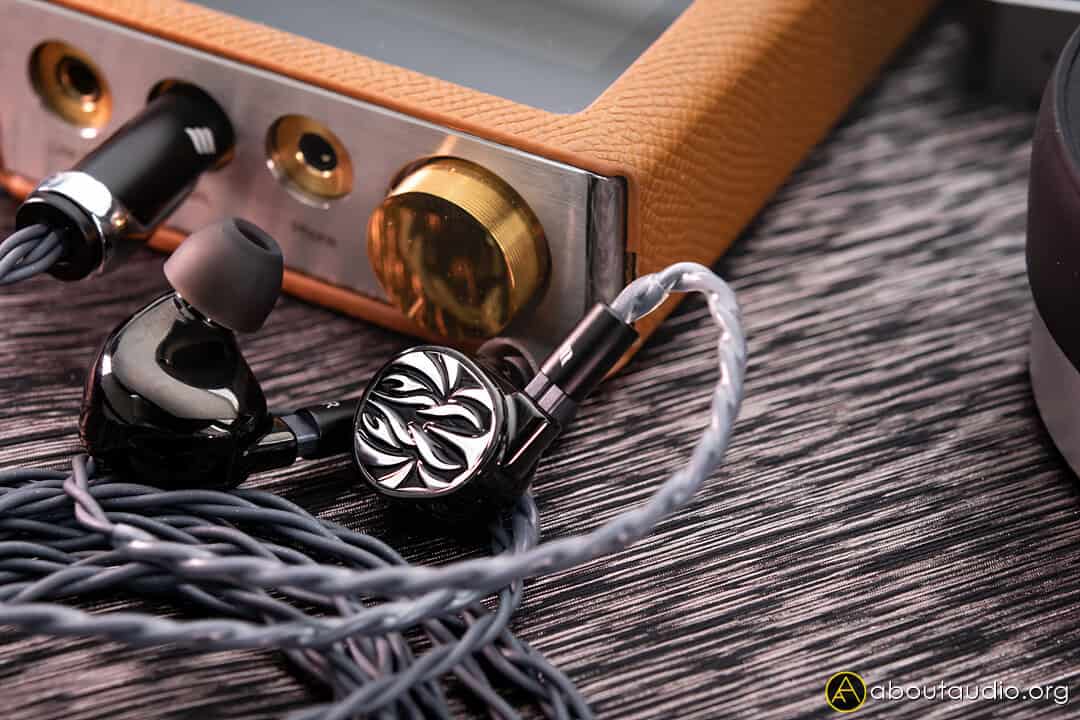
Compared to Letshuoer Ember (Review link)
Ember and Martini both sit in the $500-$600 range, though they’re fundamentally different in driver philosophy. Ember’s single 14.8mm planar driver gives the low end a velvety, room-filling character that spreads evenly and deeply across the low range. Martini’s DD+BCD bass is more organic, holographic, and more smoother. Ember’s bass is more agile and tighter in decay. Ember also has better transient control. For the phasing-accurate bass that sits more reference-like and tight, Ember has the advantage. The more musical, holographic, and immersion-focused bass could be found from Martini.
Mid-range is where they diverge more. Martini’s neutral-warm and dimmed background tone makes the mid-range creamier, smoother, and more comfortable to listen to for longer sessions. Ember’s mids are cleaner, more articulate, and more forward in the upper range – crisper and more analytically transparent overall. The planar’s consistent phase behavior also gives the pleasure of tuning into the sound without that sense of “artificial spatialness” but the pure, accurate resonance. As for the trebles, it’s hard to say that one takes the clear lead, as this would differ depending on your priorities. Martini’s highs are deliberately smooth and reserved, keeping fatigue at bay but offering less sparkle and energy than Ember’s livelier, more extended upper frequencies powered by the planar driver. Staging on Martini is spherical and immersive; Ember is more precisely imaged and layered naturally. The DD+BCD warmth and bass depth versus a single planar’s clarity and phasing-accuracy sound – pick accordingly.

Nicely Shaken Into Balance…
QOA’s Martini is a well-executed and purposeful IEM that delivers on its 3:5:2 tuning concept convincingly. The mid-range emphasis keeps vocals present and technically resolving, the BCD adds a precise tactile quality to the low end without overwhelming the rest of the sound, and the sparkly, airy treble brings a liveliness that keeps the listening experience engaging rather than fatiguing. For a BCD tribrid, Martini takes the most balanced and reference-adjacent approach to the technology – less about bass drama and more about overall coherence and clarity.
At $599, QOA Martini’s value is very well-placed as it has the multi-kilo-bucks tuning and properties trickled down to a much more accessible price point. Natural, holographic, and thoroughly balanced sound signature makes it a safe choice for those with a wide variety of tastes and consumers, not only those who’ve appreciated QOA products but also those who are looking for an accessible flagship IEM but don’t know which to choose. If you’re after a BCD IEM that doesn’t lean on the bass as a personality crutch and instead uses the driver technology as a precision tool in a well-balanced sound that could cover a wide range of genres, I’d consider Martini as a highly convincing option currently available in this price range.