


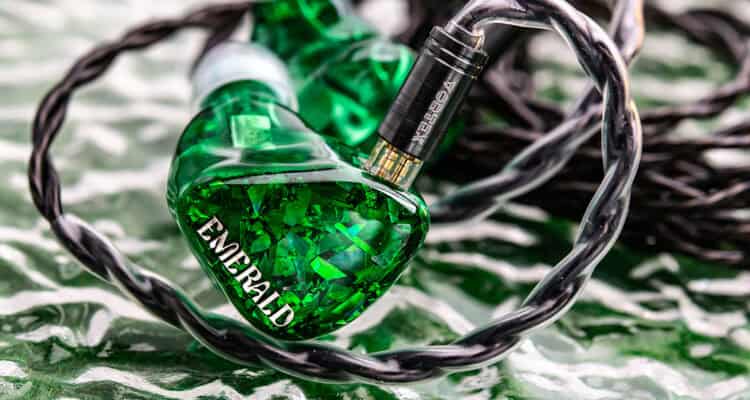

Compared to Eminent Ears Ruby (Review link)
Ruby is the most technically capable of the Gemstone siblings – a 1DD+4BA+4EST tribrid at $2,300, nearly four times the price of Emerald. Pricing-wise, it’s not really a fair comparison for Emerald, though I’ve included into the comparisons as they’re from the same family (and since Ruby is the most well-known Eminent Ears IEM so far).
Ruby’s character is vivid and expansive – clarity-forward with strong EST-driven treble, an open and airy mid-range, and a soundstage that stretches wide and upward with a very natural top-end shimmer. Ruby is also a neutral-bright IEM that brings strong transparency and resolving high-ends. Compared to Ruby, Emerald is notably warmer, thicker in bass body, and smoother in treble quantity. Ruby’s mid-range is more transparent and has better overall resolution – the EST extension adds a dimension of upper-frequency refinement and air that Emerald’s BA tweeters don’t replicate.
Ruby is also more genre-dependent because of this brightness – tracks that get busy in the upper registers can occasionally push Ruby’s highs toward the scatter zone. Emerald doesn’t carry that risk. For bass, Emerald’s BCD-assisted low end gives it more tonal depth and resonance than Ruby’s DD woofer – Ruby’s bass is more precise and agile, while Emerald’s bass is warmer and slightly more full-bodied in texture. Soundstage is broader and more open on Ruby; Emerald’s staging is more compact but well-proportioned. Ruby is clearly the more resolving and technically capable IEM, as expected at the price. For long sessions and genre versatility, Emerald is the more comfortable and practical pick. There are clear tier differences between these two, though the sound signature matters more than the performance, and if you enjoy a warmer, fatigue-free sound with the bass vibrations of a BCD driver, Emerald would be a better option nonetheless.
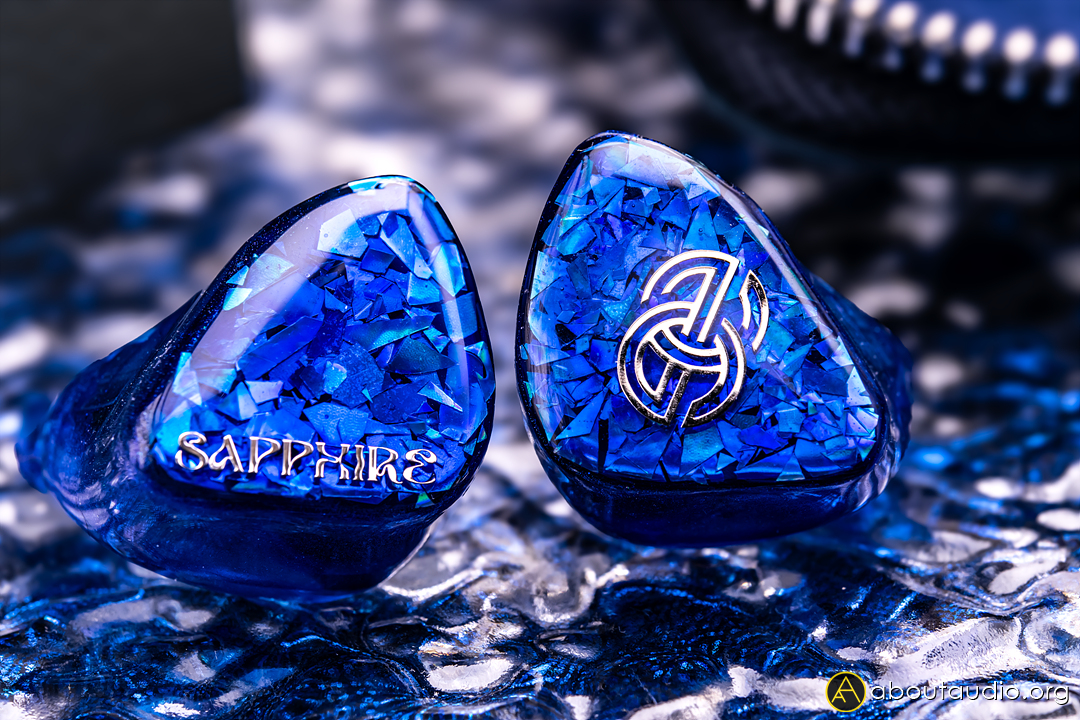
Compared to Eminent Ears Sapphire (Review link)
Sapphire and Emerald are the closest within the Gemstone lineup in driver architecture and price tier, and their tunings are quite similar – but still with noticeable differences. The identity for both IEMs is its bass – lush, solemn, deep, and large in presentation, with a sound that is dark-warm and bass-centric. Emerald is more neutral and more balanced across the spectrum. Sapphire and Emerald share the same DNA in a sense of having full and warm BCD-based sounds, though Sapphire is more bombastic, resolving, and aggressive in dynamics and transparency.
Sapphire’s bass is noticeably heavier, fuller, and more physically forward in the mix. The sub-bass presence on Sapphire creates that upside-down, fan-shaped staging that draws the sound downward with depth and weight. Emerald’s bass is tighter and more reference-level in quantity and calmer in bass amplitudes. The mid-range differs a bit more than it did for the bass. Sapphire’s vocals are more boosted with more transparency and brightness, being more resolution-based than Emerald. In summary, Ruby is the brightest and the most analytical/reference-focused sound, followed by Sapphire, which sounds significantly warmer/fuller/smoother, and then Emerald, which is just gently smoother/softer/calmer in sound.
The brightness and transparency aren’t night and day between Emerald and Sapphire, though there is a significant enough gap in vocal resolution, Sapphire being the one that has higher technicality and micro details (rightfully so since Sapphire is nearly double the price). Sapphire’s timbre is a fine mix of BA and DD, whereas Emerald has a more DD-centric timbre, which makes the mid-range not as fine-stranded as Sapphire but instead more organic and smoother to listen to. Both trebles are fatigue-free, but Sapphire introduces more treble presence and upper-end openness.
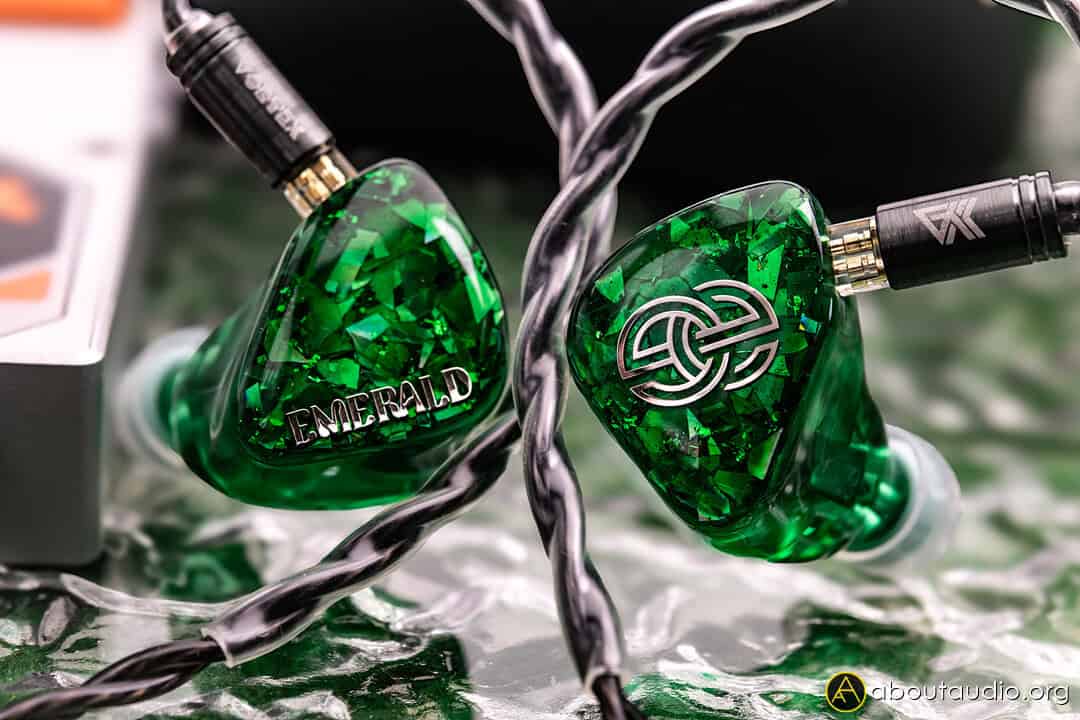
Flagship Tuning Brought Down Affordable
Emerald lands in an interesting spot in the Gemstone lineup – the most accessible and versatile of the three, designed as a more general-purpose IEM rather than a character-first one. The BCD tribrid implementation here is arguably the most practical of the series for everyday use – it adds tonal richness and texture to the low end without making the bass the centerpiece of the entire experience. Vocals are natural and balanced, highs are smooth and organic, and the overall tuning is as genre-flexible as Eminent Ears intended.
At $600, Emerald sits as a budget-friendly flagship IEM that offers a clean, well-balanced, and thoroughly listenable sound that doesn’t ask much of you, genre-wise or source-wise. If you’ve been curious about bone conduction tribrids but didn’t want to bore out your ears with sounds that are too polarizing or tilted to a specific genre/taste, make sure to look into Eminent Ears products. The nice ratio of natural balance and musical fun would make Emerald a much better and safer option as you step into the premium IEM zone.