




Sound Impressions: Bass / The Dynamic Driver Control
Burgundy has an energetic, w-shaped sound signature that is balanced with punchy bass and gently elevated upper-ends. The bass quantity is stronger than those that are slightly v-shaped but slightly shy of reaching a basshead level. If you enjoy strong bass but up to an extent of retaining clarity, Burgundy will serve you with ample sub-bass and low-end fullness.
Burgundy offers all that you want from a dynamic driver to behave as a strong yet controlled woofer – clean, deep, and tight. The bass stays grounded and doesn’t bleed into the lower mids. While keeping a clear distinction and separation between bass and vocals, Burgundy makes an extremely natural and consistent transition. You get that clean-cut precision and separation you’d expect from multi-driver or hybrid IEMs, yet without the uneasy disharmony you would often find between different drivers. Both the tone and texture of the lows go along nicely with the upper frequencies.

So Why Not the Bone Conduction Driver?
Speaking of tone and texture, Burgundy shows quite a captivating performance in those aspects. Those elastic, lucid bass ambiance and dynamics are thoroughly present throughout the low end, which makes the bass sound lush and authoritative. The bass tone is extremely deep, mature, and thick in color – yet never overpowering.
When it comes to choosing the driver type for the woofers, you should never underestimate the potential of a classic dynamic driver. It’s a common misconception that bone conductors are innately superior, yet a well-tuned dynamic driver has significant potential in delivering superb bass. Burgundy is yet another great example – bass packs great weight, depth, and fullness, all while keeping the sub-bass surprisingly tamed and controlled. Achieving the same intensity of bass would’ve made the bass get muddier for bone conductors, while generic dynamic drivers lack ambiance. Burgundy’s dynamic driver and bass tuning are done to achieve the best of both BCD and DD.

Sound Impressions: Mids / Layering
Burgundy desires tastefully analytical vocals – mids are full and rich. They are full but ‘unbloated’ – the typical mid-range bulkiness often found from multi-driver IEMs is naturally skimmed down while retaining the weight and size of the vocals. Mids are neutral in thickness, though they carry impactful slam and energy that makes them keep their significant ground on the stage. Though if that was all that Burgundy had, it would’ve not gone to the point of being properly tasteful to listen – as one of Burgundy’s most captivating charms happens on the mids. The vocal layering, to be exact.
Eminent Ears has done a very nice job creating an extremely holographic, spacious mid-range that makes the vocals highly analytical and well-separated in layering. You can feel the distancing and textural differences between multiple upper-end layers – that catharsis of transparent, extravagant vocals spreading across the vast stage; that’s what’s most memorable as I tune into these IEMs. Mids are neutral in brightness and thickness, yet mids are highly leveled and adjusted so that they won’t get hot or shouty; most will find them only pleasant and resolving unless you’re particularly treble-shy. Burgundy maintains this gently open-ended, airy timbre steadily across the spectrum.
The textural highlights are also a great part of what makes Burgundy’s vocals memorable and special – it has that velvety, micro-fine texture that makes the music blissful. Burgundy’s nature reminds me of Eletech cables, as their products are iconic for their velvety-lush sound. If you love paying attention to the intricate details in music, and when and how certain vocals and instruments make sound at certain timestamps, you’ll surely enjoy listening to these – a lot.

Sound Impressions: Highs / Soundstage
Treble is an important part of high-end IEMs and critical music listening. Burgundy proves to be a great all-rounder – it’s balanced and performs beautifully in the treble too. Highs know up to what point they should reach in crispness before the sound goes brittle and dry; Burgundy’s trebles are crisp yet organic, creating a transparent, breathable, and open-ended field.
Highs are very resolving and micro-refined, yet trebles on these IEMs retain adequate moisture and softness. They sound crystal-clear and monitoring-like, but also with excellent musicality and harmonics. Most importantly, trebles don’t get overwhelming in tone or quantity, which is quite impressive considering the level of detail Burgundy is pulling out from the music.
For many years, there have been a lot of flagship/TOTL IEMs released and introduced to the market, though Burgundy’s treble is nonetheless something very special. BA and EST-based IEMs (and some DD IEMs too) usually sound stiffer and metallic on the upper end, especially if the earphone is tuned to be flat or emphasized on the upper frequencies. Burgundy differs, as trebles know when/how to bend their way and make their curve – like the flow of natural spring water. The textures are daringly resolving and unveiled, yet not dry nor brittle, all while sounding harmonic.
When it comes to soundstage, Burgundy doesn’t try to overdo its capabilities or exaggerate to sound large, but the stage is already large as it is. The agile and deep-diving, nuanced bass, with velvety-holographic vocals, and the open-ended trebles full of finesse – these three different frequency bands come along as one, harmonic piece that creates an evenly large, spherical headroom. The staging is just adequately larger than neutral, though the holographic layering and open-ended timbre make these IEMs sound extremely immersive. Instruments and musical placements are kept controlled and accurate, yet the actual headroom feels nothing but dynamic and full.

Compared to Eminent Ears Ruby (Review link)
Ruby is Eminent Ears’ debut flagship, priced at $2,300 and featuring a 1DD+4BA+4EST tribrid setup. Being the predecessor, Ruby and Burgundy share quite a few similarities in their overall sound direction. Both have energetic W-shaped signatures with deep, punchy bass and highly resolving upper frequencies.
However, Burgundy takes a noticeable step further in every direction – overall resolution, bass elasticity/control, vocal tonal maturity, vocal holography, upper-end control, treble texture, etc. Basically significantly upgraded in all possible ways. The only advantage Ruby would have against Burgundy is the bass quantity; Ruby’s bass is more akin to a stronger V-shaped and basshead quantity, whereas Burgundy tamed the sub-bass further to sound more solemn and gentle, stepping into just around the “slightly v-shaped” territory. Both have excellent low-end control, though Burgundy brings a more elastic, lucid ambiance with a deeper and more mature bass tone.

Yet again, the bigger difference comes from the mids and highs. Ruby has a cheerful, neutral-bright tone with crisp, slightly forward vocals, focusing on clarity and separation. Burgundy maintains that resolving nature but creates a much more holographic and spacious mid-range. Vocals have much stronger layering contrast, with a velvety, micro-fine texture that makes the sound more elaborate and immersive.
Trebles are also significantly refined and matured on Burgundy, and while they’re similar in general purpose in tuning, Burgundy brings a lot more organic, naturally flowing texture – and with much more resolution and detail, of course. Ruby occasionally gets a bit disorganized with treble-heavy tracks when paired with brighter sources, whereas Burgundy takes a more stable and harmonious approach to the upper frequencies. Ruby still has its charm with that crisp, forward, and refreshing presentation, though I’d say Burgundy is a very successful successor that further refines the original tuning while bringing stronger bass and spatial technicality.
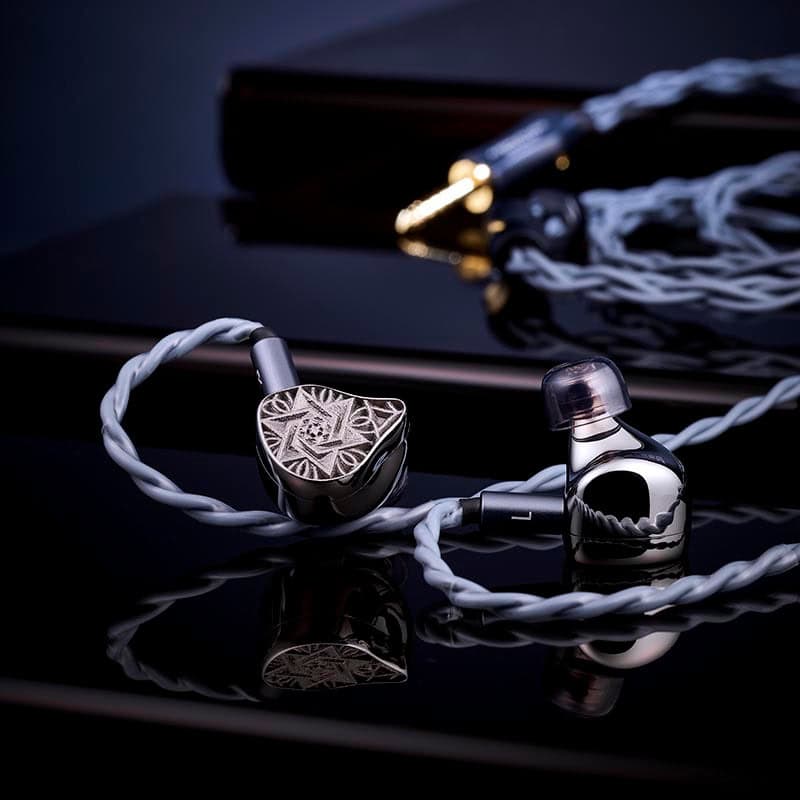
Compared to Unique Melody Maven III (Review coming soon!)
Maven III is Unique Melody’s latest 2DD+4BA+4EST+2BCD quadbrid flagship from the Maven series. Priced at $2,199, Maven III features a balanced, slightly W-shaped sound that puts a lot of attention into timbre and tonal refinement. Both Maven III and Burgundy are highly resolving and musical IEMs, though Burgundy has a more vibrant and energetic presentation.
Maven III keeps its bass quantity rather gentle, around slightly V-shaped, and focuses more on the creamy texture, natural decay, and harmonic flow of the lows. Burgundy goes considerably stronger on the bass, bringing more slam, density, and a deeper, darker tonal color. Both show impressive control and extension, though Maven III goes for a calmer and more soothing low-end character, whereas Burgundy brings stronger dynamics and bass presence.
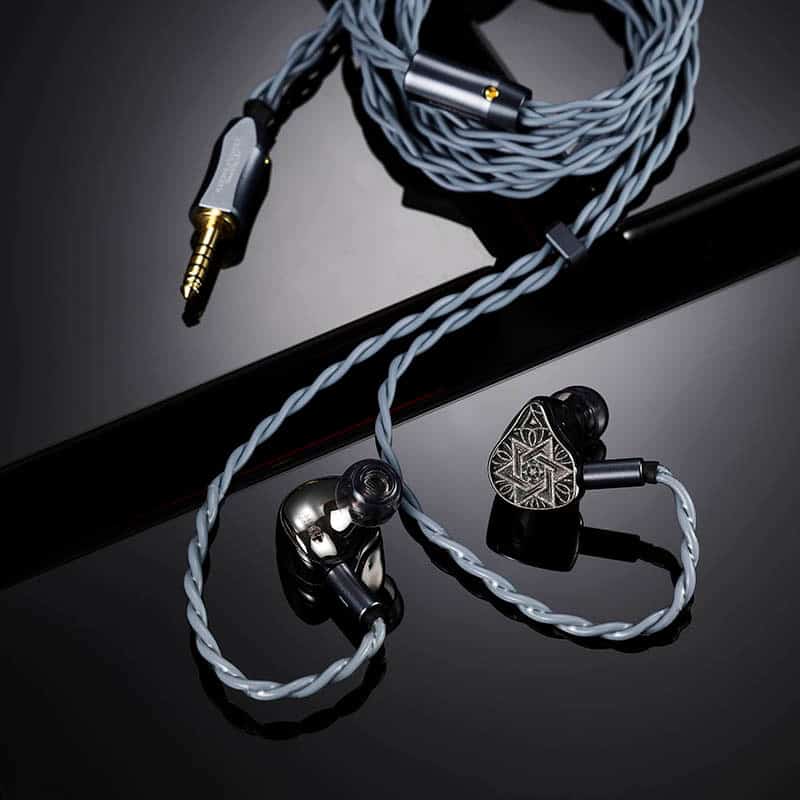
Mids also differ in character. Maven III carries a neutral-warm tone with moist, full-bodied vocals, having a natural and seamlessly connected sound flow. Burgundy is closer to neutral in brightness and thickness, but puts more attention into exposing vocal layers and finer textural details. The mids sound more holographic and spacious on Burgundy, while Maven III has a gentler, more relaxed vocal presentation.
Trebles are highly refined on both, though Maven III keeps the highs silky and naturally blended, with a pleasant amount of sparkle and airiness. Burgundy is more deliberate in revealing the micro-fine treble strands, bringing stronger clarity and separation while retaining an organic texture. I’d consider Maven III the more comfortable and laid-back choice, especially if you appreciate moist, creamy timbre. Burgundy would suit better for those who want stronger dynamics, more vivid layering, and an analytical yet thoroughly musical flagship sound.

Compared to Nostalgia Audio Pendragon (Review link)
Pendragon is Nostalgia Audio’s $3,799 summit-fi flagship, and it takes quite a different approach to sound compared to Burgundy. Both are highly musical and immersive IEMs, though Pendragon goes considerably further in warmth, thickness, and sheer sound volume. Pendragon’s bass is immense, spreading widely with a slower, more speaker-like decay that fills the low-end headroom with deep ambiance.
Burgundy also has powerful, deep-diving bass, but the strikes and reverbs are more tightly controlled with a quicker, more agile response. Pendragon creates a larger and more atmospheric bass presentation, while Burgundy focuses more on density, precision, and keeping the low-end dynamics clean and orderly.

Their vocal presentations are also quite different. Pendragon has a warm, thick, and deeply soulful mid-range, carrying enormous vocal size and tonal weight. Burgundy keeps the vocals closer to neutral thickness, with stronger emphasis on transparency, micro-texture details, and holographic separation. The upper frequencies make this contrast even more apparent. Pendragon’s trebles are smooth, gentle, and more supportive of the low-mid richness, whereas Burgundy exposes the highs more prominently with greater openness and treble fineness.
Pendragon still creates the grander soundstage, especially when it comes to the low-mid expansion and holographic depth. Burgundy has a more evenly distributed, spherical headroom, with stronger attention to mid-high layering and clarity. If you’re after that large-speaker-like, warm, and profoundly musical sound, Pendragon remains a very special choice. Burgundy would be the more versatile and analytical option, bringing strong musicality without going as thick or warm.

Compared to Starry Audio Bolide (Review link)
Bolide is Starry Audio’s limited-edition flagship, priced at $2,950 with a 2DD+4BA+4EST tribrid setup. Both Bolide and Burgundy offer strong bass presence with exceptional low-end extension, though their overall sound characters are quite different.
Bolide is warmer, darker, and thicker, with a buttery-smooth sound signature that prioritizes natural ambiance and long-term listening comfort. Its bass is enormously full-bodied with a slightly slower roll-off, allowing the lows to spread widely and naturally across the headroom. Burgundy also carries plenty of bass weight, though the strikes and decays are more agile and tightly controlled. Burgundy brings a more energetic and vivid bass response, whereas Bolide goes for a grander, more relaxed and atmospheric presentation.

The mids and highs show an even stronger contrast. Bolide keeps the vocals at a more neutral distance with a dark, warm timbre, focusing on natural phasing rather than bringing the vocals aggressively forward. Burgundy is more transparent and analytical, with clearer separation between vocal layers and a more open-ended mid-high presentation. Both have remarkably refined treble textures, though Bolide keeps the upper ends softer and more subdued, while Burgundy brings more prominent micro details, sparkle, and upper-frequency clarity.
Bolide’s soundstage is larger and more bass-oriented, creating a floor-speaker-like sense of fullness and depth. Burgundy is more evenly distributed across the frequencies, with stronger holographic layering and upper-end openness. Bolide would be the one I’d recommend for those who want the smoothest, warmest, and most effortless listening experience, while Burgundy is the more energetic and technical choice that keeps plenty of musical richness.


This is a New Level of Refinement.
Having followed Eminent Ears since its debut, I’ve been quite pleased with how this young brand has been developing its lineup. Ruby already made a strong impression on me, and since then, Eminent Ears has been exploring different sound signatures through Sapphire, Emerald, and Amethyst. However, releasing different IEMs with different tunings is one thing, and creating a flagship that truly steps beyond its predecessor is another. After spending time with Burgundy, I’d say Eminent Ears has certainly achieved the latter.
What I particularly appreciate about Burgundy is how well it combines its analytical nature with musicality. There are plenty of flagship IEMs that offer exceptional resolution and technicality, though many of them tend to lean too heavily toward either extreme. Some pursue maximum transparency at the expense of natural timbre, while others focus so much on lushness and musicality that the finer details get smoothed out. Burgundy doesn’t make you choose between those two. It brings a lot of resolution and clarity, yet maintains the organic texture, tonal richness, and natural flow that make music thoroughly enjoyable. Despite having such a bold and energetic presentation, the tuning feels incredibly well-measured and complete.
Eminent Ears has come quite a long way in a relatively short period, and Burgundy gives me an even stronger impression of what the brand is capable of. Burgundy isn’t just another flagship IEM nor a simple upgrade from Ruby that has more drivers and more expensive components. Burgundy is the complete, mature, sophisticated benchmark of what Eminent Ears has been pursuing since the beginning.
I’ve been playing around with flagship IEMs for a long time, yet Burgundy was a fresh shock to my ears on how well they’re tuned – and how they’ve advanced even far beyond their older products. For those who enjoy highly resolving, vivid, and holographic IEMs but also appreciate natural timbre and musical richness, Burgundy is certainly one of the flagships I’d highly recommend auditioning. I’d say this is the finest Eminent Ears I’ve heard yet. This one’s a must-try if you’re currently using or invested in the TOTL IEM hobby; I’m certain it’ll be an “ear-opening” experience!