




Behind Story of EarAcoustic Audio: From TTPOD to Today
If you’ve been in the Chi-Fi scene long enough, the name TFZ should ring a bell – one of the early brands that made the case for Chi-Fi IEMs being genuinely competitive. Those who recently started the earphone hobby and Chi-Fi products, I’d guess you have instead encountered a brand called EarAcoustic Audio. And if you were really long in this scene, say over a decade, you might’ve even heard about TTPOD. So why all these mentions? Well, that’s because all these brands came from the same root. The brands are traced back way earlier to a music streaming company called TTPOD. And today, neither TTPOD nor TFZ is the name on the box anymore. The current chapter is called EarAcoustic Audio. Here’s how we got here.
TABLE OF CONTENTS
1. Behind Story of EarAcoustic Audio: From TTPOD to Today
2. TTPOD: The Beginning
- The End of TTPOD: The Stumble and Business Acquisition
3. TFZ: The Return (The Fragrant Zither)
- SuperTFZ: Short-Lived, Experimental Sub-Brand
4. EarAcoustic Audio: Engineering and Recognition
- Product Line-up of EarAcoustic Audio
- Looking Forward

TTPOD: The Beginning
For those who got to know TTPOD through the earphone products back then, many wouldn’t be aware that their main business was a music streaming service. As an extension to their music player app and streaming services, they decided to venture into hardware as well – specifically in-ear monitors. This led to the release of their first IEM product, the TTPOD T1-E.
In the early 2010s, TTPOD gained solid traction among budget-conscious audiophiles. The T1-E was a dual dynamic driver earphone widely appreciated for its sound despite the impressively low price, often recommended as one of the best entry-level IEMs of its time and one of the earliest examples of what Chi-Fi would eventually become.
The End of TTPOD: The Stumble and Business Acquisition
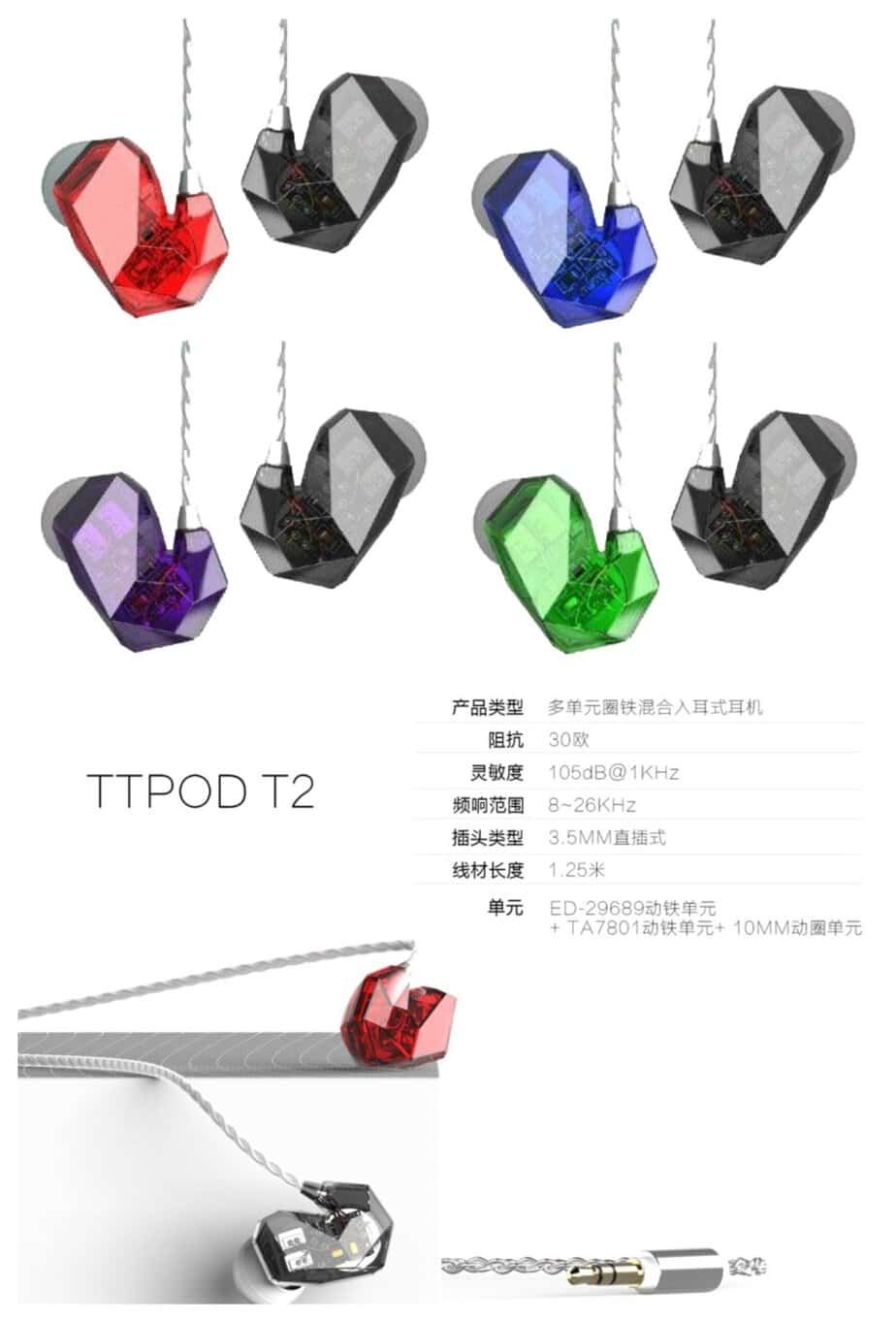
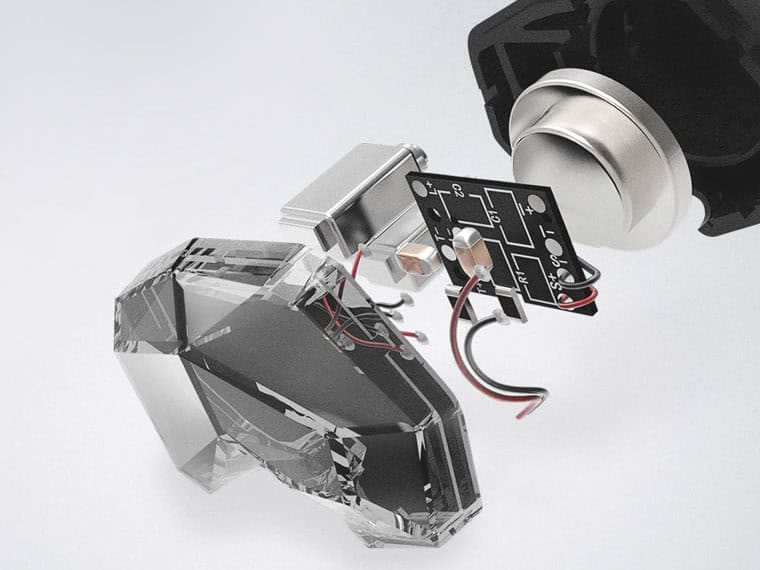
A few years after the T1-E’s success, the team released the follow-up T2-E. While TTPOD generated strong pre-launch interest thanks to the product’s design and specs, the results weren’t good once the product actually shipped. The tuning was questionable, and the T2-E had critical build quality and durability issues – drivers failing, shells falling apart. Soon after, in 2014, Alibaba acquired TTPOD, resulting in the closure of both the earphone and music streaming businesses. While there’s no way to confirm directly, the timeline suggests the acquisition likely led to the premature release of the T2-E. Alibaba rebranded TTPOD as Ali Planet, which itself shut down in 2016, putting a full close to the TTPOD era.
The Returning as TFZ (The Fragrant Zither)
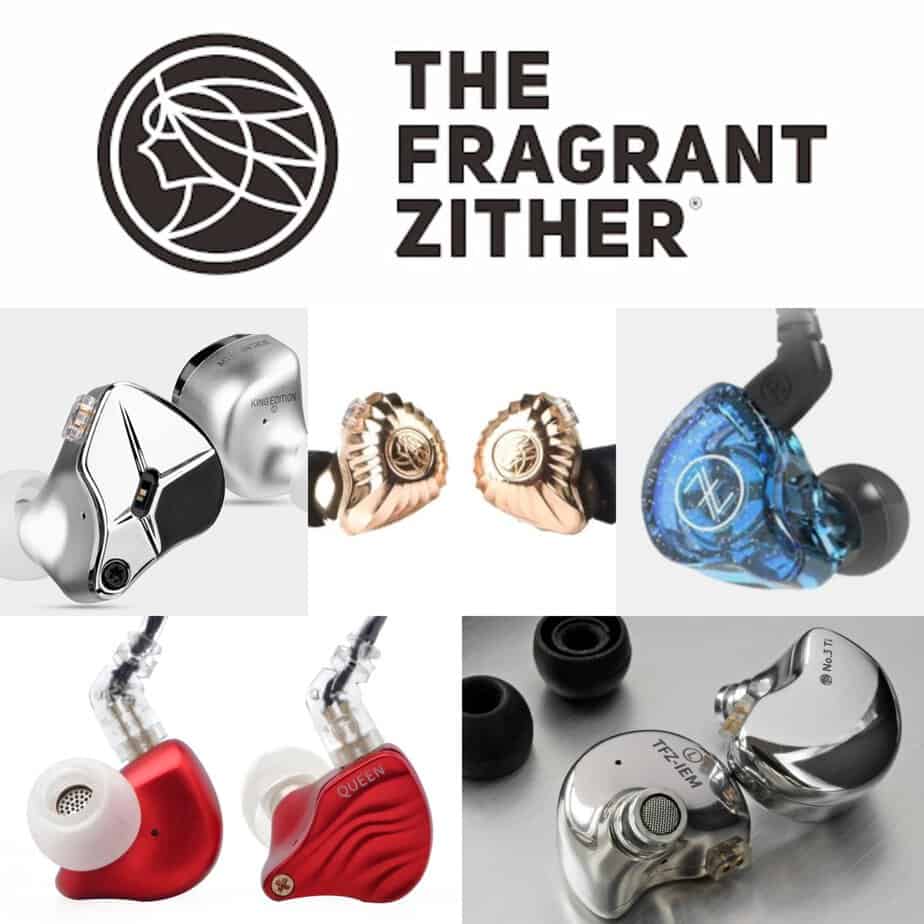
Shortly after the acquisition and closure, the leading team members gathered to work on something new. The result was TFZ – The Fragrant Zither. TFZ featured graphene dynamic drivers, colorful shells, far better build quality, and noticeably more mature tuning. Models like the King Pro, Queen LTD, and Series 2 were widely praised across the community, making TFZ one of the better Chi-Fi options you could get during that era. What’s notable is that TFZ IEMs still hold up well by current standards, which says quite a bit about how much they refined their R&D coming out of the TTPOD days.
By around 2020, TFZ expanded the lineup further – introducing the Secret Garden Series targeting higher-end IEMs, and a sub-brand called SuperTFZ aimed at budget in-ear monitors for musicians and artists. Unfortunately, neither of these landed particularly well.
The Secret Garden Series ventured into multi-BA and hybrid drivers, though it was clear the team wasn’t fully comfortable yet in that territory – the tunings were off and didn’t reflect the same confidence TFZ had with single dynamic driver products (read our earlier QTC article: TFZ with BA Drivers to learn more).

Short-Lived, Experimental Sub-Brand
SuperTFZ, meanwhile, was a project that didn’t seem fully thought through. It didn’t carry a distinct enough identity to differentiate from TFZ proper, the products weren’t special enough to gain meaningful attention, and it was eventually quietly dropped. Perhaps the most memorable thing about SuperTFZ was that even the brand logo was a poor copy of Jerry Harvey Audio’s “Fly Girl” icon, which only gave an impression of a knock-off of JHA’s. SuperTFZ is remembered more as a transitional experiment than a brand of purpose. Only a few products were made under this sub-brand, and even the best-known, the Force 1 earphones, were criticized for poor tuning and an unbalanced sound.
EarAcoustic Audio: Engineering and Recognition
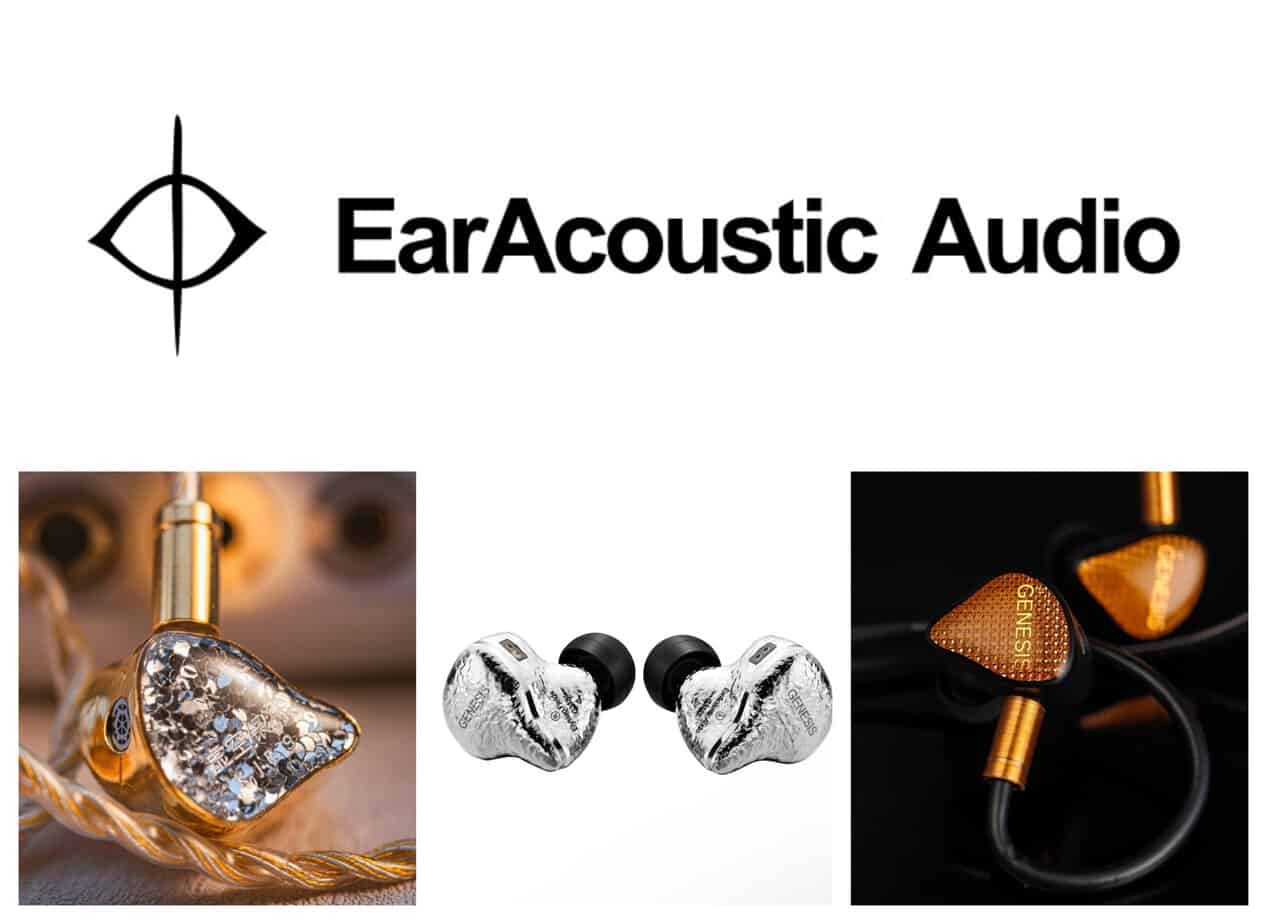
By late 2024, after a few years of hiatus, the same team behind TFZ and SuperTFZ launched their latest brand – EarAcoustic Audio as a dedicated premium brand. While these two legacy brands weren’t officially called off, EarAcoustic Audio embodied what all the legacy brands attempted to achieve – and so far, with awesome executions.
One notable point is that EarAcoustic Audio is staying firmly in the dynamic-driver territory, which is historically where this team has always been the strongest. Applying different materials for the diaphragm and body chassis, EAA has a surprising variety of earphone products, where each of them is well thought through with positive impressions to be backed with. There’s still a possibility for them to eventually challenge themselves with multi-BA and hybrids, so we’ll have to keep our fingers crossed if they’ll get the job done right in such cases. However, EAA has already made impressive progress by receiving Japan’s VGP awards and is quickly gaining a positive reputation for its IEMs. The quality controls have been noticeably improved, and they are doing a pretty good job venturing into the higher-end products.
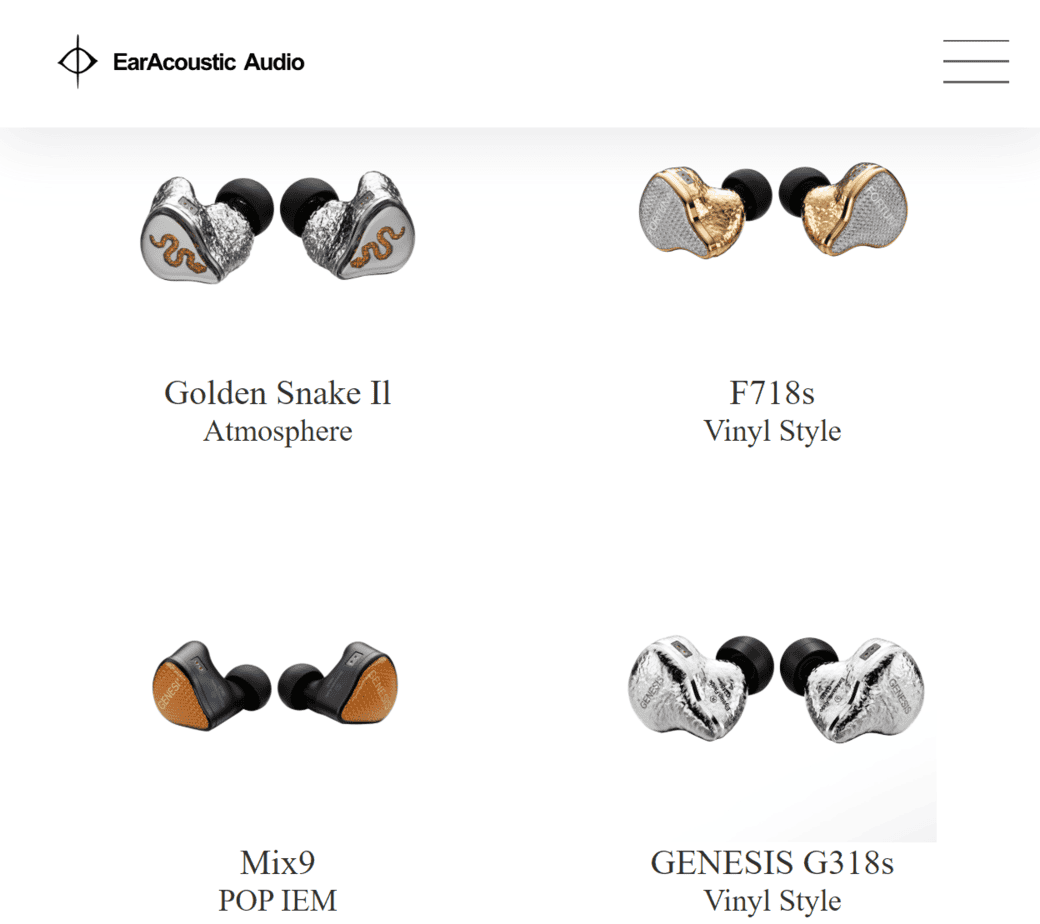
Product Line-up of EarAcoustic Audio
EarAcoustic Audio (EAA) has a wide range of products with different concepts and pricing. Their products are organized into 6 categories: Symphonic / Vinyl Style / Atmosphere / Female Vocal / Pop IEM / Stage IEM. These categories vary in tuning and pricing, and the products within the same category also range from budget to premium.
💿 Vinyl Style
This category focuses on a warm, analog-inspired sound. The tuning leans toward rich mids and smooth treble, evoking the character of vinyl playback. It’s meant for listeners who prefer a more nostalgic, musical presentation over clinical precision.
🌌 Atmosphere
Atmosphere models highlight immersive soundscapes with enhanced spatial cues. They often feature deep bass and ambient detail retrieval, making them suitable for electronic, cinematic, or atmospheric genres where mood and space are central.
🎤 Female Vocal
As the name suggests, these IEMs are tuned to bring forward vocal clarity and presence, especially in the upper midrange. The goal is to make female vocals sound intimate, detailed, and emotionally engaging, without being overshadowed by bass or treble peaks.
🎶 Pop IEM
This line is tailored for mainstream pop music. Expect a V-shaped tuning with punchy bass and lively treble, designed to maximize energy and fun. These models prioritize immediacy and excitement over neutrality, appealing to casual listeners and fans of modern genres.
🎭 Stage IEM
Stage IEMs are built with live performance monitoring in mind. They emphasize clarity, durability, and accurate reproduction across the frequency spectrum, ensuring performers can hear themselves and the mix reliably. The tuning is typically more neutral and functional than consumer-oriented lines.

Looking Forward
EarAcoustic Audio doesn’t directly address their legacy with TTPOD or TFZ, though EAA’s brand slogan, “The Romance of Wired Earphones Will Never Fade”, shows where they stand on and who they’re making products for.
EarAcoustic Audio is still a young brand by any measure; the rebranding is barely a year old, and the product lineup is still in early stages internationally. But the team behind it has decades of accumulated experience with dynamic driver IEMs, a proven track record in the Japanese market, and a clearer product identity now than they’ve had in some time.
Will EarAcoustic be able to thrive in budget Chi-Fi and premium IEM markets, where now the competition is considerably fiercer than it was in TFZ’s golden era? I’m having a good feeling about EarAcoustic Audio as their stats seem great so far, though that’s something we’ll have to continue to keep our eyes open, looking forward to what EAA has to offer us next.

TL;DR Summary: Why the Changes?
- TTPOD to TFZ: A shift from budget-focused products to a more design-driven brand.
- TFZ to SuperTFZ: An experimental attempt to refresh the brand with new technical marketing, though short-lived.
- SuperTFZ to EarAcoustic Audio: Consolidation under a new identity emphasizing engineering and awards to gain credibility.