


The Betrayal of Empire Ears: Presymptoms & Aftermath
Watching a giant like Empire Ears suddenly fold is a genuine gut-punch to the hobby. If you’ve been in the high-end in-ear monitor (IEM) scene for any length of time, you know that the “Empire” wasn’t just another brand; it was one of the 1st-gen titans that helped define what boutique high-end even meant among all audiophile communities around the world. On February 27, 2026, the company officially announced it was closing its doors, effective immediately, citing a mix of ongoing health challenges, rising operational costs, and shifting market conditions. It’s a sudden end for a name that felt permanent.
Table of Contents
- The Betrayal of Empire Ears: Goodbye… or Is It?
- From EarWerkz to Becoming Empire Ears
- Jack Leaves Empire Ears, Creates Volk Audio
- The Sudden Closure Notice
- Why Did Empire Ears Close?
- Quality Control Issues
- Rising Production Costs & Shrinking Margins
- Operational Strain & Health Reasons
- A Disastrous Example for the Audiophile Industry
- Final Thoughts: The Turning Point and the Goodbye That Wasn’t
From EarWerkz to becoming Empire Ears
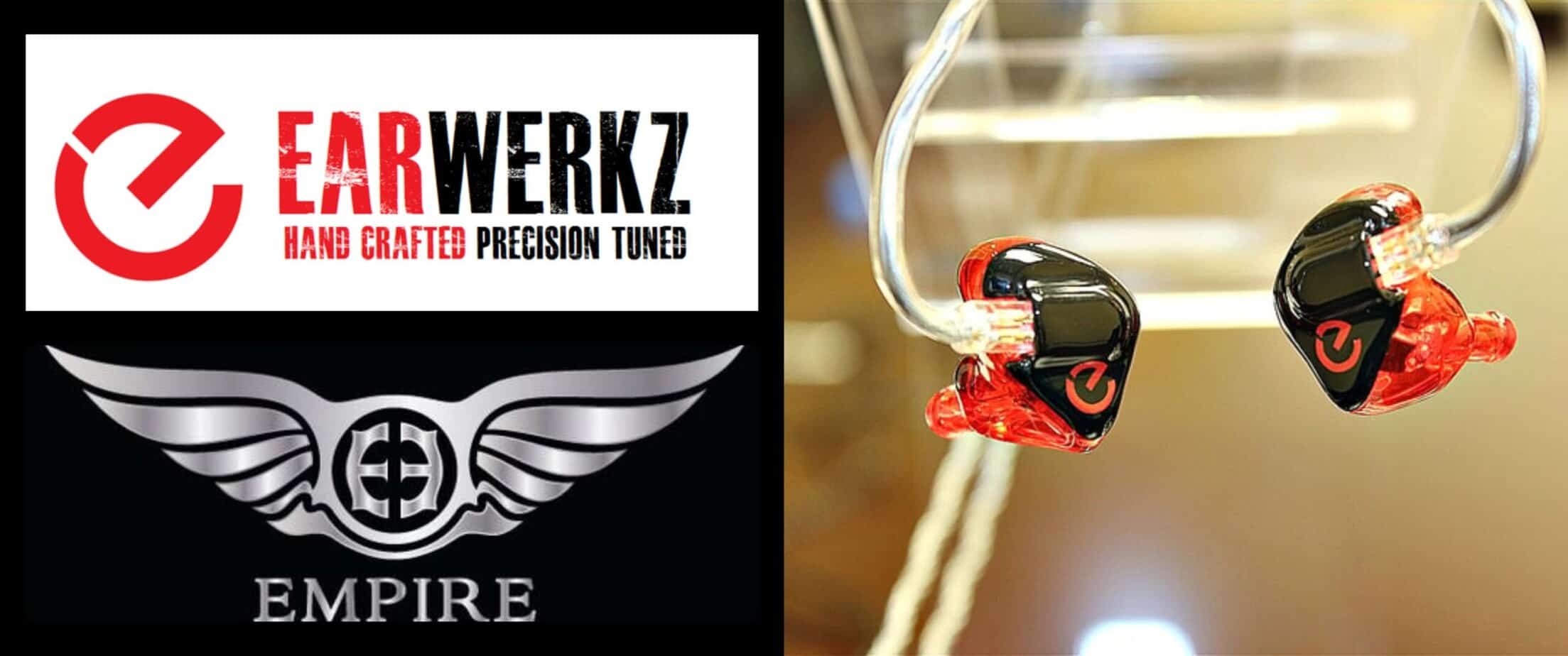
The story of Empire Ears is really the story of the Vang family. Before the flashy “Empire” branding, there was EarWerkz, a project by Jack Vang that focused on solid value and custom IEMs. In 2015, Jack teamed up with his father, Dean Vang, a seasoned acoustic engineer, to rebrand and relaunch as Empire Ears in Norcross, Georgia.
Besides, we cannot talk about the “Empire” without acknowledging the legendary Zeus line-up, which was effectively the brand’s first true claim to the summit-fi throne. Back when driver wars were just starting to peak, the Zeus-XIV arrived as a legitimate technical monster. Long before the subwoofers and bone conduction of their later years took center stage, the Zeus remained the standard that established the company as a dominant force in the IEM industry.
After the Zeus series, Empire Ears soon became popular for their famous W9 and W9+ subwoofers, found in legendary models like the Legend X and the Legend EVO. Whether it was the technical mastery of the Odin or the sheer visceral impact of the Raven, Empire Ears has consistently pushed the boundaries of what a tribrid or quadbrid IEM could achieve. Besides their independent releases, the special collaboration between Empire Ears and Astell&Kern resulted in the birth of the Novus.
Jack leaves Empire Ears, makes Volk Audio
A pivotal moment in the company’s story came when Jack Vang, co‑founder and the most visible figure behind Empire Ears, decided to part ways with Empire Ears. Jack had long been the energetic voice of Empire—his presence at audio shows, his direct engagement with the community, and his bold approach to tuning philosophy gave the company much of its personality.
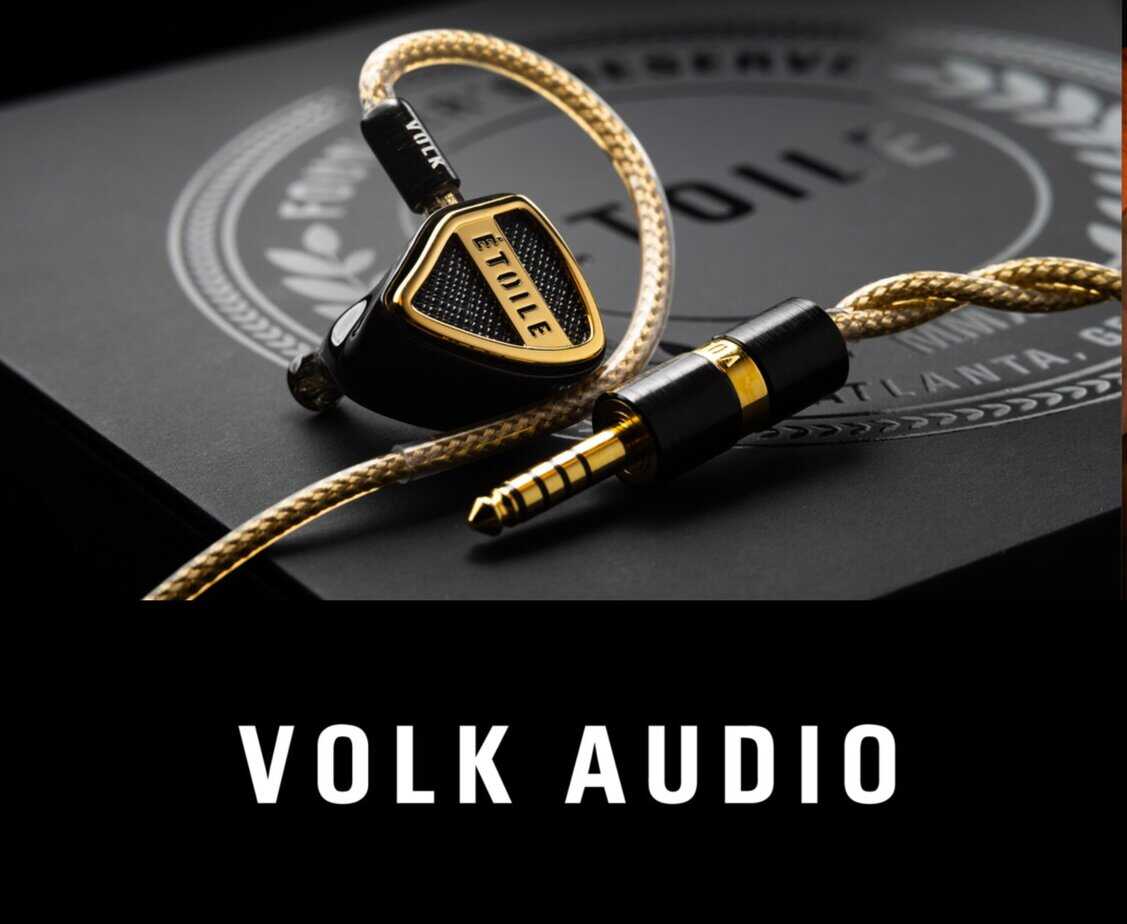
After leaving Empire Ears, Jack went on to establish Volk Audio, his own new venture, by releasing the Volk Audio Étoile IEM. While details aren’t shared in full, Jack has previously shared that he was told to resign from the company and had no interaction or
Whether Volk will carry forward the same bass‑driven, high‑impact DNA that defined Empire Ears or pursue a different philosophy remains to be seen, but his departure marked a clear turning point in the Empire Ears timeline.
The Sudden Closure Notice
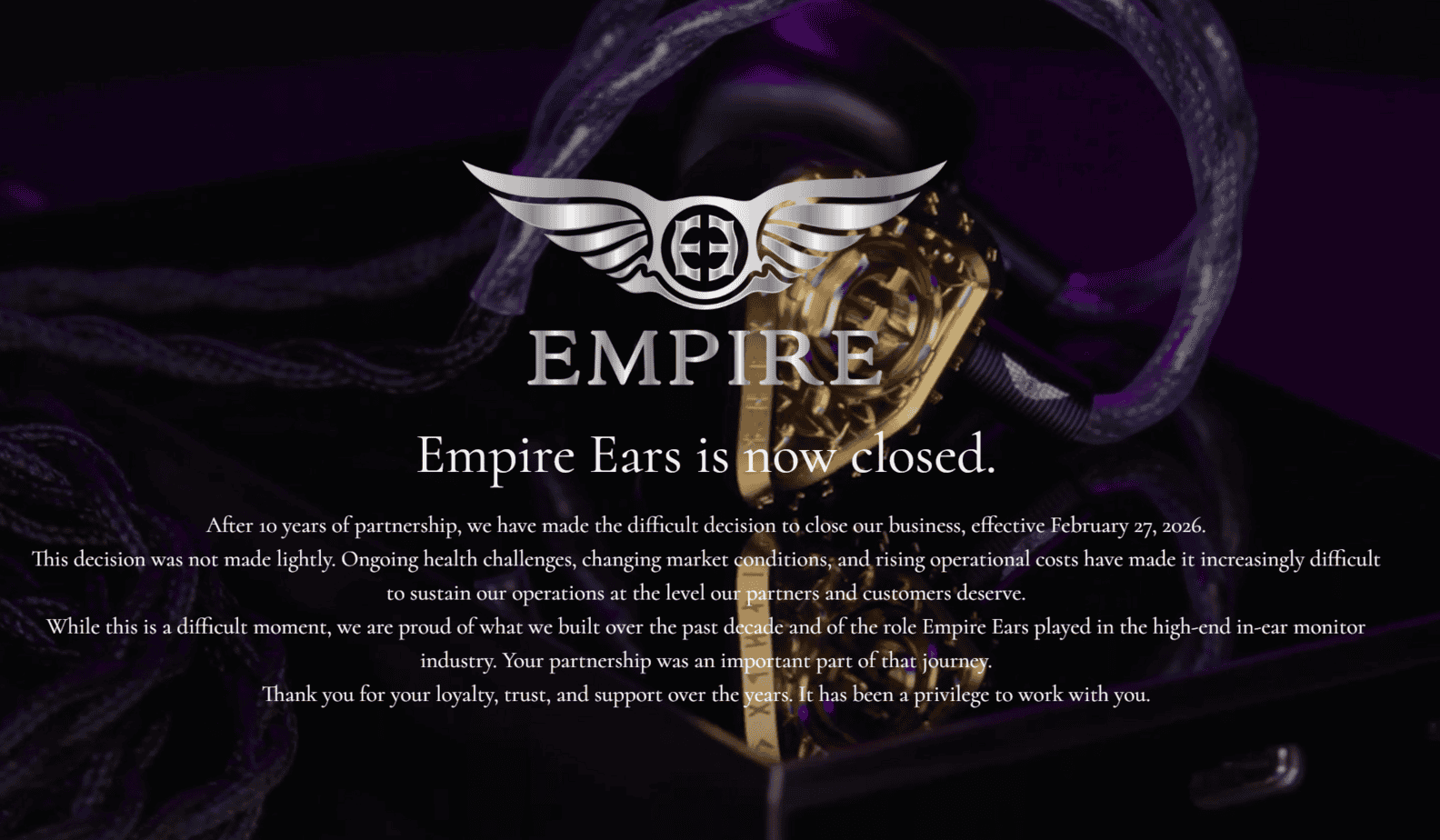
Ultimately, however, the Odin MKII became the final chapter for Empire Ears. On February 28th, 2026, Empire Ears abruptly shut down its operations. All of the company’s website pages were taken offline and redirected to a single statement on the front page as follows.
Empire Ears is now closed.

The REAL Problem Starts Here…
Apart from the news being surprising and upsetting to all related parties and people, there were two serious problems:
1. Empire Ears provided no advance notice of the closure – not even to its global distributors or sales channels.
2. They ceased operations without disclosing any after-sales service for products still under warranty, including the Odin II, which had been released less than a year ago.
Besides, it was later found out by a user that Empire Ears have already put up the HQ property for sale on February 18th, about a week before the sudden business closure. In the days following the announcement, distributors and sales partners compared notes and quickly realized that Empire Ears had given no indication of shutting down. In fact, the company had continued accepting after-sales RMA requests right up until the closure, with some packages still in transit to their headquarters when the news broke.
Despite attempts made by business partners to contact Empire Ears, so far, they have all been left completely unanswered. It wouldn’t be an exaggeration that Empire Ears “ran away”. As a result, distributors and sales channels are now left unfairly burdened with unsold inventory and unresolved after-sales responsibilities, while customers bear the collateral damage of a brand disappearing overnight.
Why did Empire Ears Close?
While Empire Ears stated that they’ve closed down due to Dean’s increasing health concerns, there are several speculations that could be made.
- Known Quality Control Issues: Empire Ears had been dealing with long-standing issues related to quality control and after-sales service. Their resin shells were rather infamous for being prone to cracking or breaking, along with recurring mechanical failures involving 2‑pin sockets, drivers, and faceplates. Their after-sales service also had a reputation for being substandard, highlighted by the viral “Empire Ears Glue‑Repair Incident,” which only amplified concerns about their QC standards.
-
Rising Production Costs While Margins Shrink: High-end IEM manufacturing has become significantly more expensive, especially over the past decade. At the same time, the market has been flooded with Chi‑Fi brands offering competitive performance at lower prices. Consumers now have countless options across every price tier. Meanwhile, other US-based brands — Noble Audio, Campfire Audio, 64 Audio, Ultimate Ears, and so on — adapted by expanding into budget-friendly lineups or shifting their focus toward musicians and stage professionals. Empire Ears, however, remained one of the few that continued serving only the high-end audiophile segment, which inevitably narrowed their market as competition intensified.
- Operational Strain & Health Reasons: Running a small, specialized audio company is demanding, especially when trying to keep up with rapid product cycles and rising expectations. After Jack left Empire Ears, the operational load fell heavily on Dean. Managing R&D, marketing, QC, and product development simultaneously would have been a stretch for any small team. Empire Ears was never a large company to begin with, and the combination of internal strain and health-related challenges likely made the situation unsustainable.
By All Means, a Disastrous Example Has Been Set for the Audiophile Industry
The Empire Ears incident became a harsh wake‑up call for the audiophile community. It showed, in the most unfiltered way possible, that even long‑established manufacturers can disappear overnight without fulfilling their obligations to loyal customers—warranties included. For many users already fatigued by faster product cycles and rising retail prices, this felt like a critical blow. It stirred up a level of doubt and distrust that the hobby hasn’t seen in years.
One of my fellow audiophile friends summed it up perfectly:
“If a major, established brand like Empire Ears can run away like that, how are we supposed to trust any audiophile product – especially from newer or boutique-sized brands?”
It wouldn’t be fair to assume that other companies will follow the same path. Most brands, old or new, are run by people who genuinely care about their customers and their craft. Still, concerns will inevitably rise. Once a precedent like this is set, it lingers. It changes how people evaluate risk. It changes how they choose where to spend their money.
From this point on, every brand—whether they’ve built a decade of legacy or are just entering the market—will need to demonstrate stronger commitment and accountability to gain customer trust. The audiophile community expects clearer communication, more transparent warranty policies, and a genuine assurance that high-end products won’t become disposable the moment something goes wrong.

To Take the Red Pill
The Empire Ears closure will be remembered not just as the fall of a major brand but as a turning point. It proved that trust in this hobby is far more fragile than we’d like to admit to a certain brand, and once it cracks, the ripple effect reaches everyone – consumers, business partners, and even the brands that have been fully loyal to their customers.
For the sake of the hobby, let’s hope this incident will become a bitter lesson and not a pattern. It’ll be a consumer’s duty to be more selective, more aware, and to support the brands that have consistently proven their reliability. I very much love my Empire Ears IEMs. The Raven is still one of my favourite IEMs of all time. As a long‑time fan, I wanted to say goodbye and thank you. But with how everything unfolded, all that’s left is a disappointed bye — and that alone says enough. 😐