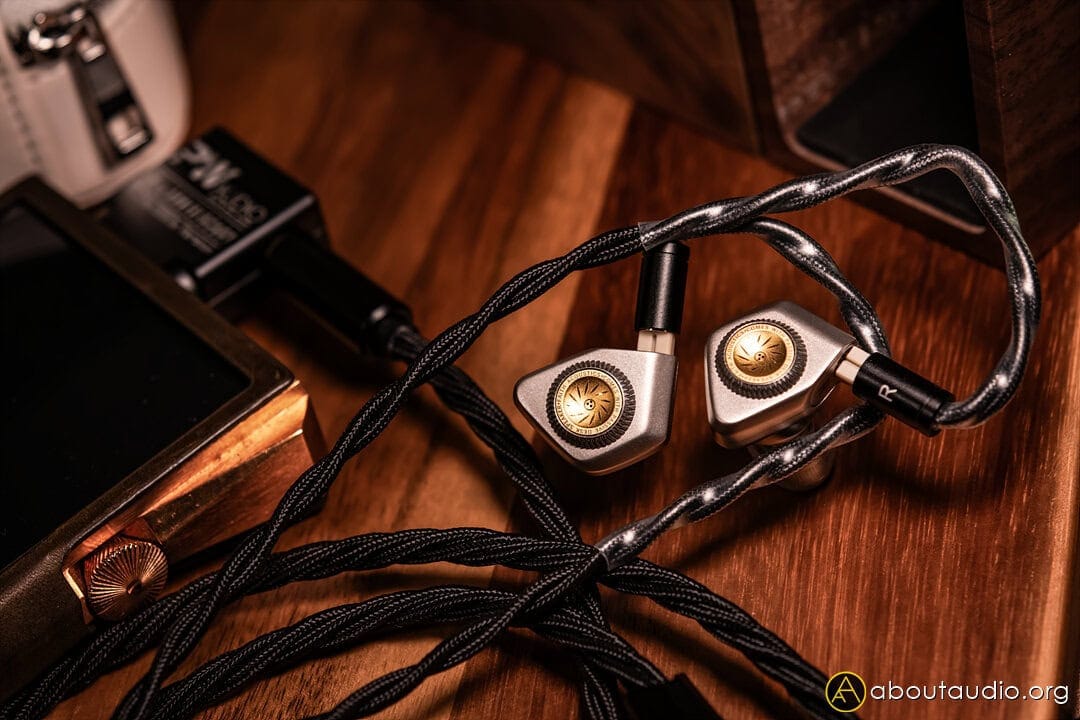


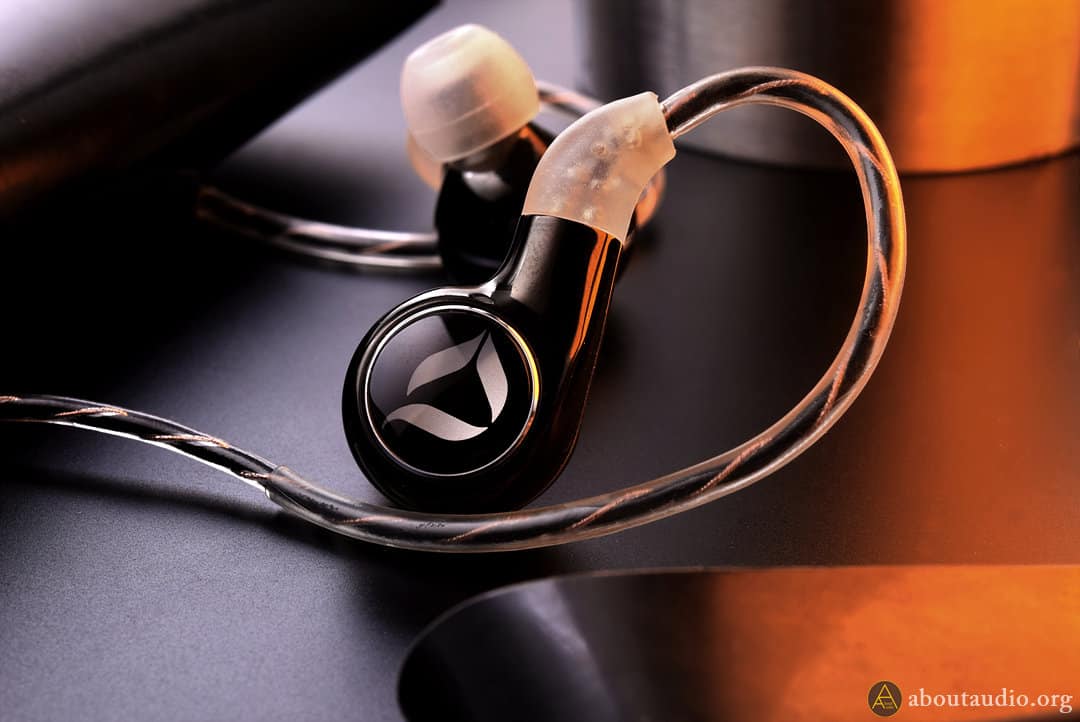
Compared to Dita Audio Perpetua (Review link)
Both the E1000 and Perpetua are 1DD flagships, and the contrast between them covers nearly the full spectrum of what a single dynamic driver can be tuned to achieve. As covered in our Perpetua review, Perpetua is warm, dense, and vacuum tube-like in atmosphere – its center of mass is firmly planted in the lower frequencies, and the vocal timbre is thick, creamy, and emotionally immersive. Perpetua prioritizes feel over analysis.
In contrast, E1000 sits at the opposite end of that spectrum. Perpetua’s mids are fuller in body and warmer in tone – the vocal thickness and gentle brightness dim give the mid-range a lush, organic character. E1000’s mids are leaner, considerably more transparent, and far more agile in resolution. The density the E1000 packs into its vocals is more about analytical depth than tonal warmth – it’s information-dense rather than mood-rich.
Bass-wise, Perpetua flows and lingers – generous reverbs, a soft and elastic texture, and a warm, expansive sub-bass presence. E1000’s bass is tighter, faster, and more controlled, sitting flatter in quantity. Perpetua creates a deeper, more immersive low-end atmosphere; E1000 keeps the bass precise and clean. Treble-wise, Perpetua’s highs are deliberate background players; a present and pleasing sound, but not the main character. E1000’s trebles are far more prominent and technically active. For those who want to sink into the music emotionally, Perpetua is the stronger choice. For those who want to hear through the music with clarity and precision, the E1000 would be the answer.
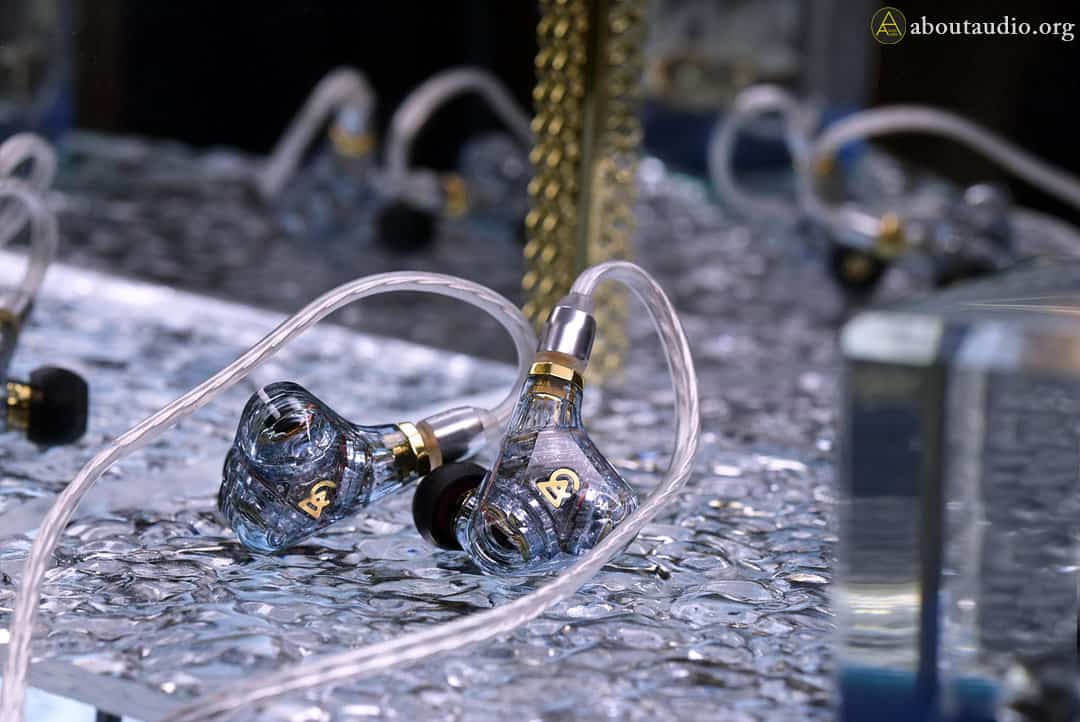
Compared to Campfire Audio Trifecta (Review link)
Being one of the most iconic earphones made by Campfire Audio, Trifecta’s unusual 3DD triangular setup produces a powerful, W-shaped sound with a forceful low end, energetic mids, and a wide, grand soundstage. It’s a bold and physically impactful IEM that doesn’t hold back, as well as being one of the most polarizing TOTL IEMs that those who love love, and those who don’t absolutely don’t.
Against Trifecta, the E1000 takes the opposite approach. Trifecta’s bass hits significantly harder and with more sub-bass body – three full-range dynamic drivers do contribute to that sense of physical weight and extension. E1000’s bass is tighter and more controlled, sitting lower in quantity but stronger in texture discipline. Vocals on Trifecta are crunchier and more energetic with a neutral-bright character and strong presence within the broader staging.
The E1000’s vocals are more agile, more neutrally precise, and more holographically focused. Trifecta’s soundstage is clearly larger in raw scale – the 3DD combo creates a grand, sweeping headroom that the E1000 doesn’t aim to match in width. Where the E1000 pulls ahead is coherence – the single-driver phase accuracy and tonal consistency across all frequencies is something Trifecta’s three-driver setup, despite its many virtues, doesn’t quite replicate. Trebles on Trifecta are natural and crisp in that typical DD manner; E1000’s highs are in a different category of technical brilliance.
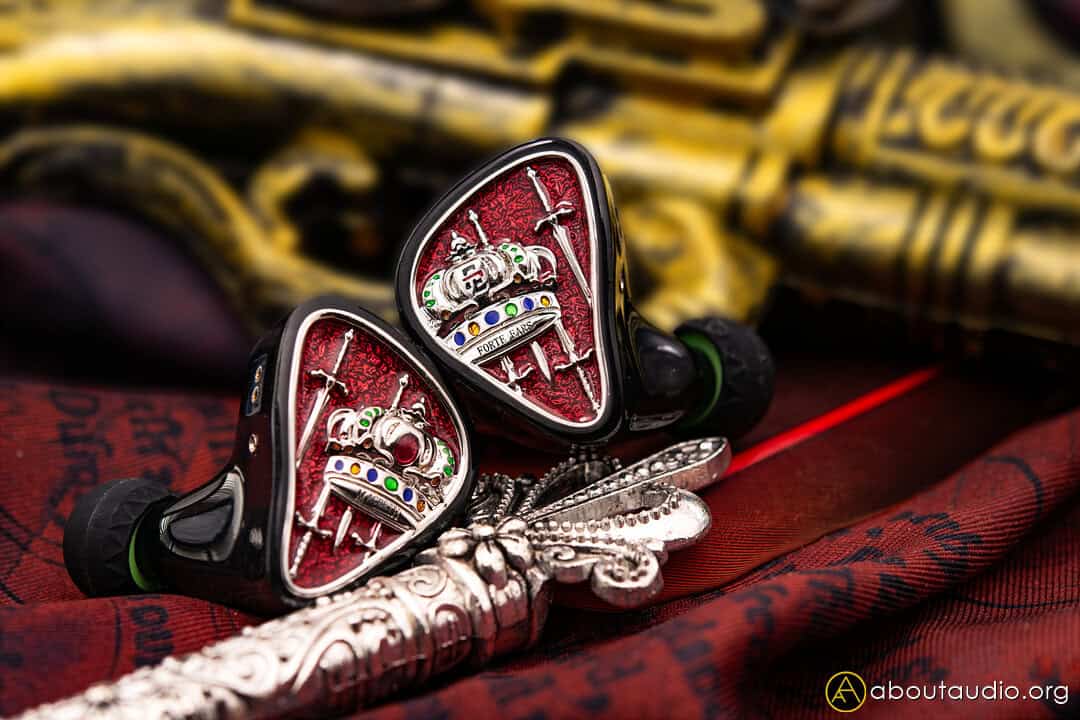
Compared to Forte Ears Macbeth (Review link)
This is a comparison between two of the most impressive debut products in recent memory from different brands, at a very similar price tier. Macbeth, which we previously reviewed, achieves a silky, blissful, almost aggressively smooth mid-range – the texture grains are so fine and uniformly distributed that the surface feels luxuriously smooth while full resolution is preserved. The bass achieves a planar headphone-like heaviness and flowing grooviness despite being entirely BA-driven, and the trebles are crystal clear with al-dente texture that extends all the way to the ultra-highs.
Against the E1000, the vocal character difference is the first and sharpest contrast. Macbeth’s mids are fuller, creamier, and thoroughly lush – the Eletech-influenced silky texture wraps around vocals with a warmth and refinement that is hard to match. E1000’s mids are leaner, more neutral-bright, and packed with analytical density rather than tonal richness. Where Macbeth is smooth, E1000 is agile. Where Macbeth is warm and full, E1000 is transparent and precise.
Bass on Macbeth has more quantity and that distinctive flowing, even meatiness – Macbeth’s low end breathes and decays with a planar-like evenness that the E1000’s more elastic, controlled bass doesn’t replicate. E1000’s bass is tighter and faster in response. Treble performance is strong on both, though in entirely different ways – Macbeth’s EST-assisted highs deliver crystal-clear layering with a silky, moist texture, while E1000’s titanium driver highs bring EST-adjacent brilliance and finesse from a single driver, which remains very impressive.
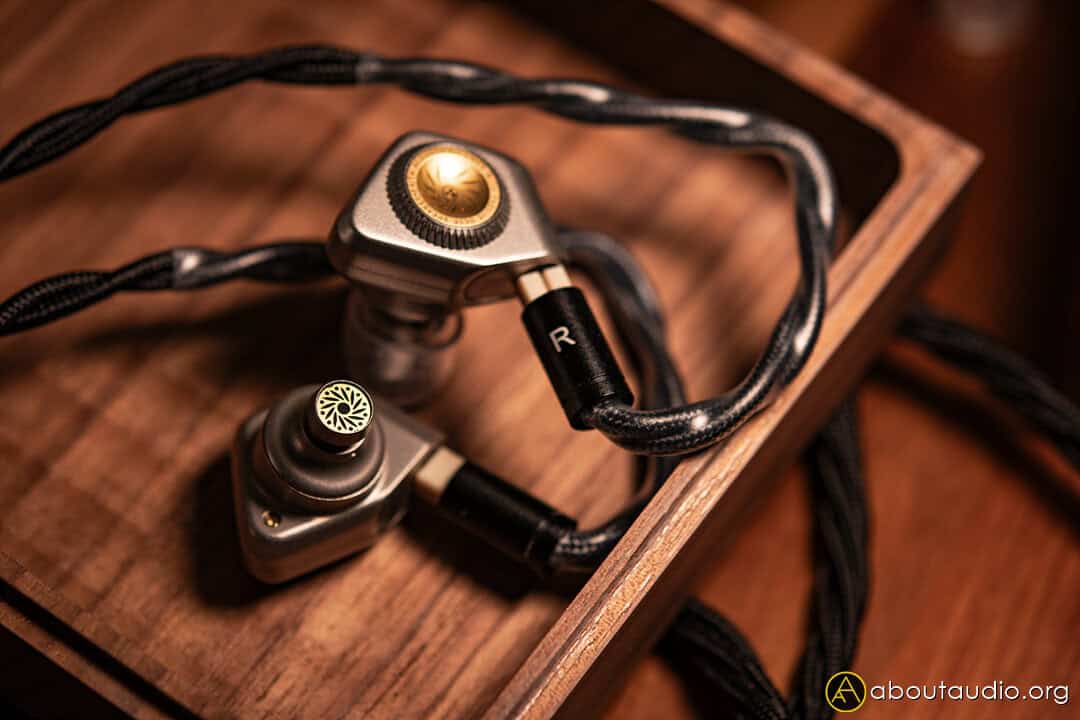
Embodiment of What Analytical Brilliance Means
The Faith Audio Labs E1000 is a textbook example that’ll change the minds of those who believe single dynamic drivers are inherently inferior to multi-driver IEMs. Even for those already familiar with TOTL 1DD sounds, the E1000 introduces a lot of room to change minds, as the E1000 is a different breed from most general TOTL 1DD IEMs. E1000 is a worthy inclusion in the TOTL IEM market that bridges the dilemma between 1DD flagships and hybrid flagships – all while still using a single dynamic driver.
Those who prefer warm, comfort-focused vocals or an immersive, emotionally colored listen will find more immediate satisfaction elsewhere. However, for the reference-ears and those who value transparency, resolution, and technical brilliance in a coherent, single-driver package, the E1000 is one of the most convincing debut IEMs I’ve recently encountered. Faith Audio Labs came well-prepared for their entry, so be sure to check out the E1000 if you’re into 1DD IEMs. I’m sure keeping my eyes on Faith Audio Labs and their endeavors in the portable audio industry.